This post contains affiliate links. As an Amazon Associate I earn from qualifying purchases at no extra cost to you.
Deep in the vaulted lower corridors of the Magic Academy, behind a locked iron gate that most students never notice, rests a scroll so old its edges have turned the colour of ash. Young Ollie stumbled upon it on a rainy Thursday, and what he read rewrote every lesson he had ever sat through. The Starveil history Legendaria’s archivists recorded on that ancient parchment was never meant for a schoolboy’s eyes — and for very good reason. It told the truth about how the legendary kingdom was born, who truly built it, and what impossible bargain made it all possible.
Before Starveil: The World That Came First
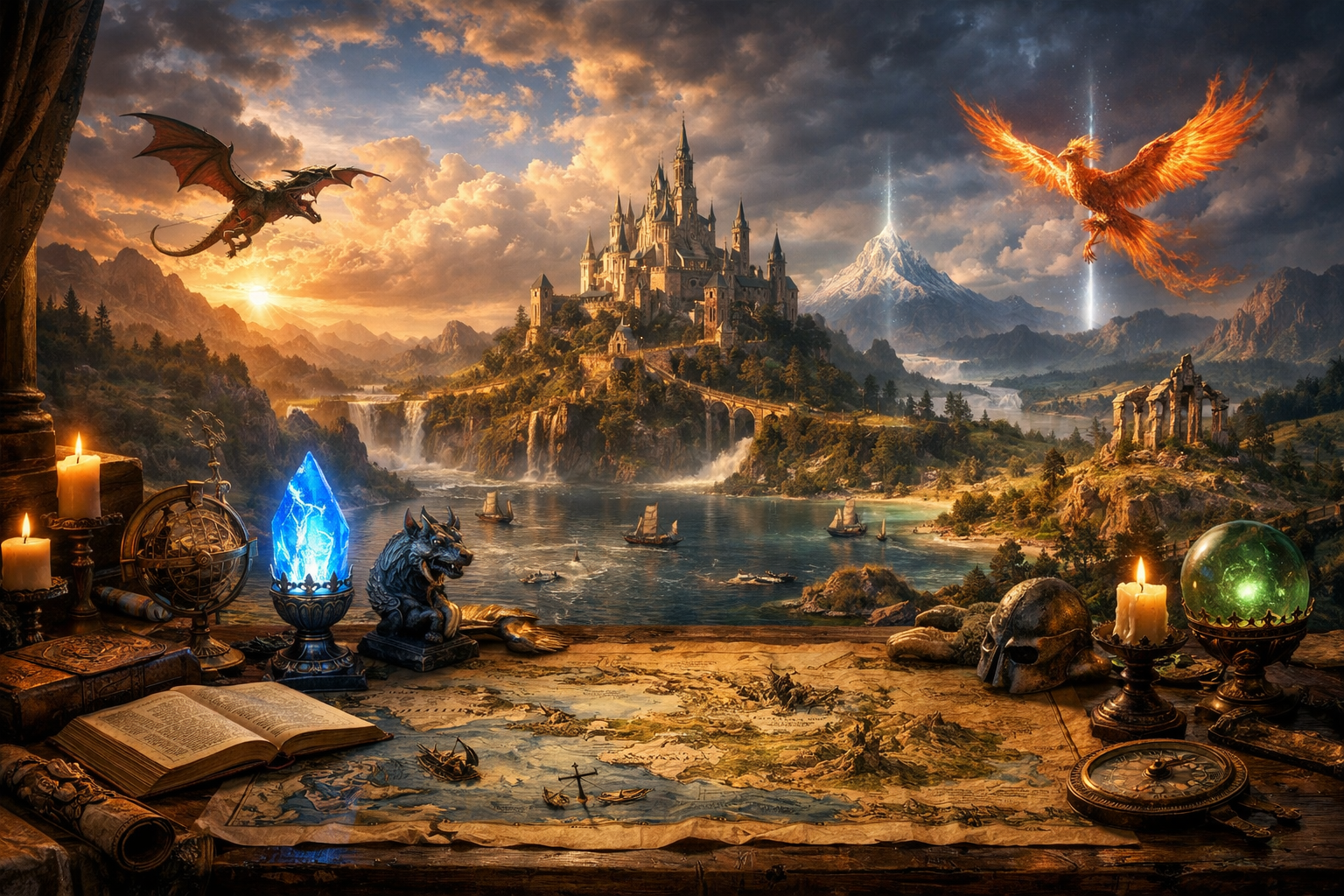
Before Starveil rose from the hillsides of Legendaria in all its starlit splendour, the land was a restless patchwork of warring clans, wandering creatures, and wild magic that obeyed no master. Scholars who have studied the earliest cave markings found near the Duskfell Ridges agree that the region now known as the Starveilian Heartlands was once called the Greywander Plains — a name that tells you everything about how bleak and directionless life felt for those who lived there.
Creatures of all kinds roamed freely. Bog-hags traded riddles for safe passage across muddy fords. Stone-backed tortoises the size of barns moved slowly between forgotten ruins, carrying mossy libraries of knowledge on their shells. And everywhere, from the highest frost-cracked peaks to the lowest river deltas, small bands of humans, elves, and beings that defied easy categorisation scratched out lives that were short, uncertain, and largely unmemorable. Nobody ruled. Nobody agreed. And nobody had yet looked up at the sky and thought to name what they saw there — until one extraordinary night changed all of that forever.
If the rich texture of ancient mythical worlds calls to you the way it calls to Ollie and his friends, you will find a wonderful companion in the Encyclopedia of Mythical Creatures — Celtic and British Isles Mythology: An Illustrated Bestiary of Legendary Beasts, Monsters and Spirits from Ancient Worlds. It is exactly the kind of reference that Legendaria’s own chroniclers might have kept on their shelves.
The Founding Night: Stars, Storms, and a Promise No One Could Refuse
The scroll Ollie found described a single night — referred to in the oldest records simply as the Luminant — when every star in the sky above the Greywander Plains shone with a different colour. Red. Violet. Deep amber. Cold silver. Witnesses from at least a dozen clans independently recorded the event, their accounts scratched on bone and clay and bark, all arriving at the same breathless conclusion: the stars moved. Not drifted, not twinkled — moved, with deliberate, purposeful grace, as though something enormous and ancient was rearranging them by hand.
Out of that luminous chaos stepped a figure the earliest texts call only the Veilcaster. Neither fully mortal nor fully spirit, the Veilcaster appeared at the highest point of a hill that would later become the foundation stone of the Magic Academy itself. She — for the pronouns most used in historical records suggest a feminine presence — carried no weapon, wore no crown, and spoke in a voice that the scribes struggled to put into words. Several simply drew a spiral next to her name and left it at that.
What the Veilcaster offered was simple in theory and terrifying in practice: she would weave the scattered starlight into a permanent Veil, a protective canopy of living magic that would hang above the land, keeping out the worst of the wandering dark forces that plagued the plains. In return, every being who chose to live beneath the Veil would give up one secret — freely and willingly — to be stored forever in the roots of the founding hill. Those secrets would become the kingdom’s foundation. Its bedrock. Its memory.
Most clans said yes. A few slipped away into the outer dark and were never reliably heard from again. The ones who stayed became the first citizens of what would eventually be named Starveil — a word that, in the oldest dialect still spoken in Legendaria’s mountain villages, means quite literally “the place where the stars watch over.”
The First Rulers and the Laws Woven Into the Land
After the Luminant, someone had to run things. The Veilcaster had not stayed. She had completed her work — the glimmering canopy visible on clear nights as a faint iridescence between the real stars and the world below — and departed without ceremony or farewell. What she left behind was a kingdom in the technical sense and a collection of deeply opinionated beings who all had strong feelings about who should be in charge.
The solution, arrived at after three particularly dramatic seasons of argument, was the Council of Woven Names. Each founding clan sent one representative whose name had been formally registered in the roots of the founding hill. These representatives served not as rulers in the traditional conquering sense but as custodians — people responsible for making sure the Veil remained healthy, the secrets in the roots stayed buried, and the wild magic that still crackled across the plains was guided rather than weaponised.
The laws they wrote were not carved in stone. In Starveil, laws were woven into the land itself. A child who broke the Rule of Open Doors — which forbade locking a stranger out of shelter during a storm — would find their own door stuck open for a week no matter how hard they pushed it. A merchant who cheated a customer in the market would discover that their coins turned transparent until they made honest restitution. The kingdom was not cruel, but it had a very long memory and a wry sense of justice that later generations would come to find either deeply comforting or mildly infuriating depending on which side of a decision they found themselves on.
This kind of world — where the rules of reality bend around moral choices — is the soul of the best fantasy fiction. If you enjoy tales built on exactly this kind of mythological richness, The Girl Who Drank the Moon, winner of the 2017 Newbery Medal, is a luminous example of storytelling where magic and consequence are woven together just as tightly. Highly recommended for young readers and the adults who love reading alongside them.
The Magic Academy: Guardian of Starveil’s Oldest Truths
It would be another four generations before anyone built the Magic Academy on that original founding hill. The decision came after the first Unravelling — a period of about forty years when sections of the Veil began to thin and dark static crept through the gaps, turning weather strange and making certain animals briefly speak in languages nobody recognised. Something had disturbed the secrets in the roots. Exactly which secret had been tampered with, and by whom, was a matter that the Academy’s founding archivists were specifically tasked with investigating and never, under any circumstances, disclosing to the general population.
The Academy was therefore built as much to guard as to teach. Its lower corridors — the very ones Ollie would one day wander into — were designed to confuse the casual visitor. Staircases that reversed direction. Hallways that hummed at a frequency that made the unprepared feel suddenly certain they had left something important behind in the room they had just come from. The scroll Ollie found sat in a case that should have been locked with a three-part riddle lock. That the lock had failed was, almost certainly, not an accident.
Characters like Jake, Rory, and Breck know the Academy primarily through its classrooms and its more cheerful professors. Sir Stinkrot’s lectures on Practical Inconvenience Magic and Dame DrizzlePox’s seminars on Weather Persuasion are the stuff of daily Academy life. But somewhere below all of that laughter and ink and questionable potion-making, the oldest part of Starveil’s story hums quietly in the roots, waiting to be remembered.
Even Avery — arguably the student most likely to have found that scroll first, given her habit of staying in the library until the candles burned down to nothing — had never made it past the iron gate. Which tells you something important about how much the Academy’s deeper architecture did not want to be found, and how remarkable it was that Ollie, of all people, managed it.
For those who love the idea of ancient academies guarding impossible knowledge, two fantastic reads come to mind. Medusa: A Fantasy Middle Grade Novel that Blends Greek Mythology with Dark Academia (The Myth of Monsters, 1) captures exactly that feeling of forbidden knowledge in a school setting — beautifully done and genuinely gripping. Similarly, Atlantis: The City of Ancients: A Middle Grade Fantasy Adventure delivers that same electric sense of an ancient civilisation concealing truths that could upend everything the heroes believe. Both are excellent additions to any young reader’s collection.
What the Scroll Actually Said
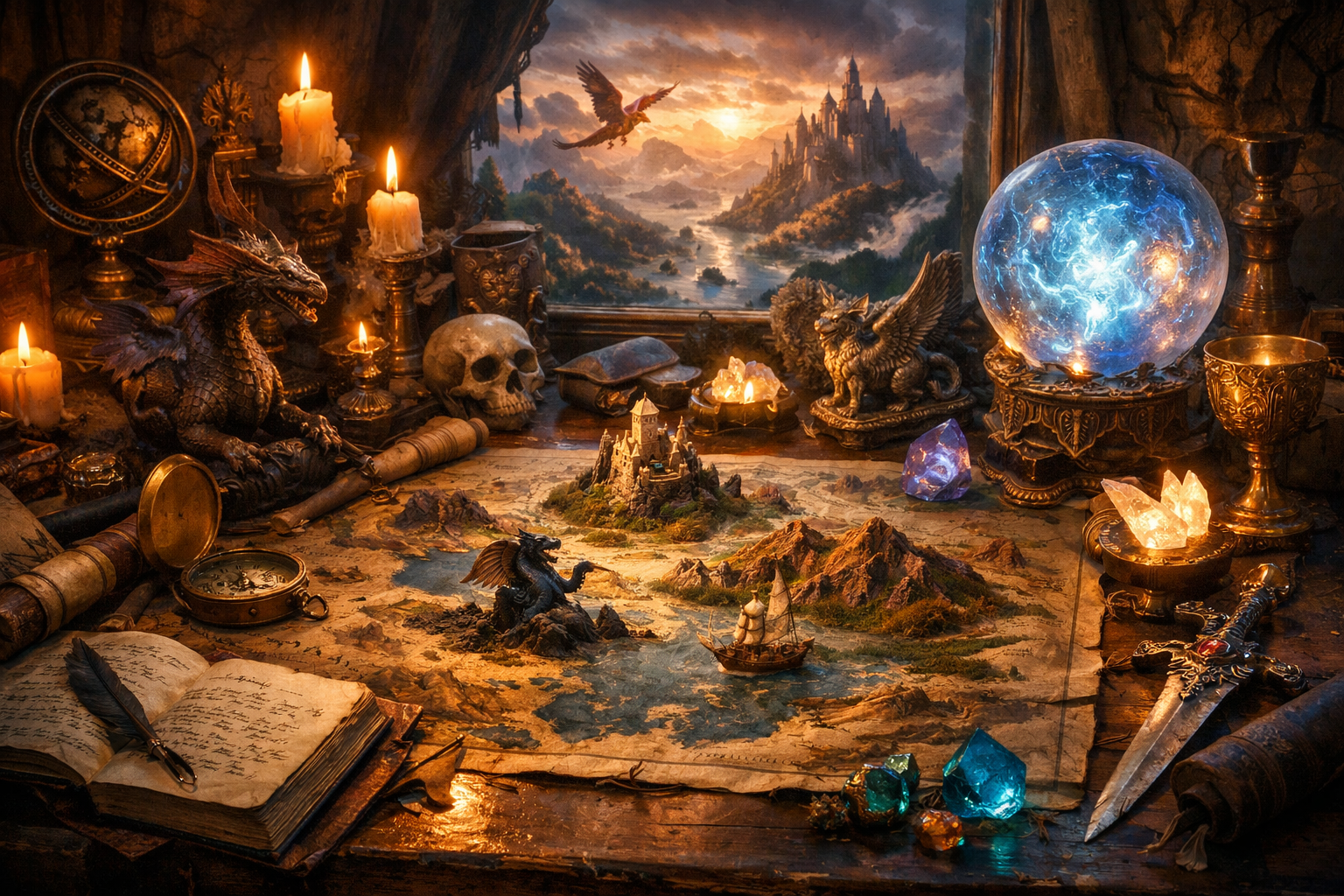
The scroll’s most startling revelation — the detail that made Ollie’s hands go cold as he read — was this: the Veilcaster had not created the Veil from starlight alone. She had woven it partly from the future. Fragments of things that had not yet happened were spun into the canopy alongside fragments of ancient light, which meant the Veil was not simply a protective barrier. It was, in the most precise sense, a prophecy made physical. Every choice made by every person living beneath it rippled backward into its weave, subtly changing what the Veil chose to protect against next.
Starveil had never been a kingdom governed by rulers or laws alone. It was governed by the accumulated weight of every decision its citizens had ever made — and ever would make. That was the bargain. That had always been the bargain.
Why the History of Starveil Still Matters Today
The Starveil history Legendaria preserves in its deepest archives is not simply a collection of dates and founding figures. It is an argument — a very old and patient one — about what makes a place worth protecting. Not its borders or its wealth or the power of its armies, but the honesty of its secrets and the quality of its choices. The kingdom that the Veilcaster built was designed to reflect its people back at themselves, perfectly and without flattery. That is why Starveil endures when other kingdoms in Legendaria’s long history have crumbled.
For young readers who want to explore worlds built on similar foundations — where mythology and moral weight intertwine — the Illustrated Stories from the Greek Myths: A Collection of Six Classic Greek Myths and Legends Retold for Kids is a wonderful starting point. These stories remind us that the oldest tales have always been about consequences, choices, and the strange mercy of a world that pays attention.
And for those readers, young or otherwise, who want to go even further and build their own legendary kingdoms and mythical worlds, two remarkable resources belong on your shelf. The Ultimate d20 RPG Systems: Create Your Own Tabletop Adventures — A Comprehensive Guide to World-Building, Character Creation, Magic Systems, and More gives you the tools to construct kingdoms with exactly the kind of layered history Starveil possesses. Pair it with the Renegade Game Studios Geologist’s Primer Tabletop RPG Sourcebook, a 360-Page Hardcover Campaign and Worldbuilding Minerals Reference Guide, and you will have everything you need to make your own fictional lands feel as ancient