This post contains affiliate links. As an Amazon Associate I earn from qualifying purchases at no extra cost to you.
I remember standing in front of a museum display on ancient ritual objects when I was about twelve, completely unable to move on, reading every label twice. That was the moment I understood that mythology isn’t just old stories — it’s a window into how entire civilizations understood the world. That same obsession is exactly what drew me deep into the lore of Legendaria and its extraordinary peoples, because the races catalogued here — from the forge-blooded Ironkin to the fierce, flora-woven Thornborn — aren’t just fantasy window dressing; they’re richly constructed cultures with origins, cosmologies, and social codes that echo the real mythological traditions of civilizations stretching from ancient Mesopotamia to the Norse sagas. Every detail, from a Thornborn’s territorial instincts to the Ironkin’s rumored kinship with volcanic deities, rewards the kind of close reading you’d give a cuneiform tablet or a Homeric epithet. This is the guide I wish I’d had the moment I first heard these names whispered across a campfire story, and if you’re the kind of person who reads museum labels twice, I suspect you’re going to love every word of it.
The Ironkin: Forged in Fire, Tempered by Time
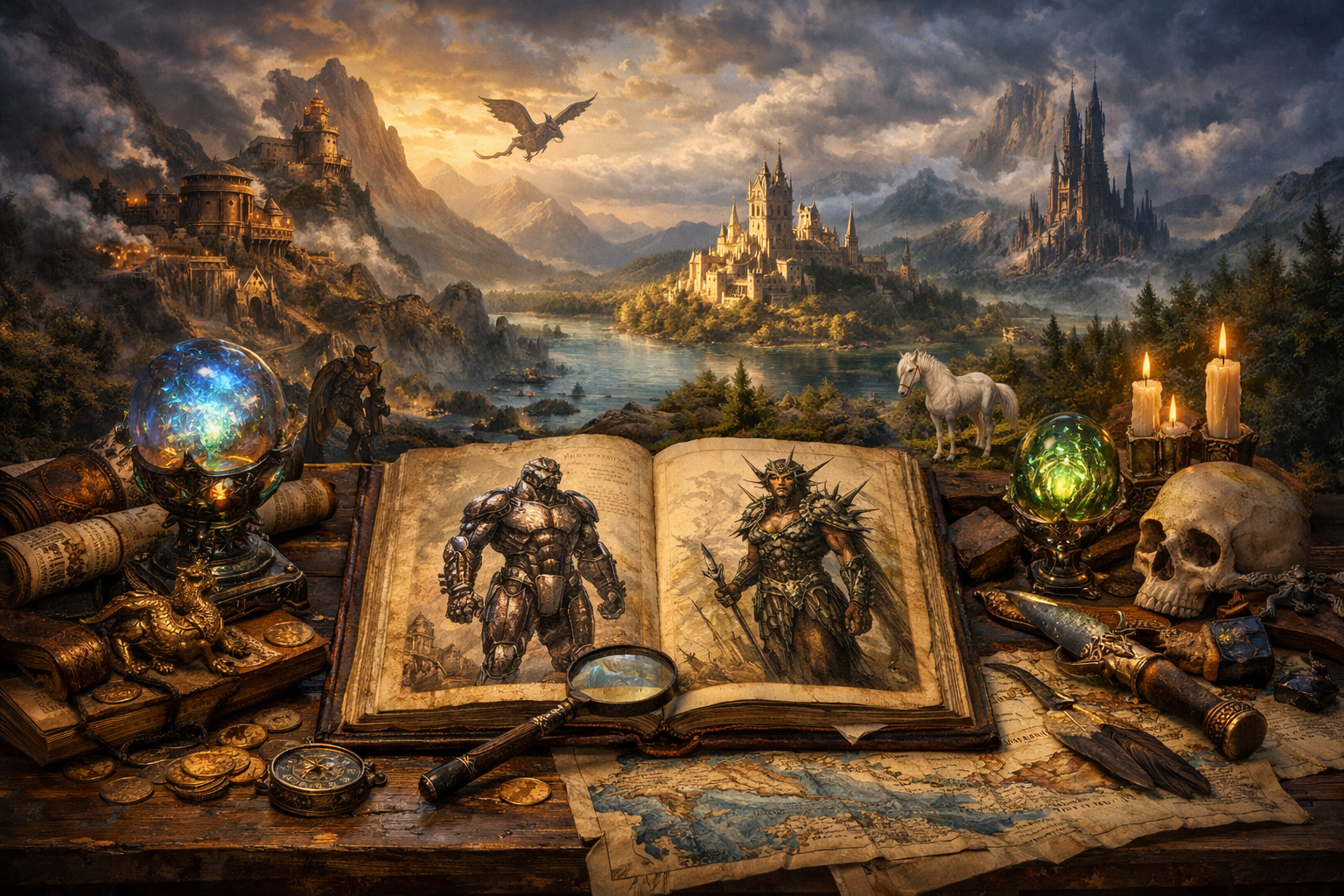
Of all the peoples of Legendaria, none are more immediately recognizable than the Ironkin. They stand between five and six feet tall, their skin a deep, burnished grey that catches firelight like hammered metal. Seams of luminous ore run along their forearms and collarbones — not decorative, but biological, the remnants of ancient geological bonding that occurred when the first Ironkin ancestors merged, quite voluntarily, with the living veins of the Cinder Mountains. This is not myth. The records of the Grand Archive confirm it in seventeen separate volumes, all of them fireproof.
Ironkin society is built around the concept of the Forge Bond — a coming-of-age ritual in which a young Ironkin must craft something of genuine worth using only materials found within a single day’s walk of their home settlement. Breck, one of Legendaria’s more celebrated young adventurers, completed his Forge Bond at the age of eleven by constructing a collapsible bridge from cooling lava rock and river reeds, an achievement that the elders described as “adequately impressive” and that everyone else described as absolutely extraordinary.
Ironkin are not quick to anger, but they are exceptionally slow to forgive. They have long memories, long lifespans averaging around four hundred years, and an encyclopedic knowledge of grudges stretching back generations. They are also, somewhat unexpectedly, devoted musicians, favoring percussion instruments carved from their own shed ore-scales. Their festivals are loud, joyful, and seismic in the most literal sense.
For readers who enjoy world-building rich in geological lore and creature detail, the Renegade Game Studios Geologist’s Primer Tabletop RPG Sourcebook is a magnificent companion — a 360-page hardcover that explores mineral lore in ways that feel almost as alive as Legendaria’s Cinder Mountains themselves.
The Thornborn: Ancient, Proud, and Easily Misunderstood
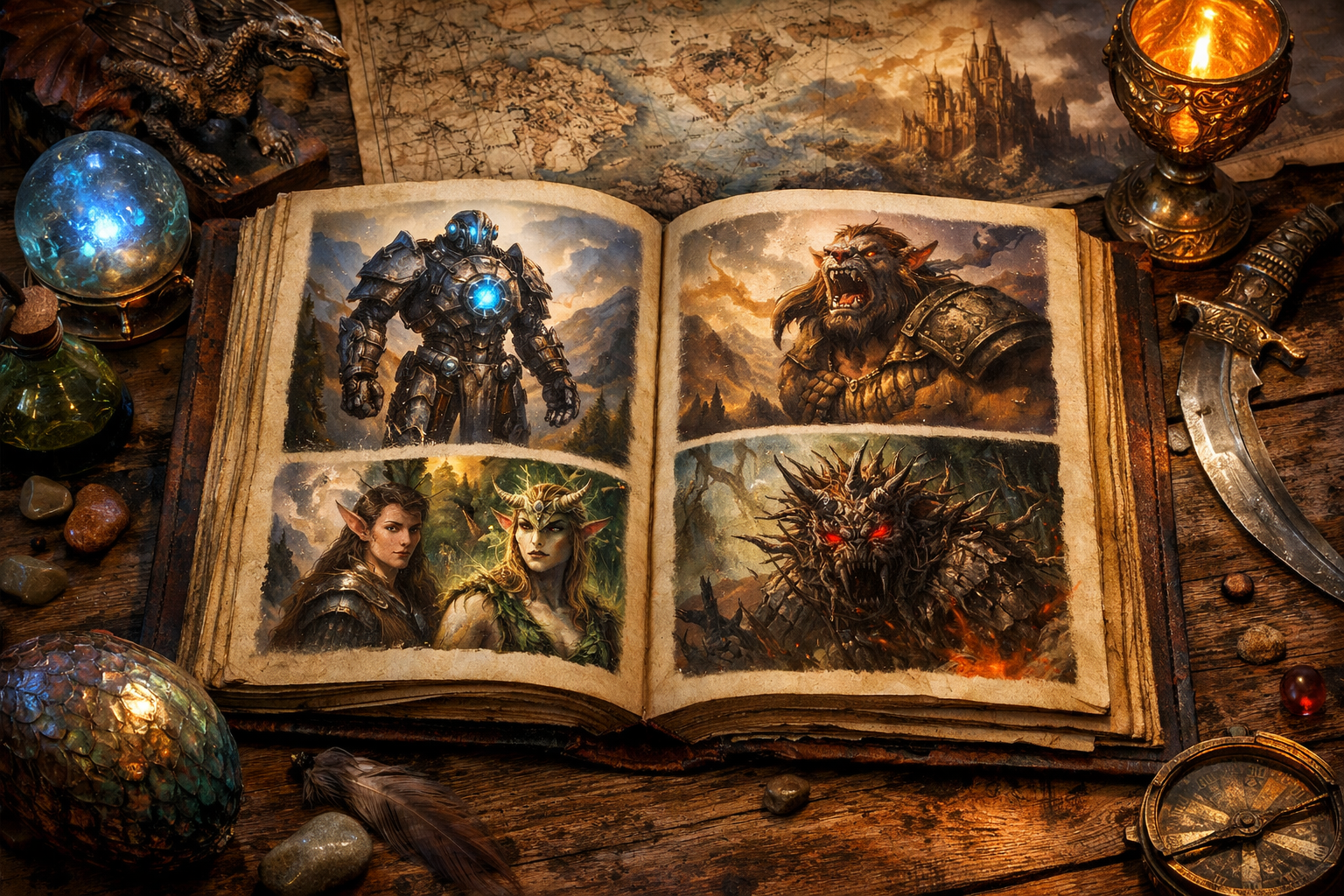
Now to the matter at hand. The Thornborn are, perhaps, the most misunderstood race in all of Legendaria, and the source of more diplomatic incidents than any other single group, including the notoriously territorial Mudwings of the Southern Bog. They are tall, ranging from six to eight feet, with bark-like skin that ranges in color from deep mahogany to pale silver birch depending on the region they were born in. Their hair, if one can call it that, consists of interwoven vines, living moss, and seasonal blooms that change with the weather and the Thornborn’s emotional state. In spring, a happy Thornborn is practically festooned with blossoms. In winter — or in anger — the blooms retract and the thorns emerge. Long, sharp, humbling thorns.
When Jake made his ill-fated “walking bush” remark near the market district of Orvenmere, the Thornborn in question — an elder named Featheroak — was already having a poor morning. Her blooms had retreated. The thorns were visible. Any seasoned traveler would have recognized this as a social signal equivalent to a raised drawbridge. Jake, regrettably, had not read any guide whatsoever.
Thornborn culture centers on the concept of the Deep Root — a spiritual philosophy that holds that all living things are connected through invisible networks beneath the soil, much as trees share nutrients through mycorrhizal webs. They do not consider themselves superior to other races. They simply consider themselves older, and they are correct. The oldest living Thornborn, a being known only as the Grandmother Hollow, is believed to be somewhere between two and three thousand years of age, though she has politely refused to confirm this.
Their relationship with written mythology and ancient story is profound. For young readers interested in how ancient cultures built their understanding of the living world through legend, the Encyclopedia of Mythical Creatures — Celtic and British Isles Mythology offers a richly illustrated journey through real-world legendary traditions that echo the Thornborn’s own deep reverence for nature spirits and ancient lore. It sits beautifully alongside any study of Legendaria’s forest peoples.
The Wanderlight Folk, the Murkweavers, and the Plains Kin
Legendaria’s diversity does not begin and end with its two most prominent peoples. Three further races deserve their own careful introduction, for each occupies a distinct corner of the world and a distinct chapter of its history.
The Wanderlight Folk
Small in stature but immeasurable in cleverness, the Wanderlight Folk average just under three feet in height and are bioluminescent — their skin emits a soft, shifting glow that intensifies when they are curious, excited, or telling a particularly good story. They have no permanent settlements. Instead, they travel in caravans called Driftings, moving with the seasons along routes so ancient that the roads themselves seem to lean slightly in the direction of the next Wanderlight camp. Ollie, who traveled with a Drifting for two seasons during the events chronicled in the Orvenmere Journals, described the experience as “the loudest, warmest, most confusing and wonderful months of my life.”
The Murkweavers
Found exclusively in the labyrinthine cave systems beneath the Ashveil Plateau, the Murkweavers are blind from birth but navigate their world through a sophisticated system of vibration reading and echolocation. Their eyes, vestigial and clouded silver, give their faces an ethereal, moonlit quality that unnerves visitors unfamiliar with their customs. They are master artisans, creating tapestries of extraordinary complexity that serve as historical records — maps of sound, emotion, and event woven into silk and shadow. Dame DrizzlePox once acquired a Murkweaver tapestry depicting the founding of the Eastern Compact and considered it the finest thing she owned, which given her collection of enchanted armaments, is saying rather a lot.
The Plains Kin
The Plains Kin are arguably Legendaria’s most numerous people, spread across the Sunken Grasslands in loose confederacies of clan-towns. They are powerfully built, averaging six feet, with sun-darkened skin patterned in natural geometric markings unique to each family line. Their culture prizes storytelling above almost all other arts. A Plains Kin who cannot recite their full ancestral lineage — going back at least twelve generations — is considered, mildly but genuinely, a work in progress. Rory, who is herself part Plains Kin on her mother’s side, can recite twenty-two generations without pausing for breath, a fact she demonstrates at every available opportunity.
For young readers whose imagination has been fired by these cultures and who are eager to explore more worlds shaped by myth and legend, two brilliant books are worth seeking out immediately. Medusa: A Fantasy Middle Grade Novel that Blends Greek Mythology with Dark Academia weaves ancient myth into a story that feels urgent and contemporary, and Atlantis: The City of Ancients plunges readers into an ancient civilization hiding secrets just as layered as anything found in the Ashveil Plateau. Both are exceptional starting points for minds hungry for myth.
Living Among the Races: Protocol, Etiquette, and Survival
Understanding who the peoples of Legendaria are is only half the education. Knowing how to behave among them is the other, arguably more urgent, half. The following principles have been assembled from the collective experience of Legendaria’s most well-traveled adventurers, several of whom survived situations that would have been entirely avoidable with prior reading.
- Never comment on an Ironkin’s ore seams. It is the equivalent of commenting on a stranger’s teeth — personal, presumptuous, and unwelcome.
- Among the Wanderlight Folk, accepting food is accepting friendship. Refusing food without cause is a social wound that takes time to heal.
- When entering Murkweaver territory, announce your presence through sound rather than touch. Tap a stone on the cave floor. Hum a single note. Do not simply appear. They will know before you do, but courtesy costs nothing.
- Thornborn distinguish between visitors and intruders by observation period — they watch for a full day before engaging. If a Thornborn approaches you first, it is the highest form of social invitation they offer. Do not make a vegetation-based comment. Jake would confirm this advice personally if he weren’t still slightly embarrassed.
- Plains Kin greet strangers by sharing a name — their full given name, not a nickname. Respond in kind. Avery, who attempted to introduce herself simply as “Av,” spent the next hour explaining herself to a very patient but quietly baffled clan elder.
Sir Stinkrot, for his part, has found that his particular aromatic qualities serve as a universal social reset button across all races — a useful, if odoriferous, diplomatic tool that no one has yet managed to replicate.
For young adventurers who want to build their own worlds with races this richly conceived, The Ultimate d20 RPG Systems: Create Your Own Tabletop Adventures is an outstanding guide covering world-building, character creation, and more — a genuinely comprehensive toolkit for constructing cultures with the depth that Legendaria’s own peoples deserve. And for younger creators who are just beginning to imagine their own fantastic races, Renegade Game Studios My Little Pony RPG Knights of Canterlot Sourcebook offers a wonderfully imaginative and accessible entry point into collaborative world-building storytelling.
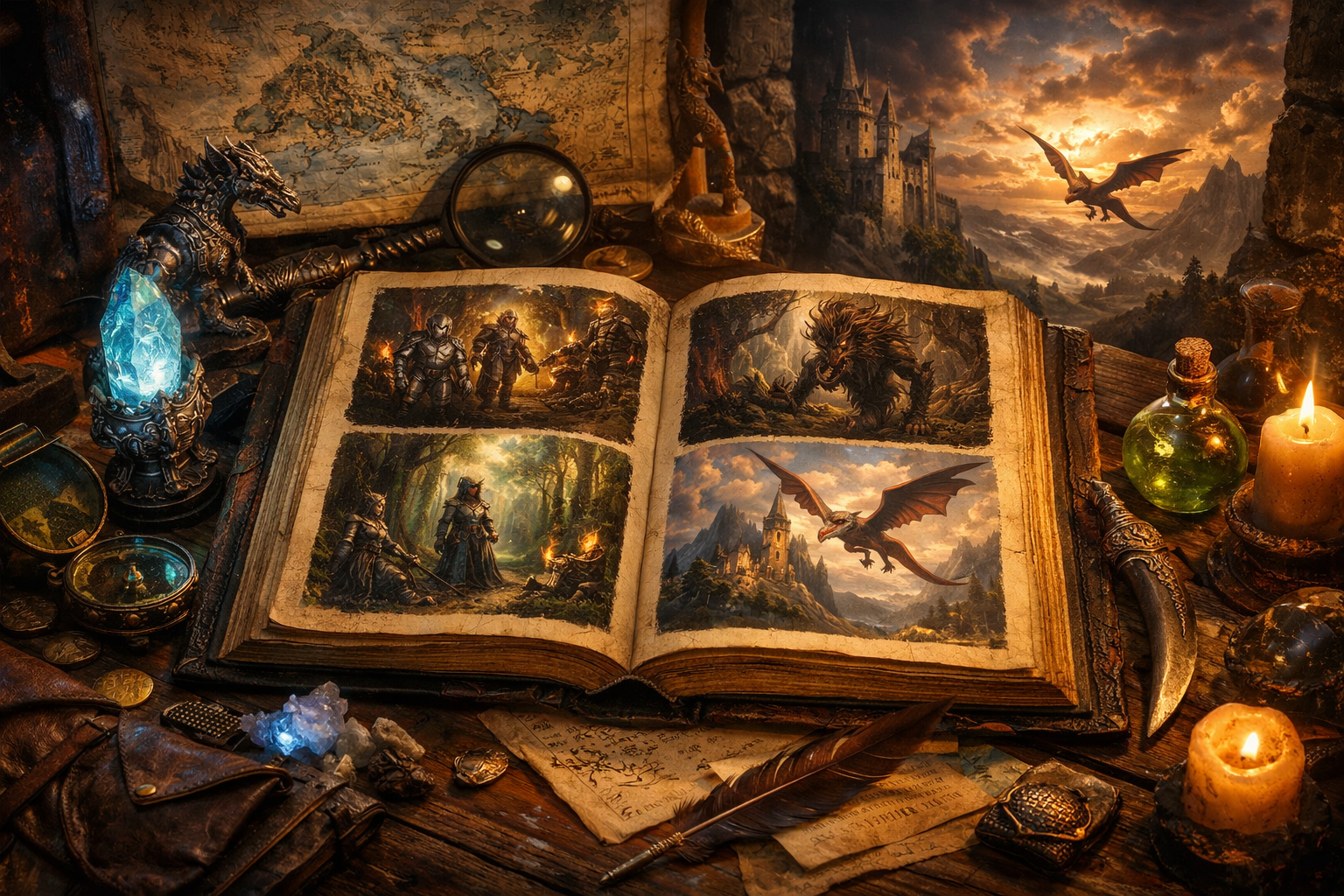
Why This Races of Legendaria Guide Matters — and What to Read Next
Legendaria is not simply a place of adventure. It is a place of people — complicated, ancient, funny, proud, gentle, and occasionally thorned people who have been building their civilizations long before any map was drawn of them. Understanding them is not merely a courtesy. It is the beginning of genuine wonder. The best stories that emerge from this world are not about battles won or treasures found. They are about the moment Ollie sat around a Wanderlight campfire and understood, for the first time, what it meant to truly belong somewhere. They are about Breck standing at the base of the Cinder Mountains and feeling