This post contains affiliate links. As an Amazon Associate I earn from qualifying purchases at no extra cost to you.
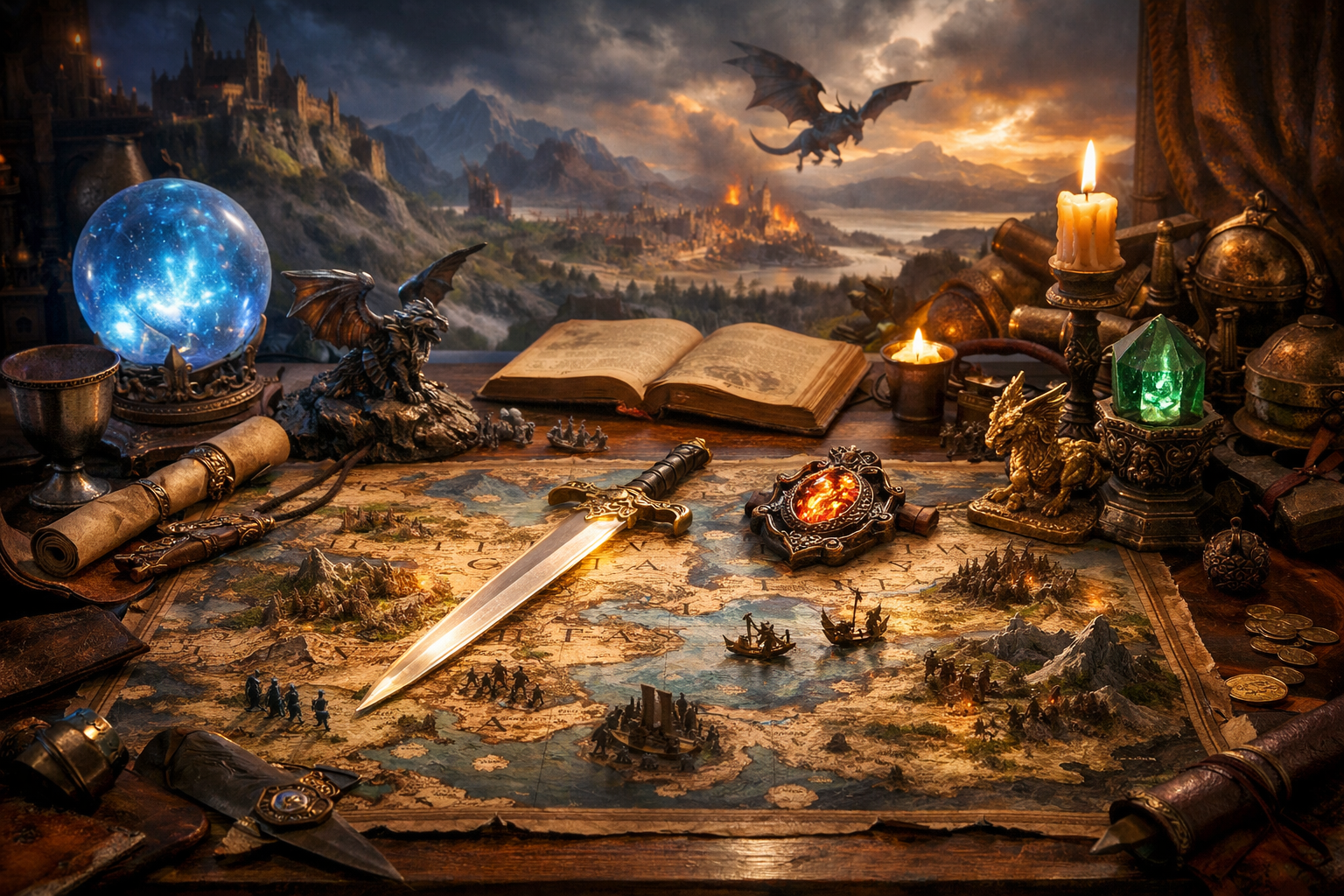
When Rory pried up the loose floorboard in her grandmother’s cottage and found an old sword wrapped in oilcloth, she expected rust and cobwebs. What she found instead were three sets of engravings — names, dates, and battle crests she did not recognize. Six months of relentless research later, she had pieced together something extraordinary: a timeline of the Great Wars of Legendaria history, the three cataclysmic conflicts that cracked the world open and stitched it back together in an entirely new shape. What Rory uncovered, scholars have debated for centuries. But the sword did not lie. The wars were real, and their echoes are everywhere.
Why the Great Wars of Legendaria History Still Matter Today
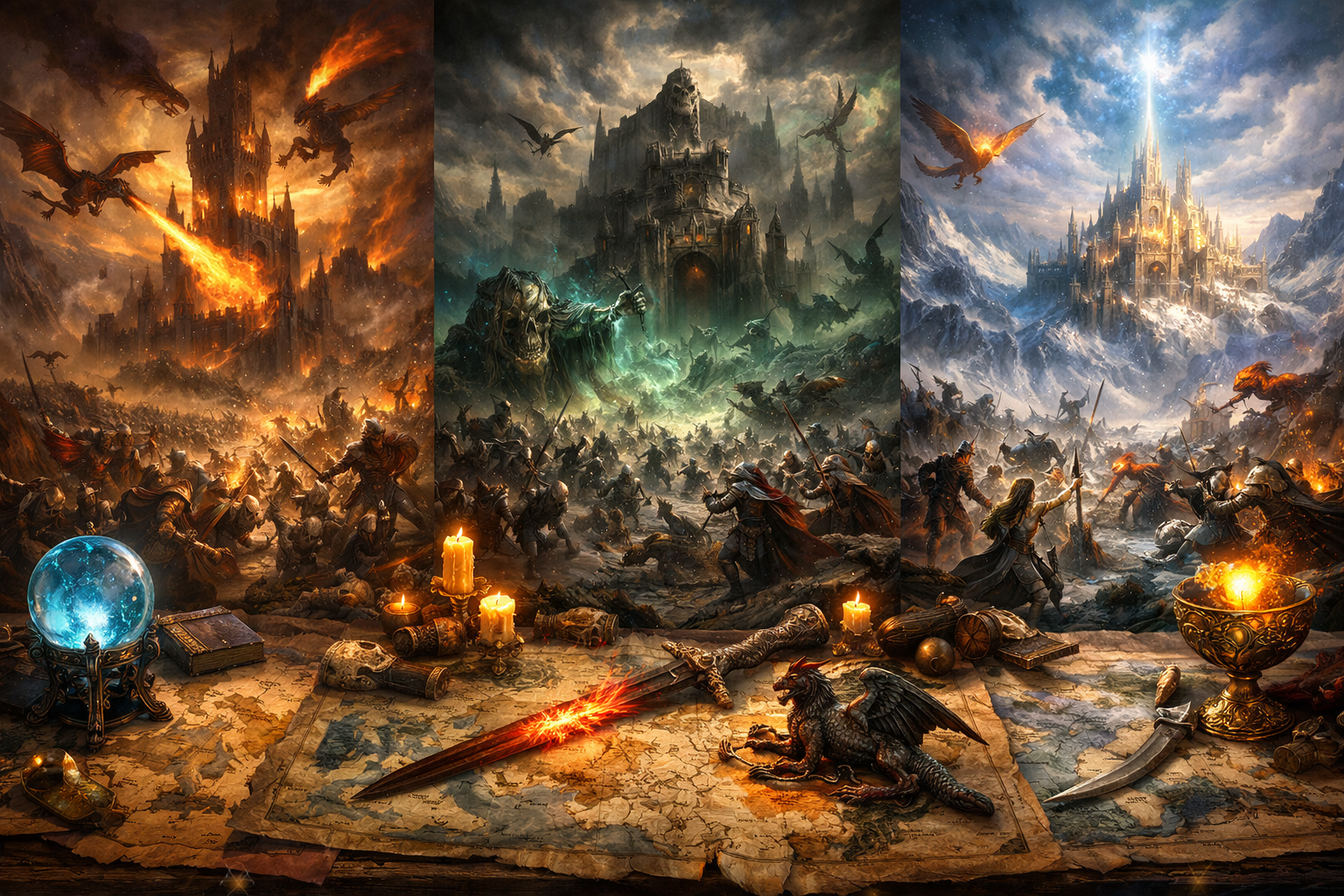
Legendaria was not always the layered, complicated world that young adventurers like Ollie and Jake wander through today, arguing about which mountain pass leads to the Obsidian Marshes and which one leads to certain doom. Before the Three Great Wars, Legendaria was younger, wilder, and dangerously unbalanced — a place where magical power pooled in the hands of a very few, where ancient creatures roamed without boundary, and where the borders between the mortal realm and the mythic deep were practically nonexistent. The wars did not simply redraw maps. They rewrote the fundamental rules of how the world works.
Understanding these conflicts is not merely an exercise in dusty history. Every enchanted artifact, every cursed forest, every alliance between human kingdoms and creature-clans that exists in Legendaria today was forged — or shattered — during one of these three pivotal periods. If you have ever wondered why the Thornwood Elves refuse to speak after sunset, or why the Saltmere Giants kneel before no throne, or why Dame DrizzlePox keeps a sealed iron chest that no one in her household is permitted to touch, the answers live somewhere in these wars.
The First Great War: The Sundering of the Veil
The First Great War is the oldest and the least completely understood. Chroniclers call it the Sundering of the Veil, though in the northern highlands it is sometimes called the Unmaking, and in the deep coastal territories it goes simply by the name the Long Dark. It began not with armies but with a tear — a catastrophic rupture in the boundary separating the mortal world from the mythic planes beneath it. Scholars still argue about the cause. Some blame an ancient sorcerer whose name has been deliberately erased from every surviving record. Others point to a natural weakening of what the old texts call the Threadwork, the invisible architecture holding Legendaria’s magical structure in place.
What is certain is that creatures not meant for the mortal world came flooding through. They were not evil, exactly — but they were vast, disorienting, and governed by entirely different laws of existence. The mortal peoples of early Legendaria, unprepared and fractured into dozens of small clans, had no framework for fighting back. The war that followed was less a battle of armies and more a desperate scramble for survival, cooperation, and understanding. It lasted nearly three hundred years and ended only when a coalition of human weavers, beast-speakers, and what the texts call the First Undying — creatures who had chosen to live on the mortal side of the Veil long before the rupture — worked together to reseal the boundary.
The price was enormous. Entire landscapes were altered. Some regions were permanently touched by mythic energy, which is why certain forests in modern Legendaria seem to breathe, and why particular rivers run in colors that have no name in any human language. For young readers hungry to understand how mythology and magic collide with real-world consequences, Medusa: A Fantasy Middle Grade Novel that Blends Greek Mythology with Dark Academia (The Myth of Monsters, 1) does something beautifully similar — it takes ancient myth and shows how it bleeds into every corner of a living world.
The Second Great War: The War of Crowns and Claws
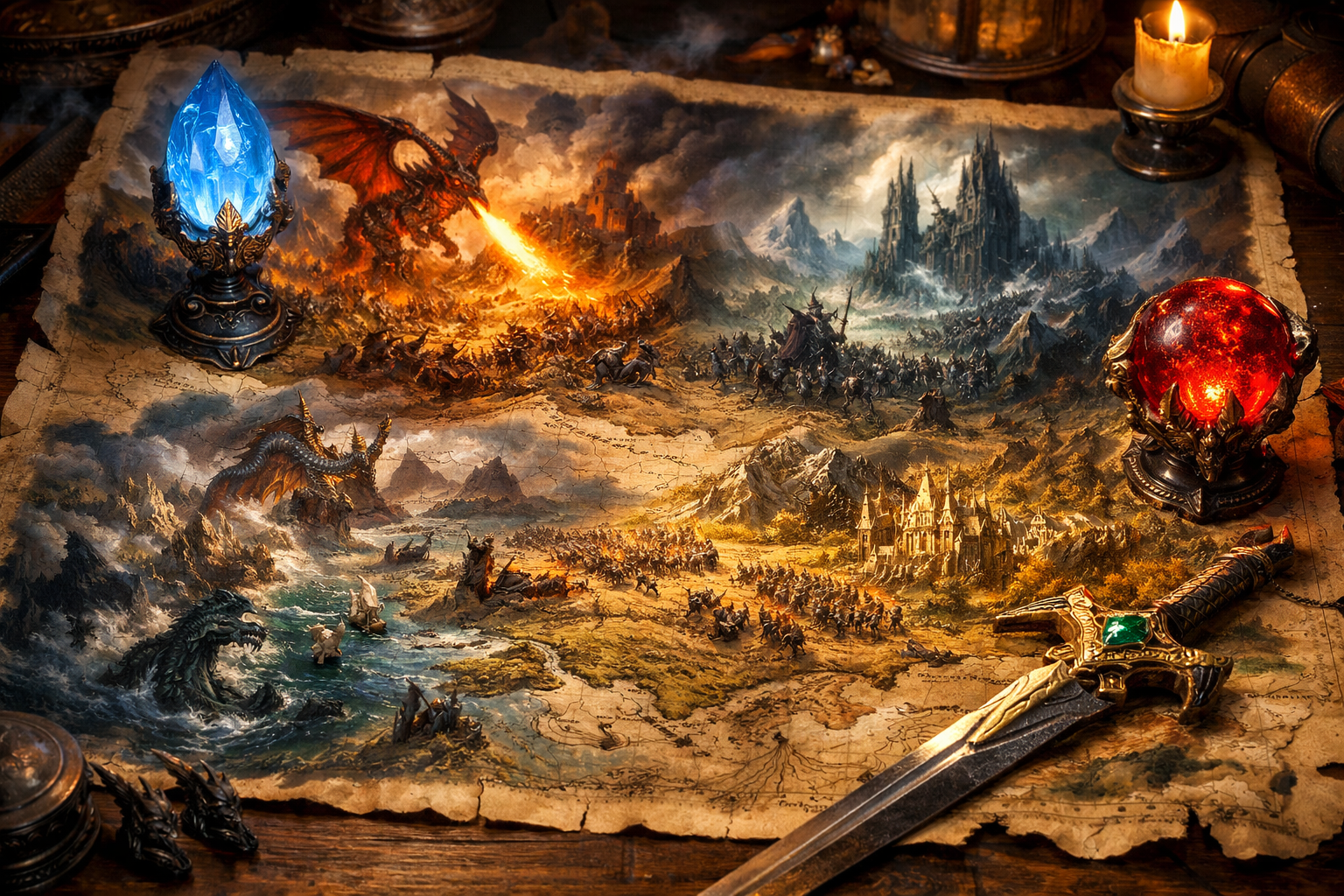
If the First Great War was a war against the unknown, the Second Great War was something far more recognizable: a war of ambition. In the centuries following the Sundering, Legendaria had slowly rebuilt itself. New kingdoms rose. Trade routes were established. The great creature-clans negotiated territories. A fragile but genuine peace had taken root. And then, as tends to happen when peace grows comfortable, someone decided they deserved more of it than everyone else.
The War of Crowns and Claws began with three simultaneous power grabs — the Embervast human empire pushing east into the Deepwood territories of the Thornwood Elves, the Stone Throne dwarven council seizing control of the underground trade arteries that the Saltmere Giants had maintained for generations, and a rogue mage collective called the Pale Chain attempting to exploit the old Veil rupture sites to harvest residual mythic energy for weapons. What followed was a sixty-year conflict of shifting alliances, betrayals, and some of the most consequential battlefield magic ever recorded in Legendaria’s history.
It is during this war that figures like Sir Stinkrot — the beloved, slightly odorous knight of legend — first appear in the historical record. Sir Stinkrot’s famous Crossing of the Moldenmere, in which he led a battalion of mismatched soldiers and one very stubborn river-dragon through enemy marshland in the dead of winter, is still taught in every Legendarian military academy that bothers to keep records. Dame DrizzlePox, meanwhile, earned her title and her infamy during the Siege of Ashveil Keep, where she reportedly held a fortified position for eleven days using nothing but weather manipulation, an impressive vocabulary, and sheer personal ferocity.
The Second Great War ended not with a decisive military victory but with the Treaty of the Five Roots, a remarkable document negotiated over eighteen months in a neutral forest clearing by representatives of every major faction. The treaty established the territorial boundaries, creature-clan protections, and magical usage laws that form the backbone of Legendarian governance to this day. For readers who love exploring how ancient civilizations and lost cities figure into world-building on this scale, Atlantis: The City of Ancients: A Middle Grade Fantasy Adventure is a brilliant companion read that captures that same sense of uncovering a civilization’s buried truth.
World-builders and tabletop enthusiasts who want to recreate the layered geological and territorial complexity of this era in their own campaigns would do well to explore the Renegade Game Studios Geologist’s Primer Tabletop RPG Sourcebook, 360-Page Hardcover Campaign and Worldbuilding Minerals Reference Guide. The depth it brings to terrain and resource-based conflict is remarkable.
The Third Great War: The Shadow Tide
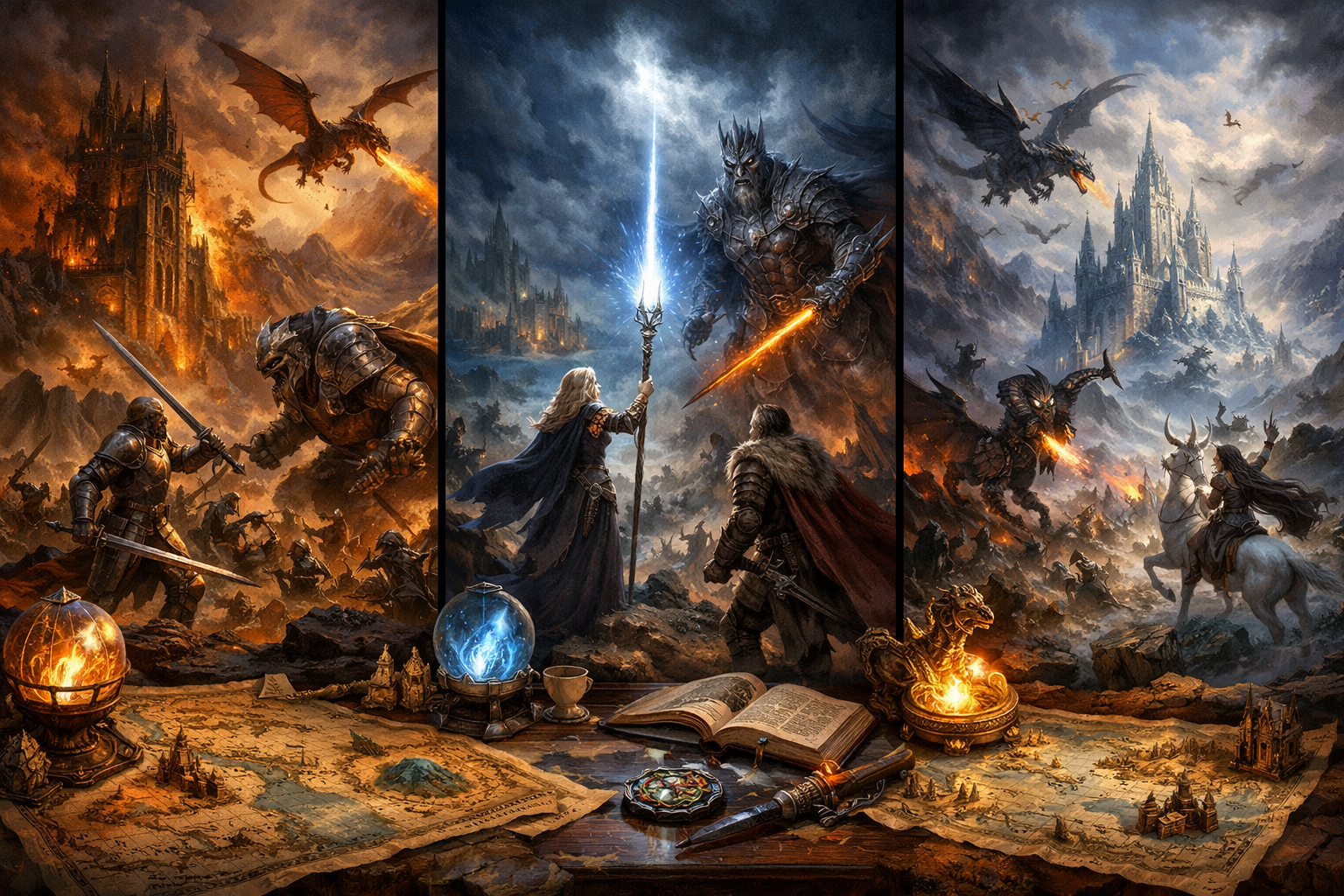
The Third Great War is the one carved into Rory’s sword. It is the most recent, the most personal, and in many ways the most frightening — because unlike the first two wars, the Shadow Tide had no clear enemy to negotiate with and no treaty that could end it cleanly. It arrived, as its name suggests, like a tide: gradually, then all at once.
Approximately four hundred years after the Treaty of the Five Roots, Legendaria began experiencing what historians would eventually call the Dimming — a slow, creeping suppression of magical energy across the land. Crops that had been nourished by proximity to old Veil-touched ground stopped flourishing. Creature-clans began losing abilities tied to the land’s magical current. Young mages born during the Dimming showed dramatically reduced power. At first it was dismissed as a natural cycle. Then, as the effects became undeniable, the investigation began.
What they found was a network of deep-world entities — not creatures who had passed through the Veil like those in the First War, but something older and more deliberate, working from underneath the Threadwork itself to consume it. The Shadow Tide, as the conflict came to be called, required not armies but specialists: trackers, lore-keepers, beast-speakers, and children, notably, who had been born during the Dimming and who, paradoxically, had developed a unique sensitivity to the consumed magical pathways that adults could no longer detect.
This is where young heroes like Avery and Breck enter the historical record most prominently. The children of the Dimming became Legendaria’s most valuable scouts, leading elder warriors to the source-points of Shadow Tide corruption throughout a war that lasted nearly forty years. The sword Rory found had been carried by one such child-scout, a detail confirmed by the third crest engraved on its blade — the mark of the Brightfinders, the officially recognized order of young pathfinders who turned the tide of the Shadow War.
For those who want to feel the emotional heart of that kind of story — the child who carries the world’s hope and doesn’t fully understand the weight of it yet �� The Girl Who Drank the Moon (Winner of the 2017 Newbery Medal) is an essential read. It captures that exact tension between childhood innocence and mythic destiny more beautifully than almost anything else in the genre.
Those interested in bringing Shadow Tide-style campaigns to life at the tabletop will find The Ultimate d20 RPG Systems: Create Your Own Tabletop Adventures an invaluable guide for designing the kind of multi-faction, long-arc conflicts this war represents. And for younger players just stepping into collaborative world-building for the first time, the Renegade Game Studios My Little Pony RPG Knights of Canterlot Sourcebook offers a wonderfully accessible entry point into fantasy campaign play.
What the Three Wars Left Behind — And Why Every Legendarian Reader Should Know Them
The Great Wars of Legendaria history did not simply produce winners and losers. They produced a world. Every kingdom boundary, every magical law, every creature-clan tradition, every sacred site and forbidden ruin in Legendaria today is a direct inheritance of those three conflicts. When Ollie and Jake argue about which road to take through the Ashveil region, they are unknowingly navigating territory shaped by the Second Great War’s battle lines. When Avery studies the old maps and notices that certain rivers seem to defy geography, she is looking at the long-healed scars of the First War’s Veil rupture. And when Rory holds that old sword and reads the three crests engraved in its blade, she is holding the entire arc of a world’s survival in her hands.
For readers who want to go deeper into the mythological traditions that inspire world-building of this kind, the Encyclopedia of Mythical Creatures — Celtic and British Isles Mythology is a stunning illustrated reference covering the real-world legendary beasts and spirits that Legendaria’s own creature-clans draw upon. Pair that with the Illustrated Stories from the Greek Myths: A Collection of Six Classic Greek Myths and Legends Retold for Kids for younger readers who are just beginning to discover how ancient stories shape the fantasy worlds they love, and you have an extraordinary foundation for any Legendaria-inspired reading journey.
The Three Great Wars are not history for history’s sake. They are the reason the world breathes the way it does. And if a sword buried under a grandmother’s floorboard can send one determined young researcher down a six-month spiral of discovery — imagine what reading about them might do for yours.