The hero’s journey isn’t just a storytelling template — it’s a document of what a culture considered transformative, what trials it thought built character, and what kind of person it most wanted to produce. Reading any legendary hero narrative with that context makes the whole thing richer. What fascinates me most is that the accidental victory — the win that stumbles in through the back door while the hero is busy doing something else entirely — appears across mythological traditions from the Greeks to the Norse to the folk cycles of West Africa, and it’s never truly accidental at all; it’s the story’s way of saying that preparation, character, and a certain stubborn attentiveness to the world are exactly what luck looks like up close. Chapter 4 leans right into that tradition, and I think that’s worth pausing on, because the cultures that told these kinds of stories weren’t celebrating incompetence or coincidence — they were making a very precise and somewhat radical argument about what heroism actually requires.
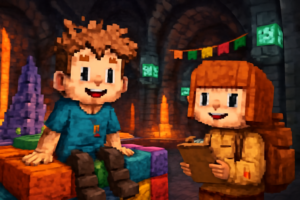
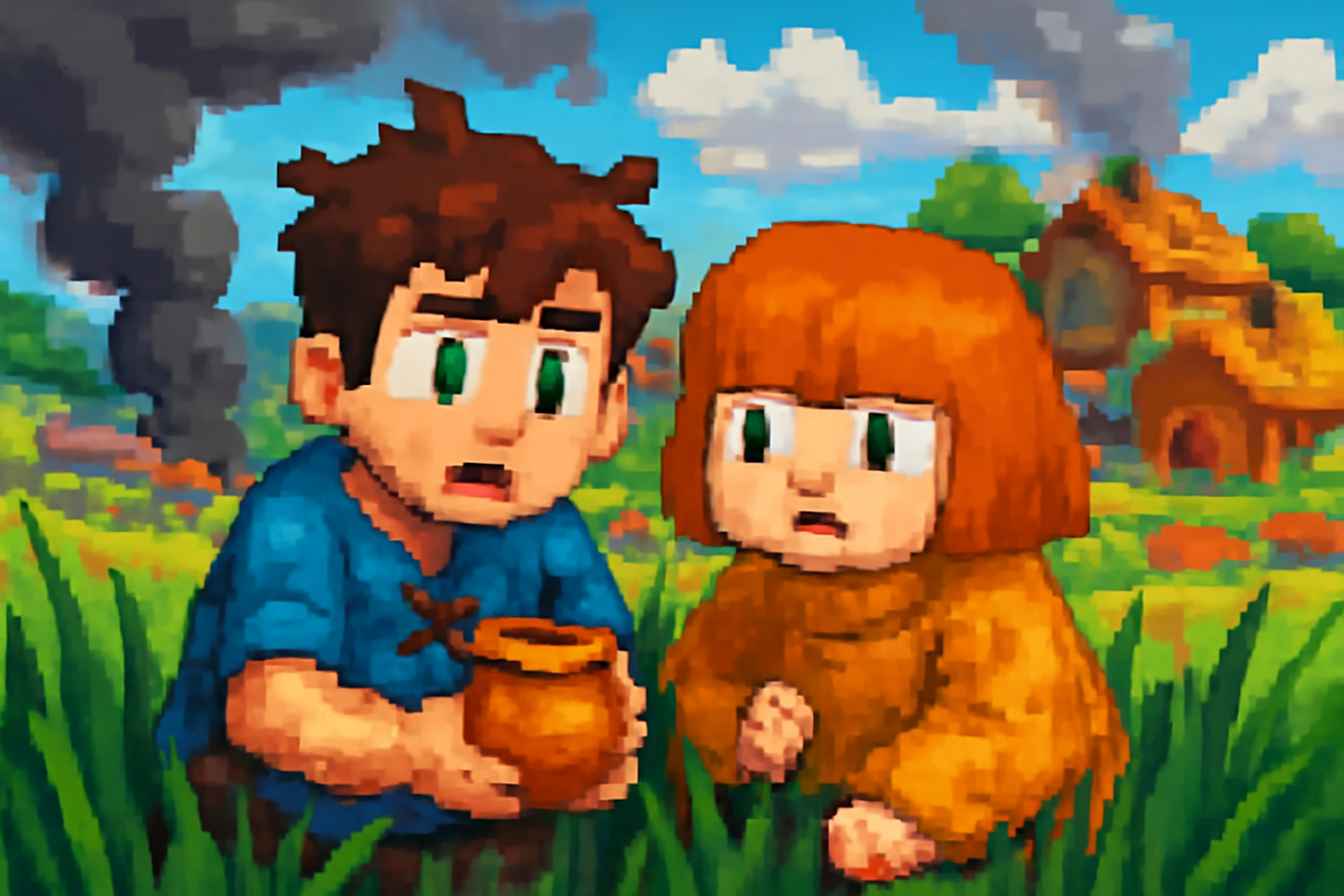
“Ollie!” Biscuit’s voice came hissing through the tall grass to my left. “Did you get it? All of it? Tell me you got ALL of it!”
“Every drop,” I whispered back, holding up the little clay pot full of golden resin. It smelled faintly of oak bark and something warm, like summer. “How’s the distraction going?”
Biscuit poked her copper bowl-cut head through the grass. Her chunky yellow sweater had a grass stain on the mushroom sleeve, which meant things had been at least slightly chaotic. “Baron Blaze has been telling me his entire life story for the last twelve minutes,” she said. “Did you know he once reorganized all the Nether fortresses by SIZE? He made a CHART. He showed me the chart, Ollie. It was laminated.”
I pressed my lips together so I wouldn’t laugh. “He laminated it?”
“With GOLD trim.” She grabbed my arm. “Come on. He’ll finish the story eventually and then he’ll notice you’re gone and then—”
A sound like a small thunderstorm wearing a very fancy hat rolled across the meadow.
“WHERE,” boomed Baron Blaze, “IS THE SHORT ONE WITH THE RIDICULOUS HAIR?”
I looked at Biscuit. “He means me.”
“He absolutely means you,” she confirmed.
The Game That Captures Accidental Chaos
If Ollie’s stumbling-into-victory resonates with you, here’s a game where the best plans fall apart in the most entertaining ways. Horrified: Greek Monsters is all about working together against impossible odds—and sometimes your messiest moment becomes your winning move.
What works
- Cooperative gameplay means you’re rooting for each other’s “accidental victories”—just like Ollie’s unexpected win—instead of competing
- Features iconic Greek monsters (Medusa, the Hydra, Minotaur) that bring the mythology directly into your living room, making the chapter’s world feel tangible
- Unpredictable board situations keep players improvising and adapting—rewarding clever thinking over rigid strategy, just like the chapter’s theme
What doesn’t
- Plays best with 2–5 players, so it requires gathering a group rather than solo play
- Game length runs 30–60 minutes, which means you’ll need a solid chunk of uninterrupted time to finish
This game works beautifully for ages 10 and up, and it’s genuinely fun for mixed-age groups—no adult “referee” needed, though an older sibling or parent playing alongside younger kids makes it richer. Ravensburger Horrified: Greek Monsters
About This Article

Written by Elias Blackwood. Elias Blackwood has spent 25 years as an obsessive collector of world mythology and folklore, from Greek and Norse epics to Japanese yokai and West African trickster tales — entirely self-taught, for the love of it. His reading draws on comparative mythology, cultural anthropology, and a personal library of translations most people have never heard of. More about this site.
Verify this against a primary source
Specifics change, and your situation may differ from the one described here. These are the authorities worth checking directly:
- Theoi Project — Greek mythology texts with primary source citations
- Perseus Digital Library — classical texts in the original and in translation
- Encyclopaedia Britannica — edited reference for figures and traditions