Chapter 16: The Crystal Oasis and a Cactus Who Smiled

Ollie and Biscuit — Chapter 16, scene 1

The gods of any mythology aren’t arbitrary — they’re a direct map of what a society considered most powerful, most unpredictable, and most worth appeasing. Spend enough time with any pantheon and you’ll understand more about the culture that created it than almost any other source. What strikes me every time I dig into a legendary world like this one is how the guardian figures — the threshold protectors, the ones you have to face before you reach the sacred center — are almost never simple villains; in Mesopotamian myth, in Celtic tradition, in the great hero cycles of Mesoamerica, the being standing between the hero and the prize is usually wounded, carrying a grief the world gave them before the hero ever arrived. Captain Cactus, presiding over what the lore frames as a Crystal Oasis — a classic liminal space, a place of impossible abundance at the edge of a wasteland — fits squarely into that archetype of the sorrowful sentinel, the guardian whose hostility is really a disguised cry for someone to finally see them clearly. That’s not a game mechanic or a narrative convenience; that’s one of the oldest storytelling structures humans have ever produced, and it’s worth slowing down to appreciate exactly why it still hits so hard.

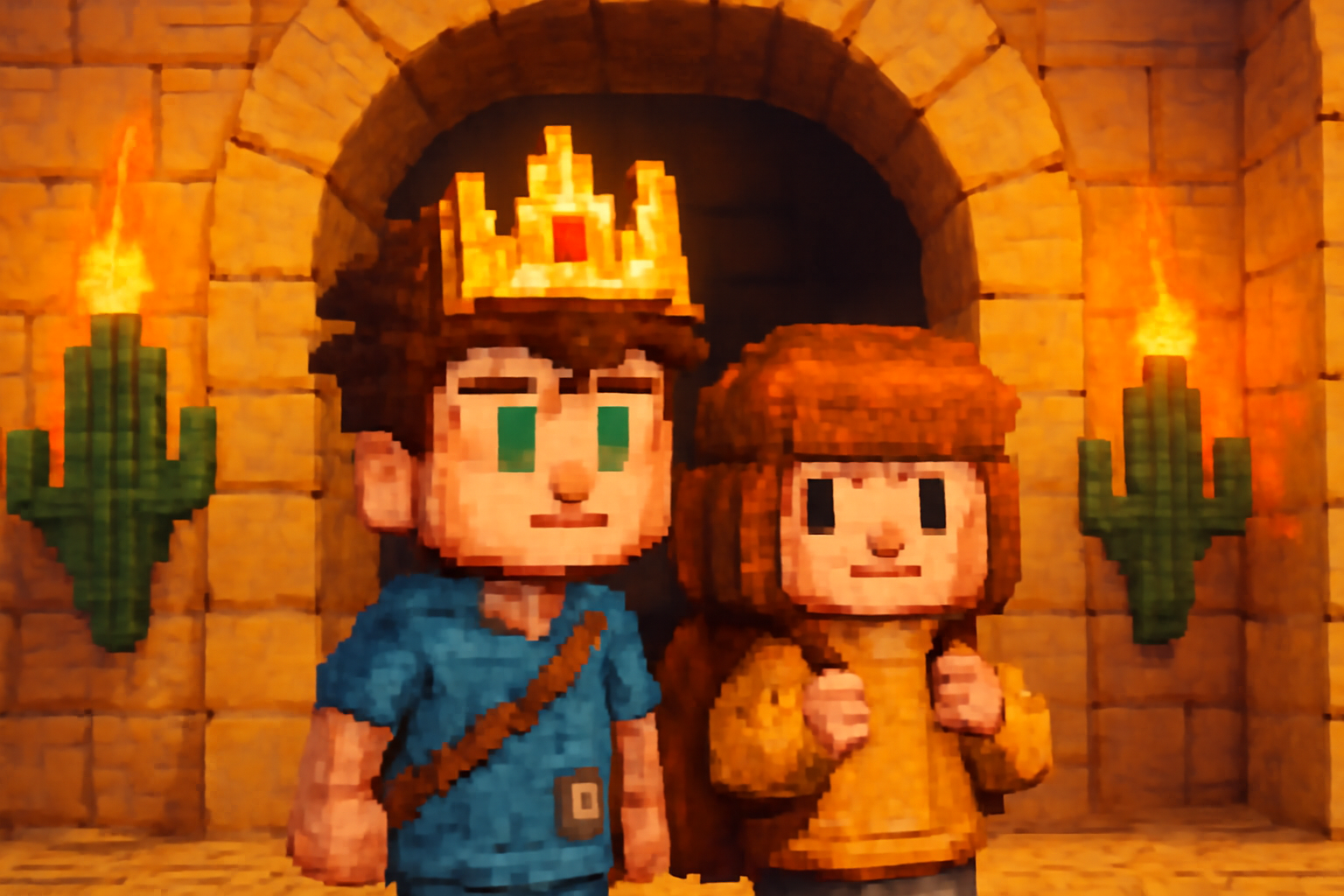
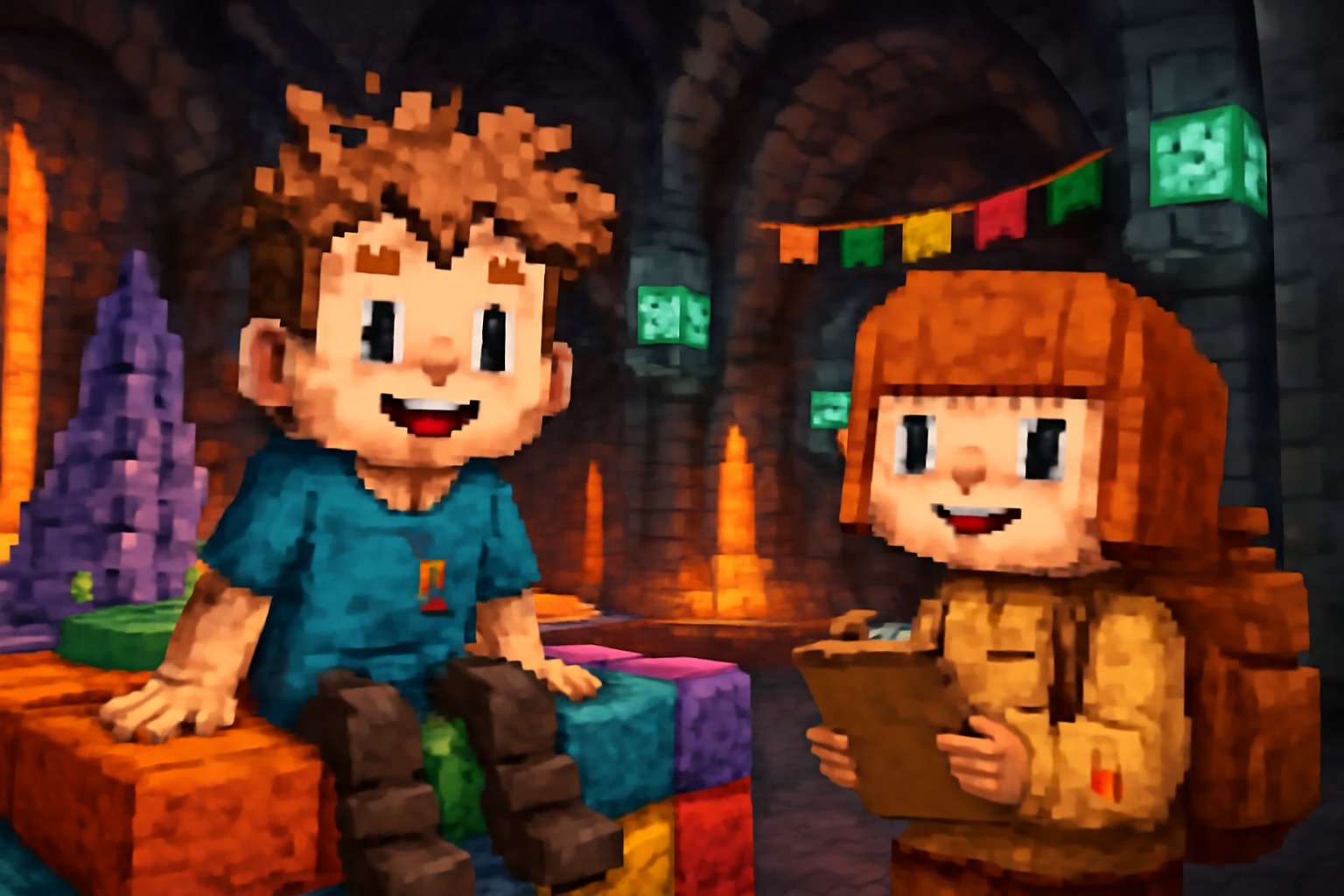
“Ready?” Biscuit whispered beside me. She had her backpack clasped shut, her lucky button right on top where she could reach it. She’d been carrying that button since Chapter Five without ever once using it sensibly, but tonight I noticed her fingers weren’t even hovering over it nervously. She looked calm. Decided.

I nodded. “I have a plan,” I said.

Biscuit’s jaw dropped so far it nearly hit the sandstone floor. “You have — I’m writing this down —”

“Biscuit.”

“Right. Yes. Let’s go.”

Ollie and Biscuit — Chapter 16, scene 1

This post contains affiliate links. As an Amazon Associate, I earn from qualifying purchases at no extra cost to you. If Chapter 16 had you dreaming about building your own Crystal Oasis at home, the TerraGreen Creations Succulent Planter Kit is honestly the perfect place to start. It comes with everything — succulent soil, gravel, pebbles, and moss — so you can layer up a tiny desert world that looks like it was pulled straight out of this chapter. I love that it’s beginner-friendly but still feels like a real crafting quest with multiple materials to work with.

Read more

Chapter 12: The Most Accidentally Elegant Build in History

Ollie and Biscuit — Chapter 12, scene 1

Sacred sites and legendary places hold a special interest for me because they exist at the intersection of physical geography and cultural meaning — real locations transformed by story into something mythological. Everywhere humans have lived, they’ve done this, and the consistency of the impulse is remarkable. What fascinates me is how accidental beauty so often becomes the most enduring kind — the shrine that was never planned as a shrine, the monument that grew from pure necessity into something transcendent, the structure whose elegance no single architect intended. Across cultures, from the organic sprawl of ancient Delphi to the improvised sacred geometries of folk traditions, the most mythologically resonant places are frequently the ones that emerged through survival, adaptation, and happy accident rather than deliberate design. That tension between intention and emergence is exactly what makes the build we’re examining in this chapter so worth unpacking — because it turns out the ancient world had a great deal to say about what happens when something accidentally becomes sacred.

“Forty-two minutes when we started,” Biscuit announced, consulting the little hourglass she’d pulled from her bag, “which means we now have eleven minutes and — oh no.”

“Eleven minutes is great!” I said, only partially believing it.

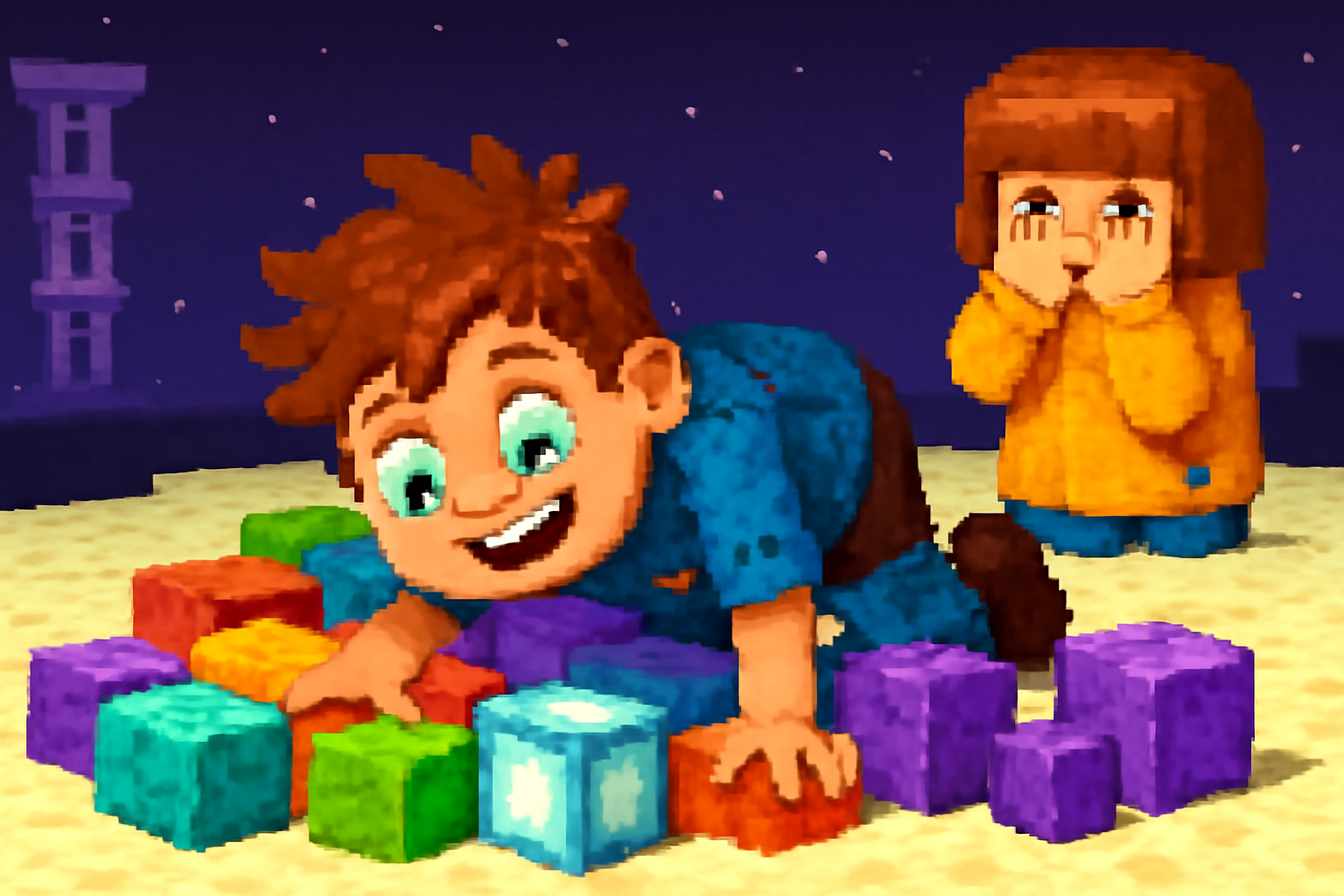
The Elegance Duel platform was enormous — a flat stretch of endstone as wide as Sproutville’s entire square, glowing faintly purple in the dim End sky. Two building zones were marked out with thin lines of amethyst dust: one on the left, one on the right. The Ender Earl was already in his zone, working in absolute silence. His structure was breathtaking. A symmetrical tower of purpur blocks, each one perfectly aligned, rising in neat identical tiers. Sea lanterns placed at exact intervals. Everything level. Everything square.

It was the most organized thing I had ever seen. I hated it a little bit.

I stepped into my zone, set all the materials in a careful pile, and immediately tripped over the pile.

Ollie and Biscuit — Chapter 12, scene 1

This post contains affiliate links. As an Amazon Associate, I earn from qualifying purchases at no extra cost to you. If Chapter 12 got your Greek mythology gears turning, you NEED to check out Ravensburger Horrified: Greek Monsters. This cooperative strategy game throws you and up to four friends straight into the chaos of facing Medusa, the Minotaur, and more — basically everything we talk about on this blog, but now you’re actually in it. The teamwork mechanic means your whole squad has to think critically together, which honestly makes it feel like you’re building your own accidentally elegant strategy in real time.

Read more

Chapter 8: The Day the Sunrise Came Back

Ollie and Biscuit — Chapter 8, scene 1

Some of the most interesting historical material is the stuff that almost didn’t survive — the fragmentary records, the suppressed traditions, the oral histories that only made it into writing centuries later. There’s something powerful about recovering those threads and understanding what they meant to the people who carried them. And that’s exactly what makes the mythology of returning light so compelling to dig into: across dozens of cultures — Norse, Egyptian, Japanese, Mesoamerican — the moment when the sun comes back isn’t just a calendar event, it’s a cosmic reckoning, a story that communities told themselves about survival, about whether the world would keep its promises. What we’re exploring in this chapter sits right at the intersection of those ancient traditions and the kind of legendary world-building that takes them seriously, tracing how figures like Biscuit carry the weight of that archetypal moment — the desperate, almost irrational act of trusting that the light will return — even when every rational instinct says it won’t. This is the chapter where the stakes stop being abstract, and I think once you see how deep the historical roots of this narrative go, you’ll feel the full force of what’s actually happening here.

“About forty percent of one,” I whispered back. She nodded like that was completely acceptable, which honestly made me feel great.

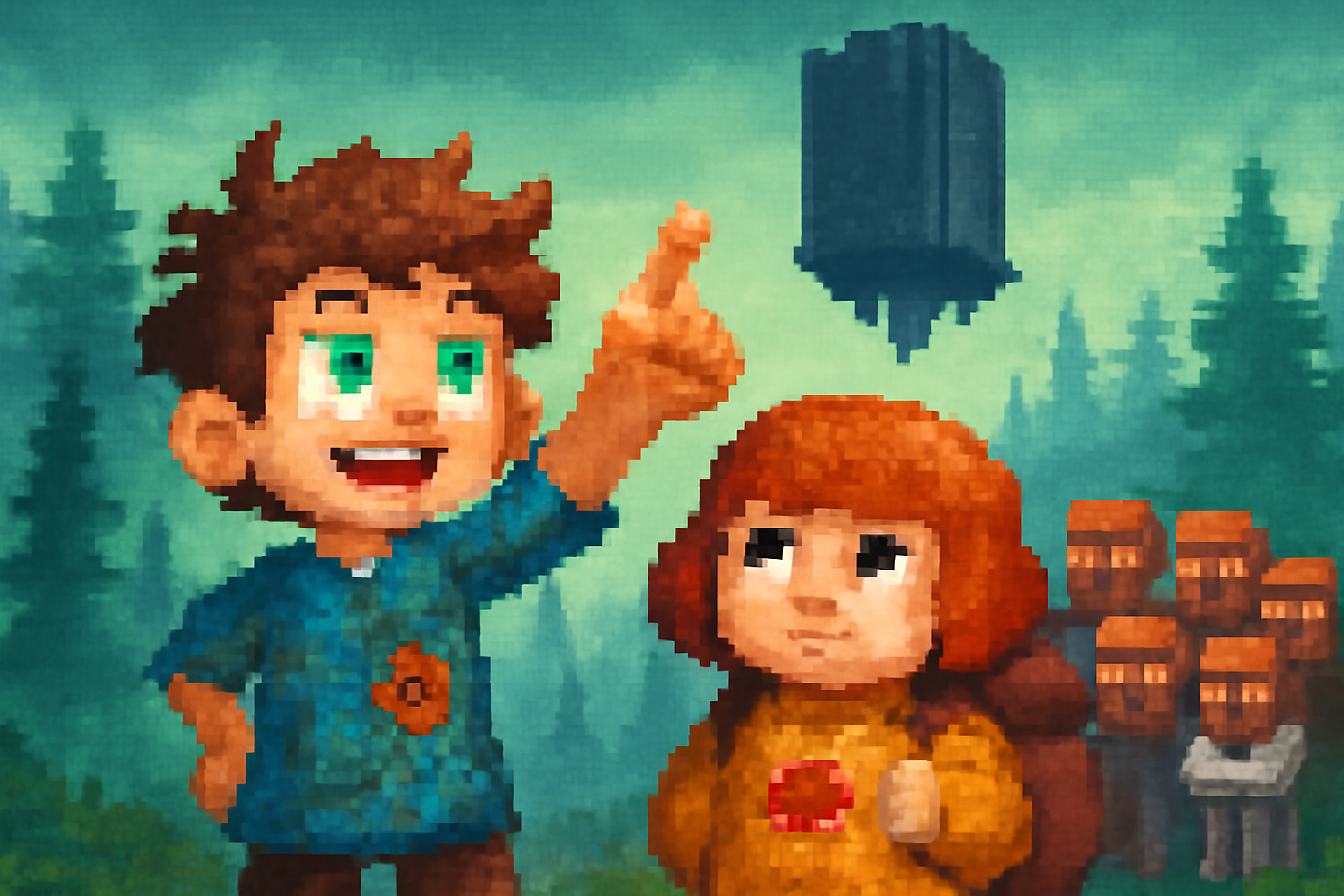
The fog maze was behind us now. We’d found our way out by following the smell Biscuit had been tracking — something she described as “burnt toffee mixed with gray crayon and a very sad Tuesday” — which turned out to be the base of Sky Tower, a tall, crooked structure of dark stone that floated just above the treeline like it had forgotten to come back down. A rickety staircase spiraled up its outside, and at the very top, through the haze, I could just barely see the glow of hundreds of glass jars.

Stolen sunrises. Stolen auroras. All of them trapped up there while the rest of us lived under a flat gray sky that smelled, according to Biscuit, of old socks and sadness.

And somewhere in that tower: the stolen hats.

Ollie and Biscuit — Chapter 8, scene 1

This post contains affiliate links. As an Amazon Associate, I earn from qualifying purchases at no extra cost to you. If Chapter 8 had you totally hooked on the idea of the sun returning to the sky, then you NEED the Treasury of Greek Mythology: Classic Stories of Gods, Goddesses, Heroes & Monsters on your shelf. National Geographic packed this thing with stunning full-color artwork and rich storytelling that brings solar myths, sky gods, and legendary heroes to life in a way that actually makes you feel like you’re *there*. It’s the perfect companion read for anyone who wants to go deeper into the mythological world we’re exploring in this chapter series.

Read more

Chapter 4: One Very Accidental Victory

Ollie and Biscuit — Chapter 4, scene 1

The hero’s journey isn’t just a storytelling template — it’s a document of what a culture considered transformative, what trials it thought built character, and what kind of person it most wanted to produce. Reading any legendary hero narrative with that context makes the whole thing richer. What fascinates me most is that the accidental victory — the win that stumbles in through the back door while the hero is busy doing something else entirely — appears across mythological traditions from the Greeks to the Norse to the folk cycles of West Africa, and it’s never truly accidental at all; it’s the story’s way of saying that preparation, character, and a certain stubborn attentiveness to the world are exactly what luck looks like up close. Chapter 4 leans right into that tradition, and I think that’s worth pausing on, because the cultures that told these kinds of stories weren’t celebrating incompetence or coincidence — they were making a very precise and somewhat radical argument about what heroism actually requires.

“Ollie!” Biscuit’s voice came hissing through the tall grass to my left. “Did you get it? All of it? Tell me you got ALL of it!”

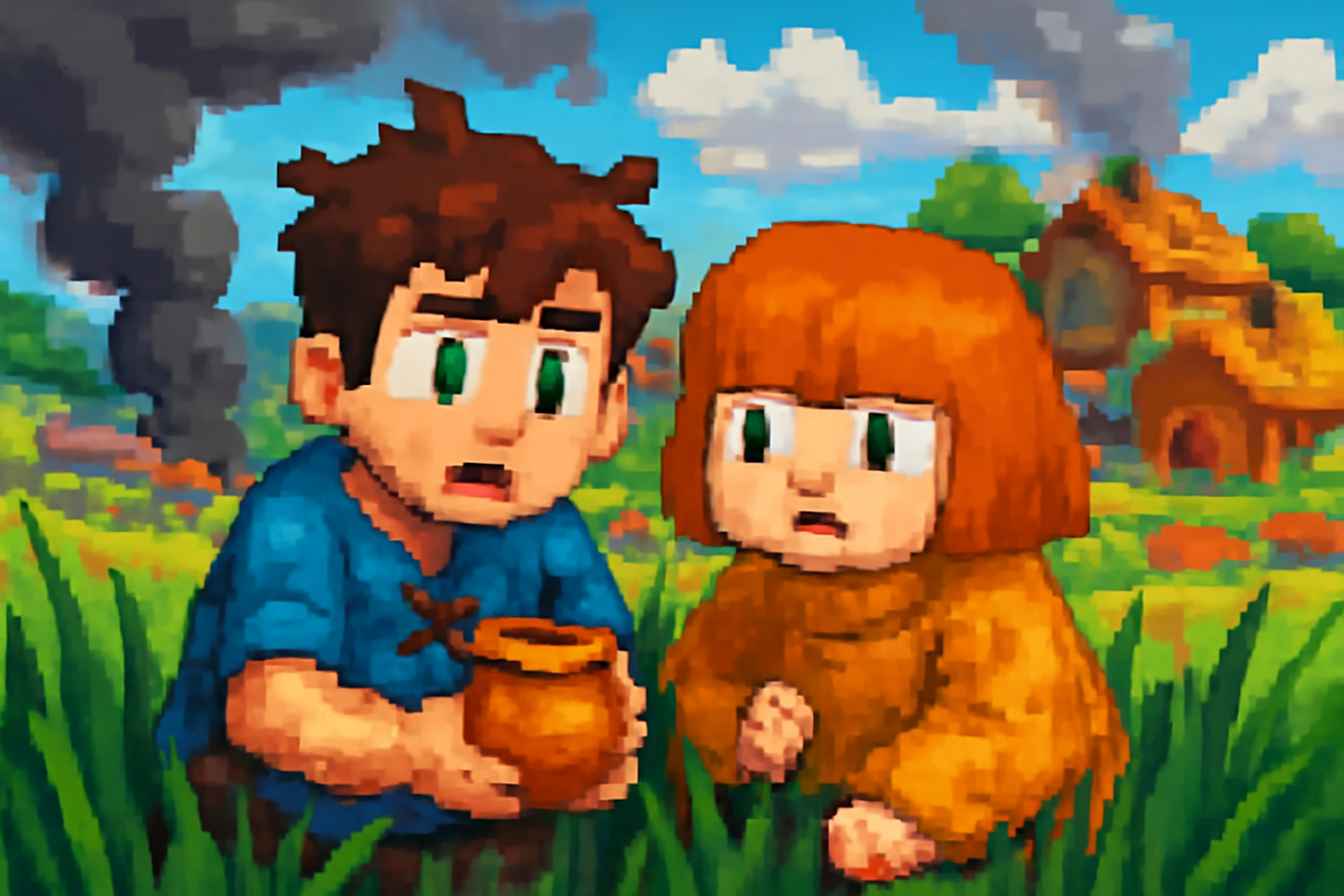
“Every drop,” I whispered back, holding up the little clay pot full of golden resin. It smelled faintly of oak bark and something warm, like summer. “How’s the distraction going?”

Biscuit poked her copper bowl-cut head through the grass. Her chunky yellow sweater had a grass stain on the mushroom sleeve, which meant things had been at least slightly chaotic. “Baron Blaze has been telling me his entire life story for the last twelve minutes,” she said. “Did you know he once reorganized all the Nether fortresses by SIZE? He made a CHART. He showed me the chart, Ollie. It was laminated.”

I pressed my lips together so I wouldn’t laugh. “He laminated it?”

“With GOLD trim.” She grabbed my arm. “Come on. He’ll finish the story eventually and then he’ll notice you’re gone and then—”

A sound like a small thunderstorm wearing a very fancy hat rolled across the meadow.

“WHERE,” boomed Baron Blaze, “IS THE SHORT ONE WITH THE RIDICULOUS HAIR?”

I looked at Biscuit. “He means me.”

“He absolutely means you,” she confirmed.

Ollie and Biscuit — Chapter 4, scene 1

This post contains affiliate links. As an Amazon Associate, I earn from qualifying purchases at no extra cost to you. If Chapter 4’s accidental victory got your heart racing, you NEED to check out Ravensburger Horrified: Greek Monsters. This cooperative board game throws you and up to four friends straight into the chaos of facing creatures like Medusa and the Minotaur — and trust me, nothing feels more epic than pulling off a last-second win together. It’s the perfect way to live out your own accidental victory moment, except this time you’re actually planning it. Mostly.

Read more

Chapter 20: I Meant to Do All of That

Ollie and Biscuit — Chapter 20, scene 1

Before writing systems existed, oral tradition was the entire archive of human knowledge. Stories weren’t entertainment — they were encyclopedias, legal codes, religious texts, and historical records all at once. That’s the lens I always bring when I dig into legendary lore like this. What strikes me about a chapter titled “I Meant to Do All of That” is how perfectly it captures one of mythology’s most enduring archetypes: the trickster hero, the figure who stumbles into chaos, reshapes it through cunning or sheer audacity, and then claims the outcome as intention — think Loki mid-scheme, Odysseus improvising after yet another divine wrench thrown into his plans, or Anansi spinning a disaster into a story worth telling for generations. That retroactive mastery isn’t just a punchline; it’s a survival strategy baked into the bones of legendary tradition, and unpacking why it resonates so deeply across cultures is exactly the kind of rabbit hole I live for.

“I meant to do that,” I said into the wool.

“You always do,” said Biscuit, and I could hear the smile in her voice even with my face buried in approximately forty stolen wool blocks.

I pushed myself upright and looked around. The palace was extraordinary, even now — enormous vaulted ceilings of dark stone, lava falls running down carved channels along the walls, and every kind of glittering block imaginable stacked in careful towers: amethyst clusters from the End, festival banners from Blockville, rainbow wool from Rainbow Meadows, sea lanterns from places I couldn’t even name. Mira had collected it all, every beautiful thing, and brought it here where nobody could see it.

That was the part that always made my chest feel a little twisty.

Ollie and Biscuit — Chapter 20, scene 1

This post contains affiliate links. As an Amazon Associate, I earn from qualifying purchases at no extra cost to you. If you love the chaotic, “I totally meant to do that” energy of mythology, you NEED Ravensburger Horrified: Greek Monsters in your game night rotation. You and up to four friends team up to outsmart creatures straight out of the myths we love — Medusa, the Minotaur, Cerberus — and trust me, the cooperative gameplay means you can absolutely blame your teammate when things go sideways. Strategic, replayable, and genuinely thrilling for anyone 10 and up.

Read more