
The Myths of Dionysus: From Birth to Divine Ascension
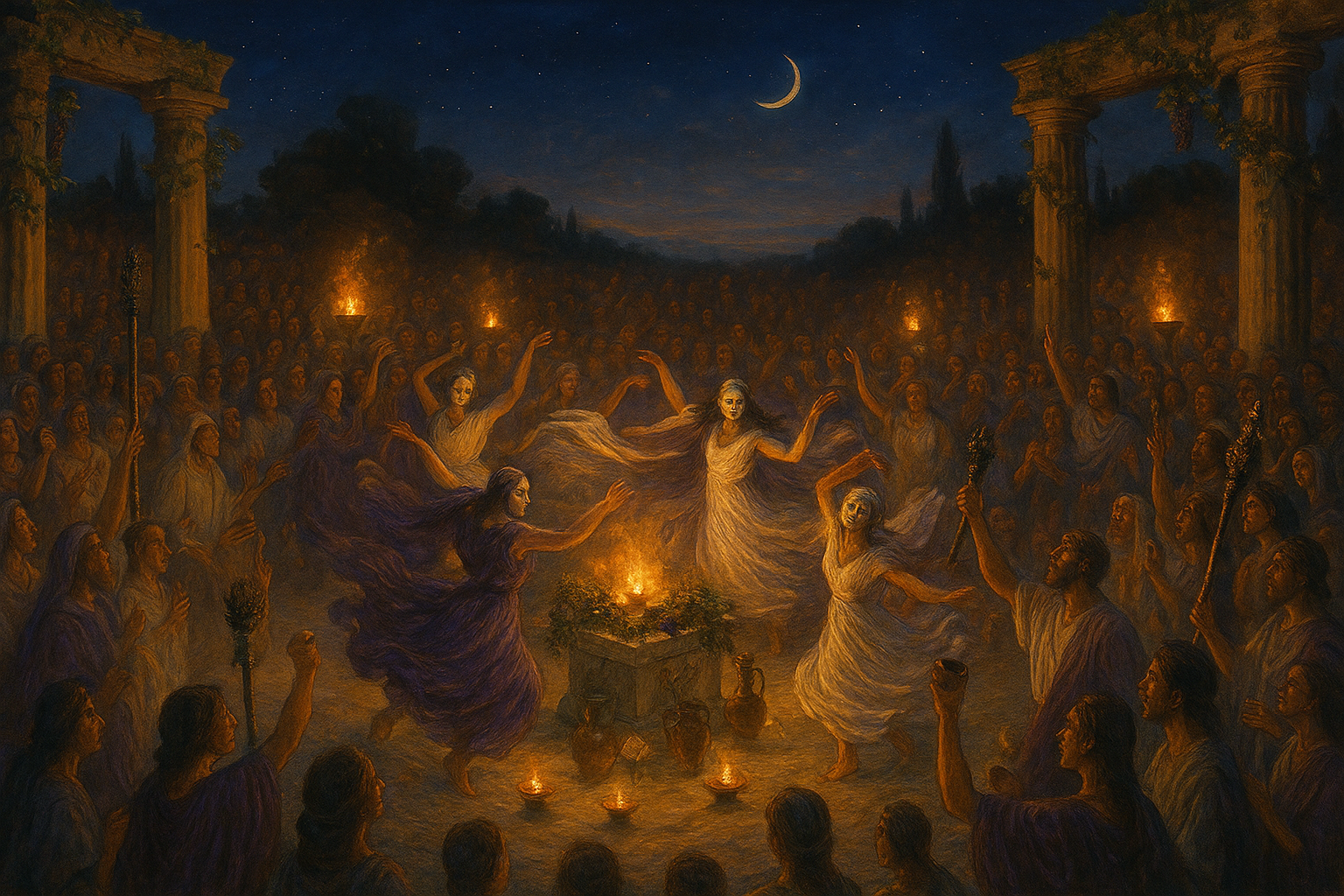
A dramatic ancient Greek ceremonial scene unfolds in a torch-lit outdoor amphitheater at dusk, where hundreds of devotees gather in flowing white and purple robes to honor Dionysus through sacred rituals. In the center, masked dancers whirl ecstatically around a marble altar adorned with grapevines, wine amphoras, and flickering oil lamps, their movements creating dynamic swirls of fabric against the golden firelight. The crowd forms concentric circles, some participants holding thyrsus staffs topped with pinecones and ivy, others raising wine cups toward the darkening sky filled with stars. Ancient stone columns draped in grape clusters and ivy frame the scene, while the warm glow of braziers illuminates faces expressing joy, reverence, and spiritual connection. The atmosphere pulses with communal energy as wine flows freely, musicians play reed pipes and drums in the shadows, and the entire gathering moves in harmonious celebration beneath a crescent moon, embodying the intoxicating power and divine ecstasy associated with the god of wine and revelry.

Ancient Greek mythology presents few figures as complex and fascinating as Dionysus, the god of wine, ecstasy, and divine madness. His journey from miraculous birth to divine recognition weaves through some of mythology’s most captivating tales. Moreover, these stories reveal profound themes about transformation, acceptance, and the struggle between civilization and wild nature. The Miraculous … Read more
Dionysus: The Greek God of Wine, Ecstasy, and Ritual Madness

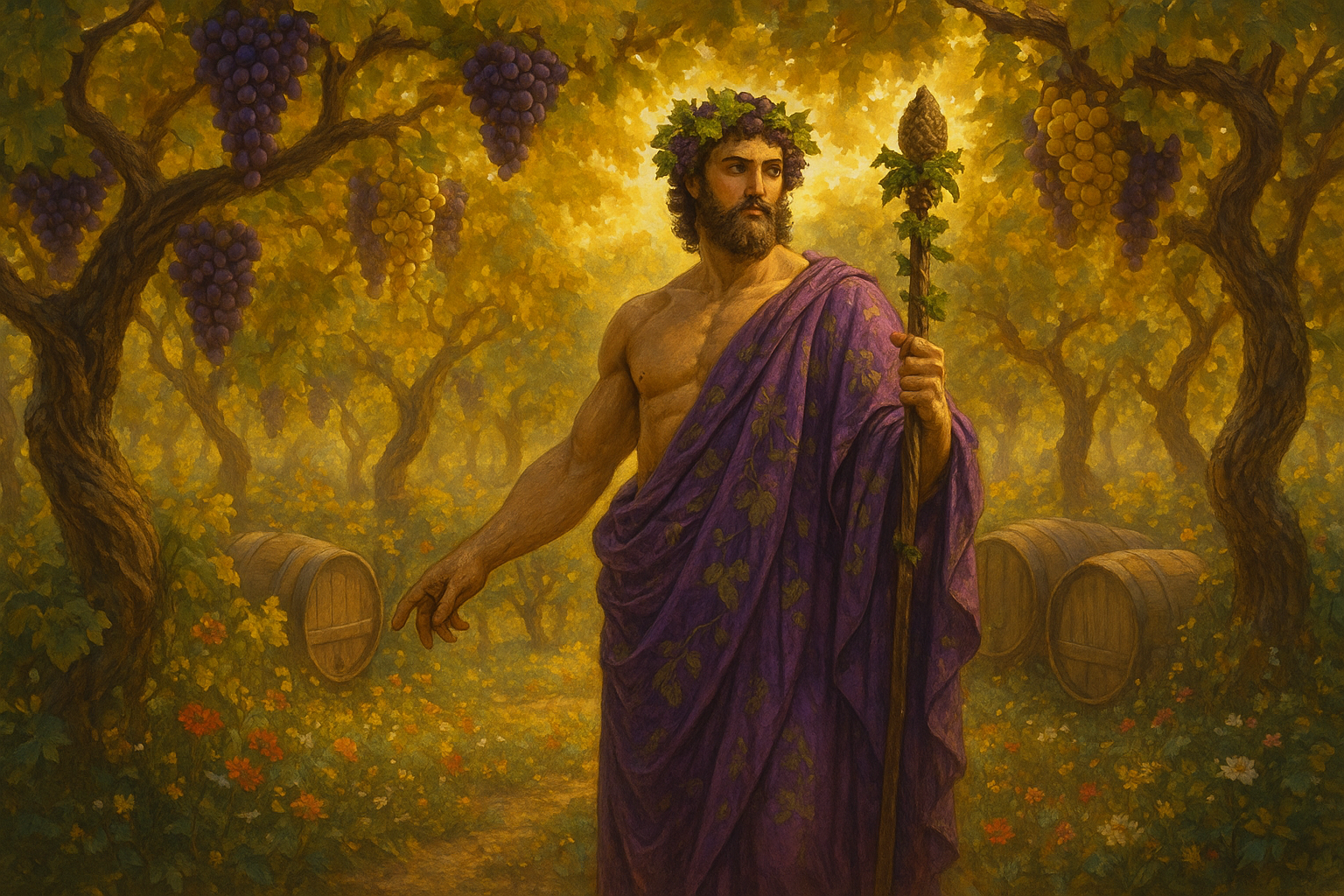
A majestic scene depicting Dionysus, the Greek god of wine and fertility, standing in a lush vineyard during the peak of harvest season, his powerful muscular form draped in flowing purple robes adorned with grape vine patterns. Golden sunlight filters through heavy clusters of ripe grapes hanging from ancient twisted vines, casting dappled shadows across the fertile earth below. The god holds a ornate thyrsus staff topped with pine cones and wrapped in ivy, while a crown of grape leaves and small purple grapes adorns his curly dark hair. Around him, the natural world pulses with divine energy - wine barrels rest among the vines, wild flowers bloom in vibrant colors, and the air shimmers with an otherworldly golden glow that suggests the mystical connection between the changing seasons and divine power. The composition captures the essence of autumn's abundance and the sacred relationship between nature's cycles and ancient Greek religious symbolism.

Far from a simple deity, Dionysus stands as a profound paradox, a god whose very essence challenged the ordered world of the Olympians and the rational thought prized by Greek philosophy. His compelling allure stemmed from his embodiment of life’s most potent, often contradictory, forces. The Duality: Divine Ecstasy vs. Terrifying Madness Dionysus was the … Read more

The Cult of Dionysus: Ancient Greek Rites and Festivals

The Cult of Dionysus: Ancient Greek Rites and Festivals The Revolutionary Nature of Dionysian Worship The Dionysiac mysteries represented a radical departure from traditional Greek religious practices, offering participants an intoxicating blend of spiritual transcendence and physical liberation. Unlike the formal ceremonies conducted in marble temples for gods like Apollo or Athena, Dionysian worship took … Read more

Understanding Dionysus: Symbols, Attributes, and Iconography

The Divine Symbols of Dionysus Dionysus stands among the most complex deities in the Greek pantheon. His symbols tell stories of transformation, ecstasy, and divine power. These sacred emblems appeared consistently across ancient art, literature, and religious practices. Visual Symbols That Defined the Wine God Ancient Greek artists developed a sophisticated visual language to represent Dionysus, creating … Read more