Ancient Greek mythology presents few figures as complex and fascinating as Dionysus, the god of wine, ecstasy, and divine madness. His journey from miraculous birth to divine recognition weaves through some of mythology’s most captivating tales. Moreover, these stories reveal profound themes about transformation, acceptance, and the struggle between civilization and wild nature.
The Miraculous Birth of Dionysus
Dionysus entered the world through extraordinary circumstances that set him apart from other Olympic deities. Zeus fell deeply in love with Semele, a mortal princess of Thebes who possessed remarkable beauty. However, Hera discovered this affair and devised a cunning plan for revenge.
The jealous goddess disguised herself as an elderly woman and befriended Semele. Subsequently, she convinced the princess to ask Zeus to appear before her in his true divine form. Zeus had promised to grant Semele any wish, and consequently, he reluctantly revealed himself as the god of thunder and lightning.
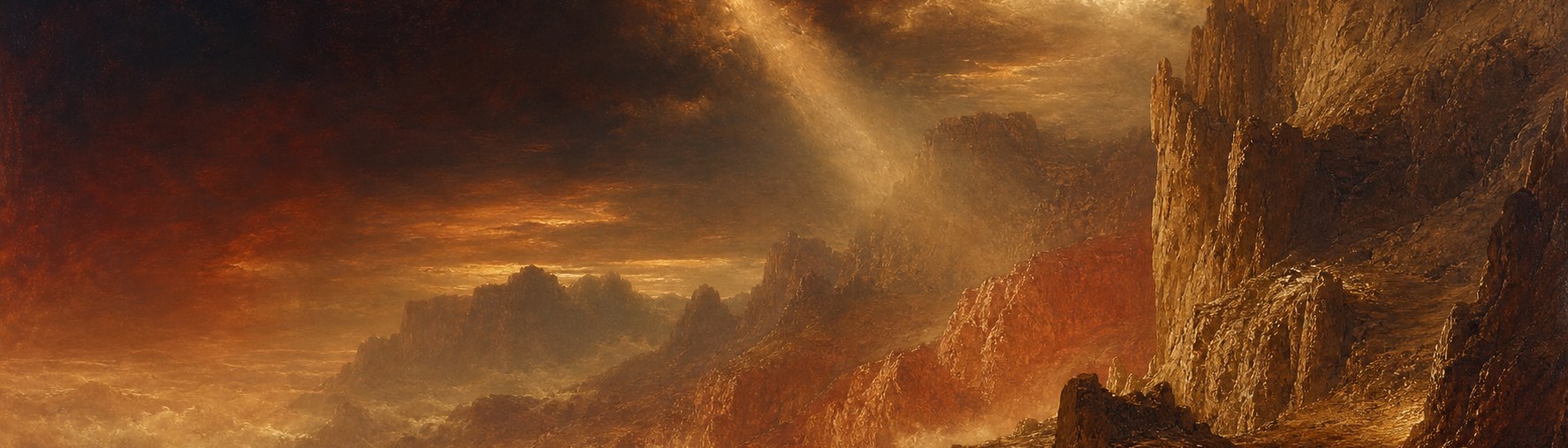
Driven by Hera’s insidious manipulation, Semele had foolishly demanded to witness Zeus in his true, divine form. Bound by an unbreakable oath on the River Styx, Zeus had no choice but to comply. When the King of the Gods unveiled his true essence, it was not merely a bright light, but an overwhelming, cataclysmic display of raw, cosmic power:
- Blinding flashes of lightning tore through the air, illuminating the palace with terrifying brilliance.
- Deafening thunderclaps reverberated, shaking the very foundations of the earth.
- An incinerating inferno erupted, a direct manifestation of Zeus’s unbridled divinity.
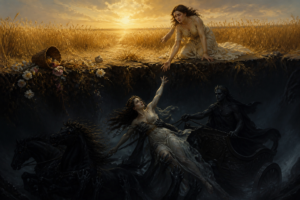
Semele, a mere mortal, was instantly overwhelmed. Her body, unable to withstand such immense and unshielded power, was tragically consumed by the divine flames, reduced to ash in a heartbeat. It was a brutal testament to the fatal consequences of witnessing true godhood without divine protection.
Yet, amidst this devastating spectacle, Zeus’s paternal instincts surged with astonishing speed and resolve. Even as the inferno raged, his focus shifted to the precious, nascent life within Semele. The child, though prematurely expelled from the shock and destruction, was miraculously still alive.
Zeus, demonstrating an unparalleled act of divine intervention, swiftly undertook a series of extraordinary measures to preserve his son:
- Emergency Extraction: With a combination of gentle precision and immense power, Zeus carefully retrieved the tiny, vulnerable infant from the smoldering remains of Semele. This was no ordinary birth; it was a desperate, immediate rescue to snatch life from the jaws of death.
- The Divine Incubator: Recognizing that the child was not yet fully developed and required further gestation, Zeus performed an unprecedented act. He created a temporary, living incubator within his own body. He made an incision in his thigh, specifically the fleshy part, and carefully placed the infant inside.
- Completion of Gestation: The wound then miraculously closed, effectively sewing the baby into Zeus’s body. Here, nestled within the very essence of the King of the Gods, Dionysus remained for the remainder of his natural term. This unique “thigh-womb” provided the necessary warmth, protection, and divine energy for the child to fully develop, completing what would have been Semele’s pregnancy.
This remarkable origin story is why Dionysus is famously referred to as “twice-born” or “born from fire and thunder.” His first “birth” was his premature expulsion from Semele’s womb, and his second, more complete and miraculous birth, was from the thigh of Zeus. This extraordinary genesis imbued Dionysus with a profound dual nature: a connection to the mortal world through his mother and an intimate, direct connection to the divine through his father, having literally been nurtured within him. It set him apart as a god intimately familiar with both destruction and rebirth, life and death, chaos and ecstatic revelry.
This extraordinary origin story of Dionysus, often invoked by his epithet “twice-born” (or dithyrambos in some contexts), is more than just a dramatic tale. It is the foundational myth that profoundly shapes our understanding of his complex nature and his unique role within the Greek pantheon.
The Significance of Being “Twice-Born”
The narrative of his birth — first from the mortal princess Semele, who was consumed by Zeus’s divine fire, and then from Zeus’s own thigh, where he completed his gestation — isn’t merely a curiosity. It imbues Dionysus with several crucial characteristics:
- A Bridge Between Worlds: Unlike the other Olympians, who are purely divine, Dionysus is born from both mortal and immortal parentage. His “twice-born” status symbolizes his unique position as a liminal deity, existing on the threshold between the human and divine, the earthly and the celestial.
- Symbol of Rebirth and Regeneration: The cycle of destruction (Semele’s death) and subsequent rebirth (from Zeus’s thigh) directly mirrors the natural cycles over which he presides – the death and revival of the vine, the changing seasons, and the very processes of life, death, and renewal.
- An Initiate’s Journey: This transformative birth can also be seen as a metaphor for initiation. It suggests a profound, often painful, journey of death and resurrection that leads to a higher state of being, a concept central to the mystery cults associated with Dionysus.
The Foreshadowing of Duality
More importantly, this singular birth event serves as a potent foreshadowing of the profound dualities that would become the very essence of Dionysus’s character and influence throughout Greek mythology and religious practice. His nature is a tapestry woven from seemingly contradictory threads, making him one of the most dynamic and enigmatic gods.
Consider the following core dualities inherent in the “twice-born” god:
- Joy vs. Frenzy:
- He is the god of wine, revelry, ecstasy, and the joyful liberation found in celebration.
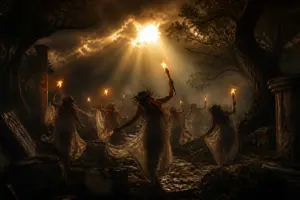
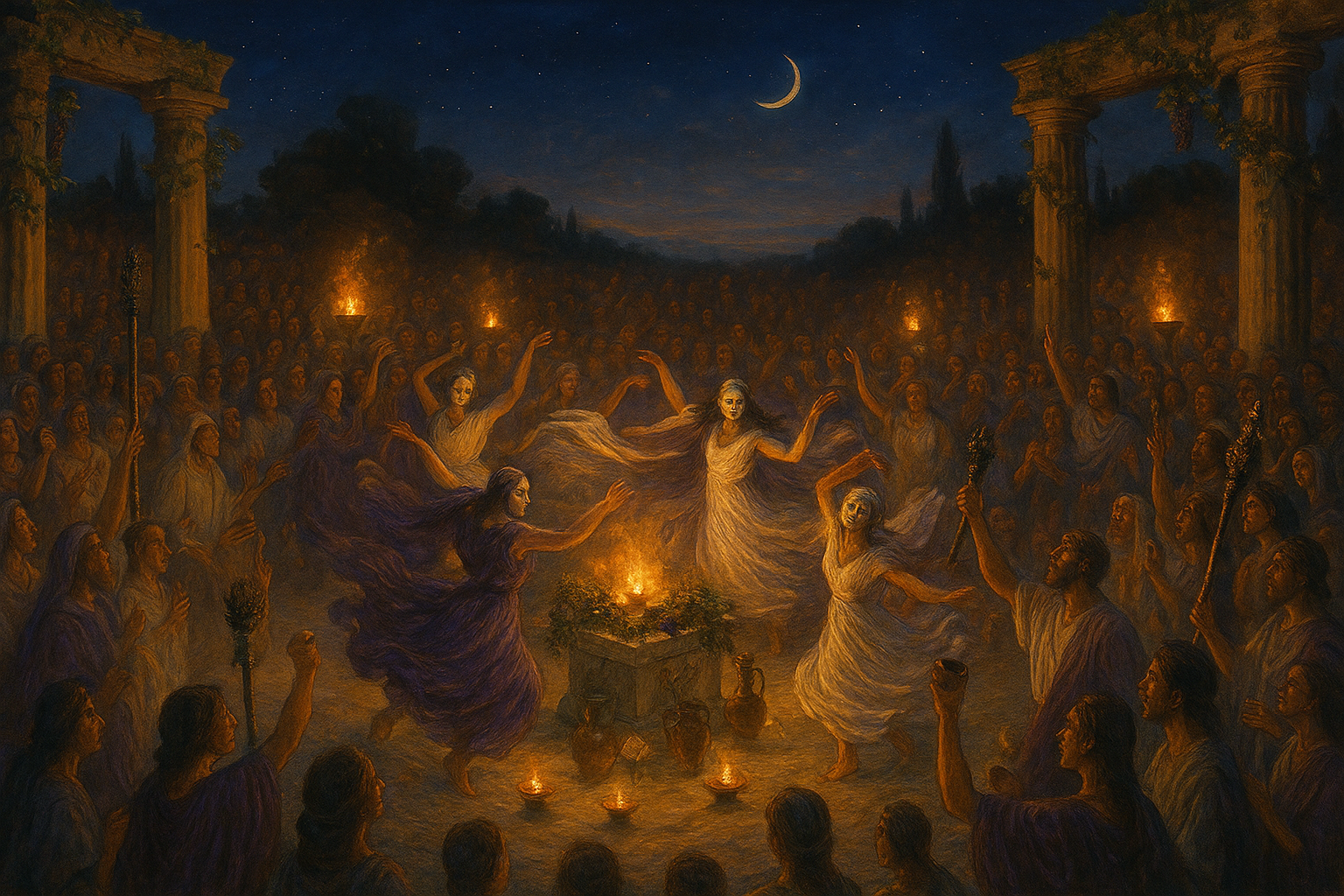
- Yet, he also embodies mania, uncontrolled passion, madness, and the terrifying loss of self that can lead to violence and destruction. Think of the wild maenads in their ecstatic rites.
- Life vs. Death:
- As a fertility god, he represents lush growth, abundant harvests, and the vibrant force of nature’s life-giving power.
- Simultaneously, he is linked to themes of dismemberment (sparagmos), sacrifice, and a journey into the underworld, often associated with the cycle of dying and rising gods.
- Order vs. Chaos:
- Dionysus is the patron of theater, a highly structured art form with defined roles and narratives, representing a form of civic order.
- Conversely, his cults often involved breaking societal norms, abandoning inhibitions, and embracing the untamed, primal forces of nature and the subconscious, leading to a blissful or terrifying chaos.
- Civilized vs. Wild:
- He brings the gift of wine, a symbol of culture, communal feasting, and the refinement of civilization.
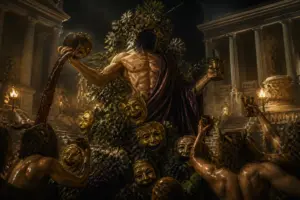
- However, he is frequently depicted in wild, untamed landscapes, surrounded by satyrs and maenads, embodying the raw, untamed wilderness that lies beyond human control.
- Presence vs. Absence:
- His cults celebrated his sudden, powerful epiphany or arrival, bringing transformation and divine presence.
- Yet, he is also a god of withdrawal and mystery, often depicted as a wanderer whose presence is felt even in his absence, creating a longing for his return.
These inherent contradictions, born from the very fabric of his origin, define Dionysus not as a god of simple categories, but as a powerful, transformative force who challenges boundaries and embodies the full spectrum of human experience.
Early Years in Exile
After his birth, Dionysus faced continued persecution from Hera’s wrath. Zeus entrusted the infant to various guardians to ensure his safety. First, he gave the child to Hermes, who delivered him to Semele’s sister Ino and her husband Athamas.
However, Hera’s vengeance extended to these foster parents as well. She drove them to madness, forcing Zeus to seek alternative arrangements. The king of the gods then transformed Dionysus into a kid goat to disguise him from Hera’s watchful eyes.
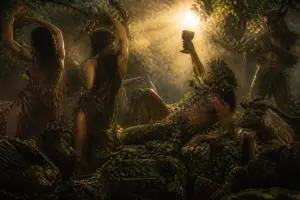
Eventually, Zeus transported the young god to Mount Nysa, where nymphs raised him in secret. These divine caretakers taught Dionysus about nature’s mysteries and the cultivation of grapes. Additionally, they introduced him to the intoxicating properties of wine, which would become his primary domain.
The mountain sanctuary provided Dionysus with protection and education. There, he learned to harness his divine powers while developing his distinctive personality. Moreover, this period of exile instilled in him empathy for outcasts and marginalized individuals.
The Handbook That Untangles Dionysus’s Contradictions
If you’re finishing this post wanting a deeper reference on Dionysus’s many faces—from the twice-born god to the civilizing force and the mad liberator—this handbook offers concise, well-researched entries on every major figure and myth you’ve just encountered.
What works
- Covers Dionysus alongside the full Olympian pantheon, so you can quickly cross-reference how other gods interact with him and why his acceptance took so long
- Includes the major myths and variations discussed in this post—birth, madness, ascension—all in one accessible place for ongoing reference
- Designed for the exact audience of this blog: mythology lovers who want accuracy without academic density
What doesn’t
- If you’re already deep into primary sources like Ovid’s *Metamorphoses* or Euripides’ *The Bacchae*, this won’t offer new textual insights
- Handbook format means individual entries are brief—perfect for quick lookup, less ideal if you want extended narrative or scholarly debate about which version of a myth is “most authentic”
This is a reference tool, not a narrative deep-dive, so it works best as a companion to posts like this one rather than as your only source. For that purpose, grab the Greek Mythology: The Gods, Goddesses, and Heroes Handbook and keep it within arm’s reach.
About This Article

Written by Elias Blackwood. Elias Blackwood has spent 25 years as an obsessive collector of world mythology and folklore, from Greek and Norse epics to Japanese yokai and West African trickster tales — entirely self-taught, for the love of it. His reading draws on comparative mythology, cultural anthropology, and a personal library of translations most people have never heard of. More about this site.
Verify this against a primary source
Specifics change, and your situation may differ from the one described here. These are the authorities worth checking directly:
- Theoi Project — Greek mythology texts with primary source citations
- Perseus Digital Library — classical texts in the original and in translation
- Encyclopaedia Britannica — edited reference for figures and traditions