Far from a simple deity, Dionysus stands as a profound paradox, a god whose very essence challenged the ordered world of the Olympians and the rational thought prized by Greek philosophy. His compelling allure stemmed from his embodiment of life’s most potent, often contradictory, forces.
The Duality: Divine Ecstasy vs. Terrifying Madness
Dionysus was the ultimate representation of liminality, thriving on the boundaries between civilization and wilderness, sanity and frenzy. This is most vividly illustrated in his dual nature:
- Divine Ecstasy (The Liberating Force):
- This aspect brought profound joy, spiritual liberation, and a sense of unity with the divine and nature.
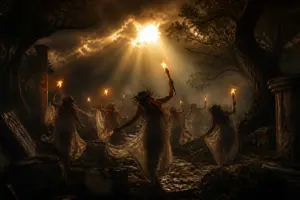
- Rituals and Revelry: His followers, particularly the female Maenads and the male Satyrs, engaged in ecstatic dances, music (flutes, drums, cymbals), and feasting in wild, untamed landscapes.
- Transcendence: Through these rites, mortals could temporarily shed their mundane identities, social constraints, and anxieties, experiencing a heightened state of being – a true enthusiasmos (being filled with the god). It was a profound release, often leading to a feeling of spiritual enlightenment and uninhibited freedom.
- Inspiration: This divine intoxication could also inspire artistic creativity, prophecy, and a deeper understanding of the world.
- Terrifying Madness (The Destructive Force):
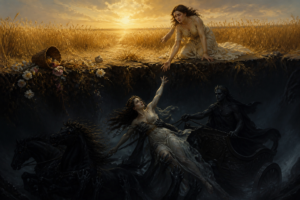
- The flip side of ecstasy was a terrifying, uncontrollable frenzy that obliterated reason and could lead to brutal violence.
- Loss of Control: When the boundaries blurred too much, the liberating abandon could devolve into delusion, savagery, and a complete loss of self.
- Violent Outbursts: Tales abound of Maenads, driven to madness by the god, tearing apart wild animals – and sometimes even humans – in acts of sparagmos (ritual dismemberment), consuming raw flesh. The mythical king Pentheus of Thebes met a gruesome end at the hands of his own mother and aunts, who, maddened by Dionysus, mistook him for a wild beast.
- Chaos: This destructive potential highlighted the inherent danger of unchecked passion and the fragility of human reason when confronted with overwhelming primal forces.
Domains of Profound Influence
Dionysus’s sway extended over fundamental aspects of ancient Greek life, each colored by his complex nature:
- Wine: The Catalyst for Transformation
- More than just a beverage, wine was seen as a divine gift, a transformative elixir capable of altering perception.
- Social Lubricant: It facilitated social gatherings, loosening inhibitions, and fostering camaraderie.
- Ritual Element: Central to many religious rites, it was used for libations and as a means to induce altered states of consciousness, allowing mortals to connect with the divine.
- Double-Edged Sword: While it could inspire joy and creativity, excessive consumption led to intoxication, folly, and destructive behavior – mirroring the god’s own duality.
- Fertility: Life’s Abundance and Renewal
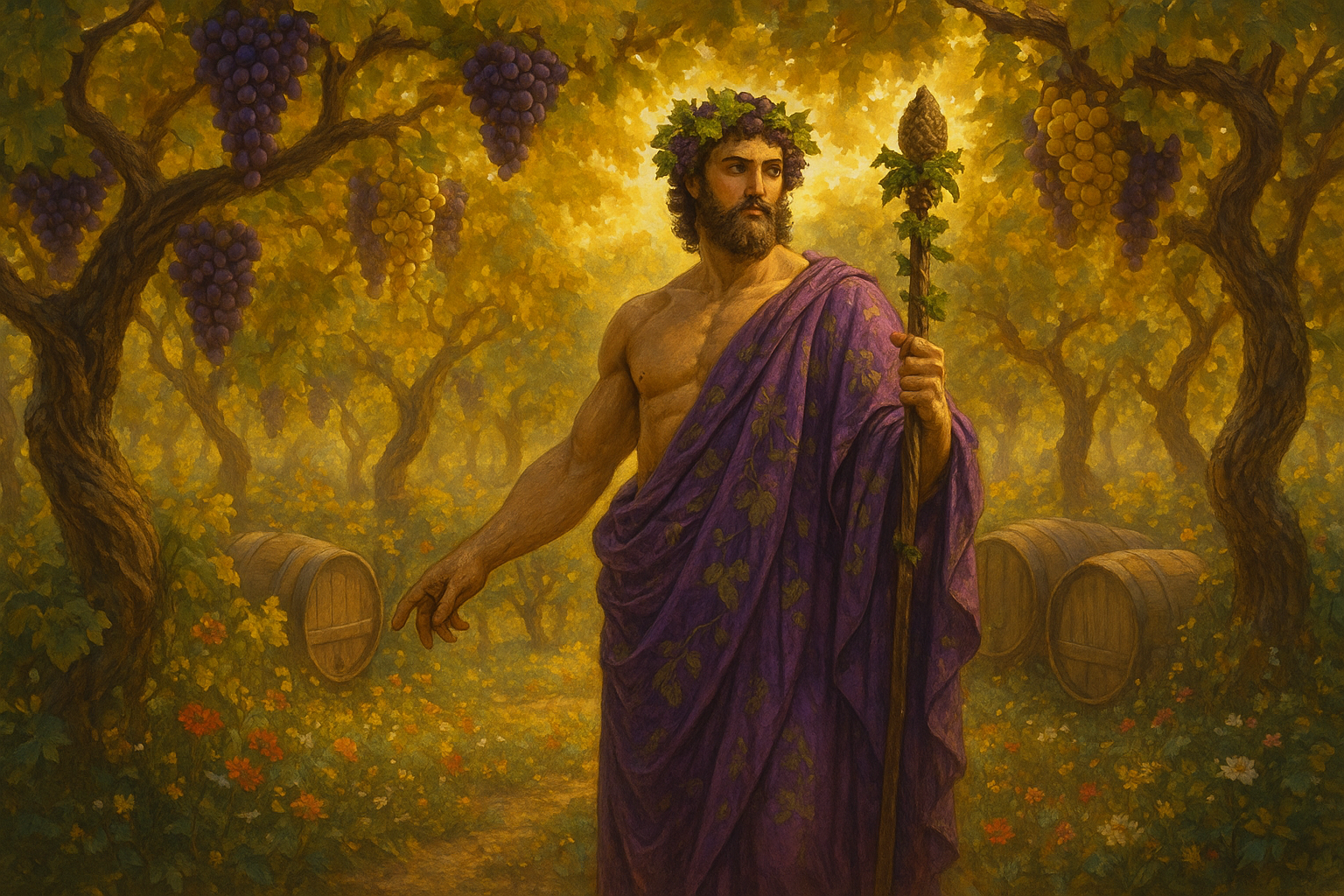
- Dionysus was intrinsically linked to the teeming life force of nature, particularly the vine, but also to the broader cycles of growth, decay, and rebirth.
- Agricultural Bounty: His cult ensured the fertility of crops, livestock, and the general abundance of the earth.
- Procreation: He was associated with human fertility and the generative power of life, often represented by phallic symbols in his processions.
- Seasonal Cycles: His myths often reflect the annual death and rebirth of the vine, symbolizing the continuous renewal of life.
- Theater: The Mirror of Human Experience
- As the patron god of drama, particularly tragedy, Dionysus presided over the very art form that allowed Greeks to explore the depths of human emotion and fate.
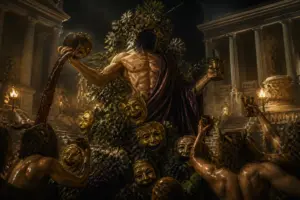
- The Mask: The theatrical mask, central to ancient Greek drama, perfectly encapsulated Dionysus’s themes of identity, transformation, and the revelation of hidden truths. It allowed actors to embody roles, transcending their own selves, much like his worshippers transcended their daily lives.
- Catharsis: The experience of watching a play, especially a tragedy, could evoke a powerful emotional release (catharsis) in the audience, mirroring the emotional intensity of Dionysian rituals.
- Festivals: Major dramatic festivals, like the City Dionysia in Athens, were held in his honor, underscoring his vital connection to artistic expression and communal experience.
- Wild Abandon: Breaking the Bonds of Convention
- This overarching theme weaves through all his domains, representing the urge to break free from societal norms, rational thought, and self-control.
- Liberation: It offered an escape from the mundane, the opportunity for self-discovery, and a profound connection to primal forces.
- Destruction: Yet, this same abandon, when uncontrolled, threatened the very fabric of society, leading to chaos, violence, and the dissolution of identity.
In essence, Dionysus was the god who dared humanity to confront its own wildness, to embrace the powerful, often terrifying, forces that lie beneath the surface of civilization, offering both profound liberation and the potential for devastating self-destruction.
Unlike other Olympian gods who maintained consistent divine personas, Dionysus represented duality itself. He brought joy through wine and celebration, yet simultaneously unleashed chaos through ritual frenzy. Furthermore, his influence extended far beyond simple intoxication, encompassing the creative arts, agricultural fertility, and the thin boundary between civilization and wilderness.
The Extraordinary Birth of Dionysus
A Bronze Embodiment of Dionysus’s Paradox
After exploring Dionysus’s role as a god of liminality and contradiction, having a visual representation of him on your desk or shelf serves as a daily reminder of his dual nature—the civilized deity and the wild force. This bronze miniature captures that essential tension.
What works
- Authentic iconography: the figurine depicts traditional Dionysian symbols (grapes, theatrical elements, or his characteristic flowing robes) that connect directly to the mythology covered in this post
- Bronze finish conveys gravitas and reverence, refusing to let Dionysus become a mere party-god caricature—honoring the serious philosophical and religious significance discussed here
- Miniature scale makes it an affordable, displayable companion to primary texts like Euripides’ *Bacchae* or scholarship on ancient mystery cults
What doesn’t
- As a decorative object, it won’t deepen your understanding of the texts or rituals themselves—it’s a visual aid, not a research tool
- The small size means fine details may be subtle; if you need something that commands a room or serves as a teaching piece, a larger resin version might work better
This works best if you’re building a personal mythology library or altar space and want something that fits unobtrusively on a shelf next to your copies of ancient drama. If you’re looking for educational depth beyond iconography, pair it with primary source reading instead. Veronese Design Dionysus Miniature Figurine in Bronze Finish
About This Article

Written by Elias Blackwood. Elias Blackwood has spent 25 years as an obsessive collector of world mythology and folklore, from Greek and Norse epics to Japanese yokai and West African trickster tales — entirely self-taught, for the love of it. His reading draws on comparative mythology, cultural anthropology, and a personal library of translations most people have never heard of. More about this site.
Verify this against a primary source
Specifics change, and your situation may differ from the one described here. These are the authorities worth checking directly:
- Theoi Project — Greek mythology texts with primary source citations
- Perseus Digital Library — classical texts in the original and in translation
- Encyclopaedia Britannica — edited reference for figures and traditions