The Divine Symbols of Dionysus
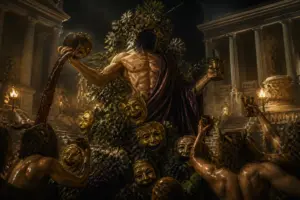
Dionysus stands among the most complex deities in the Greek pantheon. His symbols tell stories of transformation, ecstasy, and divine power. These sacred emblems appeared consistently across ancient art, literature, and religious practices.
Visual Symbols That Defined the Wine God
Ancient Greek artists developed a sophisticated visual language to represent Dionysus, creating instantly recognizable symbols that appeared across:
- Temple frescoes depicting religious ceremonies
- Pottery designs used in daily life and ritual contexts
- Theatrical masks worn during dramatic performances
- Coins and medallions circulated throughout the Mediterranean
The Sacred Vine and Its Transformative Power
The grapevine served as Dionysus’s most prominent attribute, but its significance extended far beyond simple agricultural association. In Greek artistic tradition, the vine represented:
- Metamorphosis – The transformation of simple fruit into intoxicating wine
- Cyclical renewal – Annual death and rebirth of the plant
- Divine connection – The bridge between earthly pleasure and spiritual transcendence
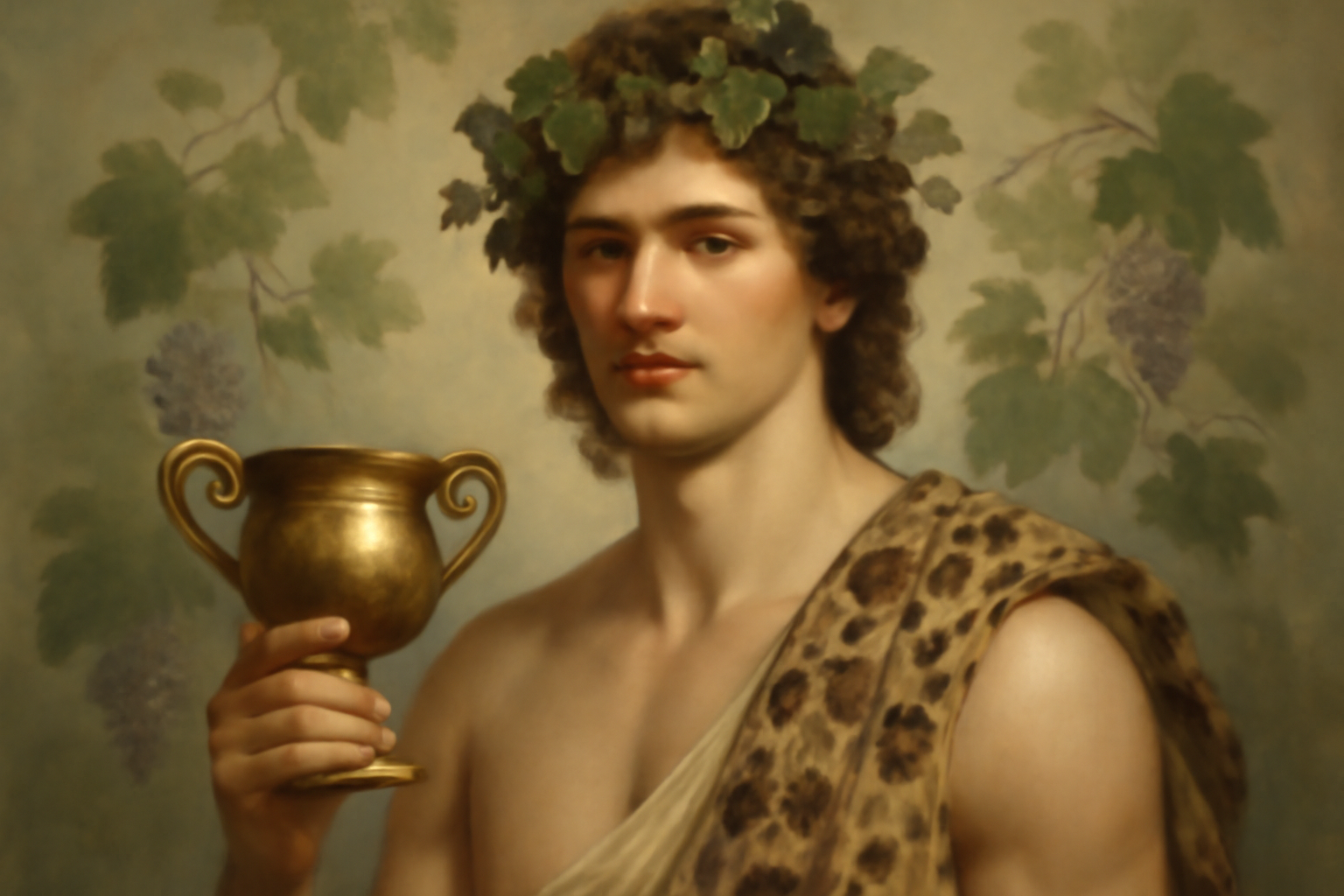
Artists frequently depicted Dionysus crowned with ivy wreaths, another climbing plant that remained green throughout winter, symbolizing eternal life and the god’s triumph over death.
Animal Companions as Divine Messengers
The leopard and panther became central to Dionysiac iconography, representing the god’s wild, untamed nature. These feline companions appeared in artwork as:
- Mounts carrying Dionysus across distant lands
- Guardians flanking his throne
- Symbols of the primal forces unleashed during religious ecstasy
Goats and bulls also featured prominently, connecting Dionysus to fertility rites and sacrifice rituals that formed the backbone of his worship.
The Thyrsus: More Than a Simple Staff
Perhaps no symbol carried more complex meaning than the thyrsus – a staff topped with a pinecone and wrapped in ivy. This seemingly simple object represented:
Masculine and feminine duality – The phallic staff combined with the fertile pinecone Nature’s abundance – Pine cones as symbols of regeneration and growth
Divine authority – The staff as a scepter of spiritual power
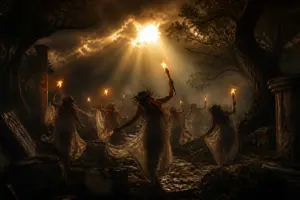
Devotees carried these staffs during Dionysiac festivals, using them in ecstatic dances that could reportedly work miracles or strike down enemies.
Cultural Context Behind the Symbols
Each iconographic element reflected deeper societal tensions within ancient Greek culture:
- The tension between civilization and wildness
- The balance of order and chaos in community life
- The relationship between mortality and divine experience
These symbols weren’t merely decorative – they served as visual theology, communicating complex religious concepts to both literate and illiterate populations across the ancient world.
The Thyrsus: Staff of Divine Power
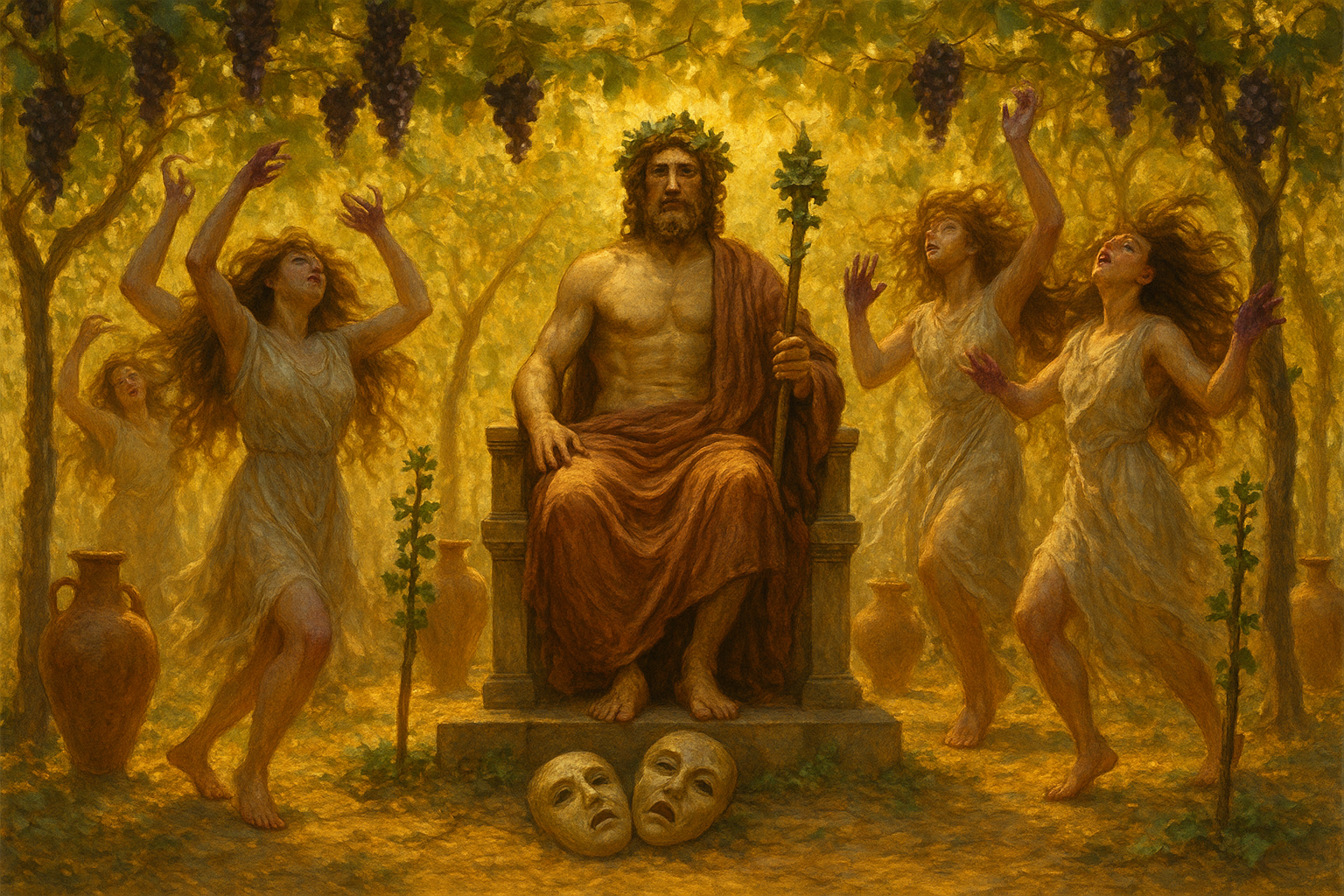
The thyrsus represents Dionysus‘s most recognizable attribute. This ceremonial staff topped with a pinecone symbolized fertility and transformation. Ancient Greeks carried these staffs during Dionysiac festivals and rituals.
Crafted from fennel stalks, the thyrsus demonstrated the god’s connection to nature’s cycles. Furthermore, the pinecone crown represented masculine fertility and regeneration. Devotees believed the staff channeled divine energy during religious ceremonies.
The Thyrsus in Ancient Visual Culture
The thyrsus served as Dionysus’s primary symbol of divine power across the ancient Mediterranean, appearing with remarkable consistency in artistic representations spanning over a millennium. This sacred staff, topped with a pinecone and wrapped in ivy vines, became one of the most recognizable religious symbols of the classical world.
Artistic Representations Across Media
Vase Paintings and Pottery
- Red-figure and black-figure pottery from Athens frequently showcase Dionysus gripping his thyrsus during mythological scenes
- Drinking vessels (kylixes and kraters) often featured the god using his staff to transform pirates into dolphins or to strike down those who opposed his worship
- The thyrsus appears in over 2,000 surviving Greek vase paintings, making it one of the most documented divine attributes in ancient art
Monumental Sculpture
- Roman copies of Greek statues consistently depict Dionysus leaning casually on his thyrsus, emphasizing both his divine authority and relaxed nature
- The famous Dionysus of Knidos shows the god’s thyrsus as tall as his shoulder, carved with intricate ivy leaf details
- Temple pediments and friezes across Greece and Asia Minor feature the thyrsus as a key identifying element in Bacchanalian scenes
Frescoes and Wall Paintings
- Pompeii’s Villa of Mysteries contains stunning frescoes where initiates hold thyrsus staffs during mysterious religious ceremonies
- Roman domestic art frequently incorporated thyrsus motifs in dining rooms, connecting the symbol to wine, celebration, and hospitality
- Egyptian-Greek fusion art from Alexandria shows Dionysus-Osiris figures wielding hybrid thyrsus-was scepters
The Thyrsus in Religious Practice
Sacred Processions and Festivals
- Dionysiac processions featured hundreds of worshippers carrying miniature thyrsus staffs made from fennel stalks
- Festival celebrations during the Greater Dionysia included theatrical performances where actors portraying satyrs brandished decorative thyrsus props
- Mystery cult initiations required participants to craft their own personal thyrsus as part of the sacred ritual process
Regional Variations
- Thracian followers created thyrsus staffs using local pine species and mountain ivy
- Italian Bacchants incorporated grape clusters alongside the traditional pinecone topping
- Asian Minor devotees sometimes added colorful ribbons and small bronze bells to their ceremonial staffs
The Figurine That Brings Dionysus’s Symbols to Life
If you’ve just read about Dionysus’s iconography and want to see these symbols rendered in three dimensions, a quality figurine bridges the gap between academic understanding and visual experience. This miniature captures the god’s essential attributes in a form you can actually hold and examine.
What works
- Displays the grape vine, thyrsus, and other symbolic elements discussed in this post in a single, artifact-like piece
- Fine detail work captures the artistic conventions ancient Greek potters and sculptors used to represent the god
- Small enough to keep on a desk or shelf as a reference object while researching or reading deeper into Dionysian worship
What doesn’t
- A modern resin reproduction is not an archaeological artifact, so it can’t teach you about regional variations or dating of actual ancient representations
- It’s decorative rather than educational—there’s no accompanying scholarly context or primary source material
This works best as a visual companion to your reading, not as a substitute for examining actual museum collections or ancient sources. If you’re serious about understanding how Greek artists actually depicted Dionysus across different eras and regions, you’ll still want to seek out museum catalogs and archaeological databases. But for a tangible reminder of what you’ve learned here, the Veronese Design Dionysus Miniature Figurine is a solid choice.
Veronese Design Dionysus Miniature Figurine
I keep this on my desk while reading about Dionysus—the carved details match what ancient potters actually made.
Check Price on Amazon →This post contains affiliate links. As an Amazon Associate, I earn from qualifying purchases at no extra cost to you.