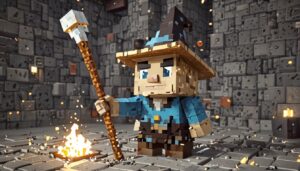
My name is Jake, and everyone in my blocky village calls me Jake Cobblestone-Toes. Why do they call me that? Well, because I trip over every single loose cobblestone block in the entire Overworld! While other kids my age dream about finding shiny diamonds deep underground, I just want to tend my little garden behind our house. I’m not very good at building either – once I tried to make a simple shed and somehow built the whole thing out of upside-down stairs!
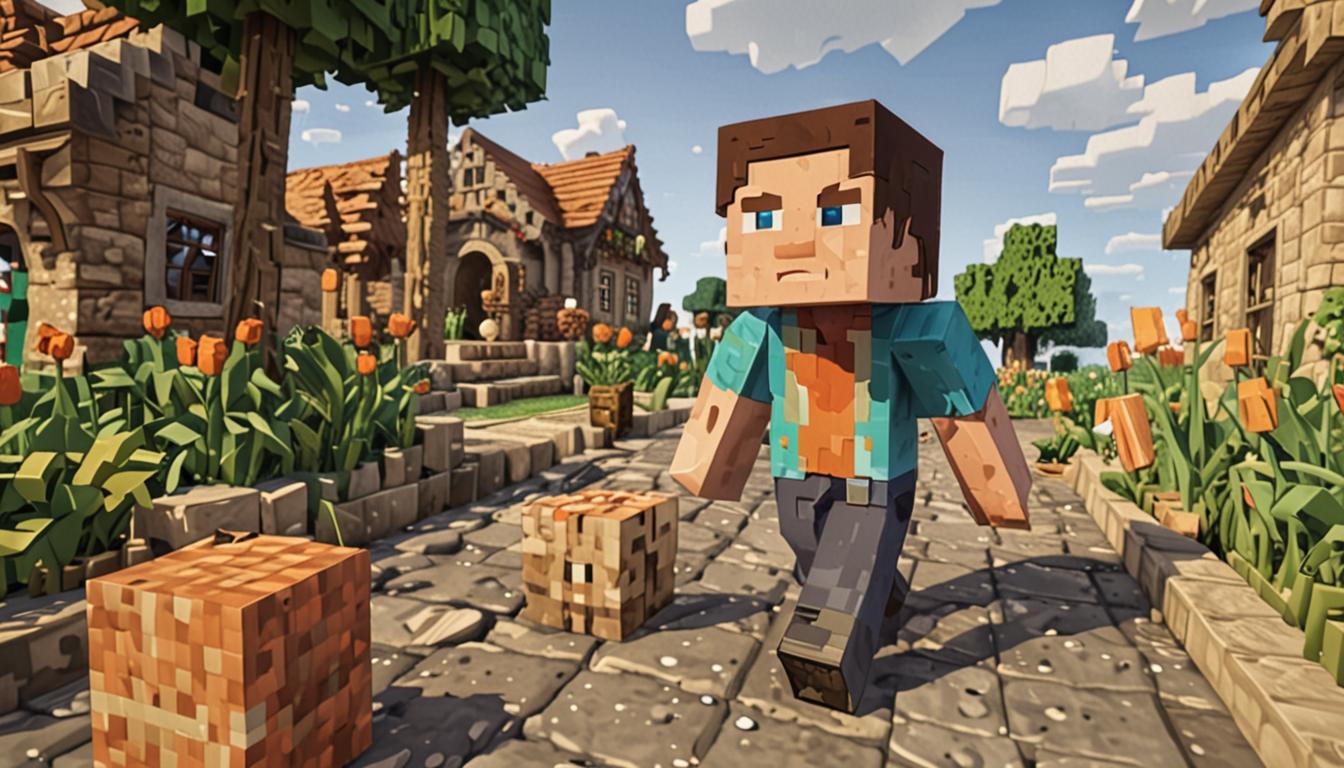
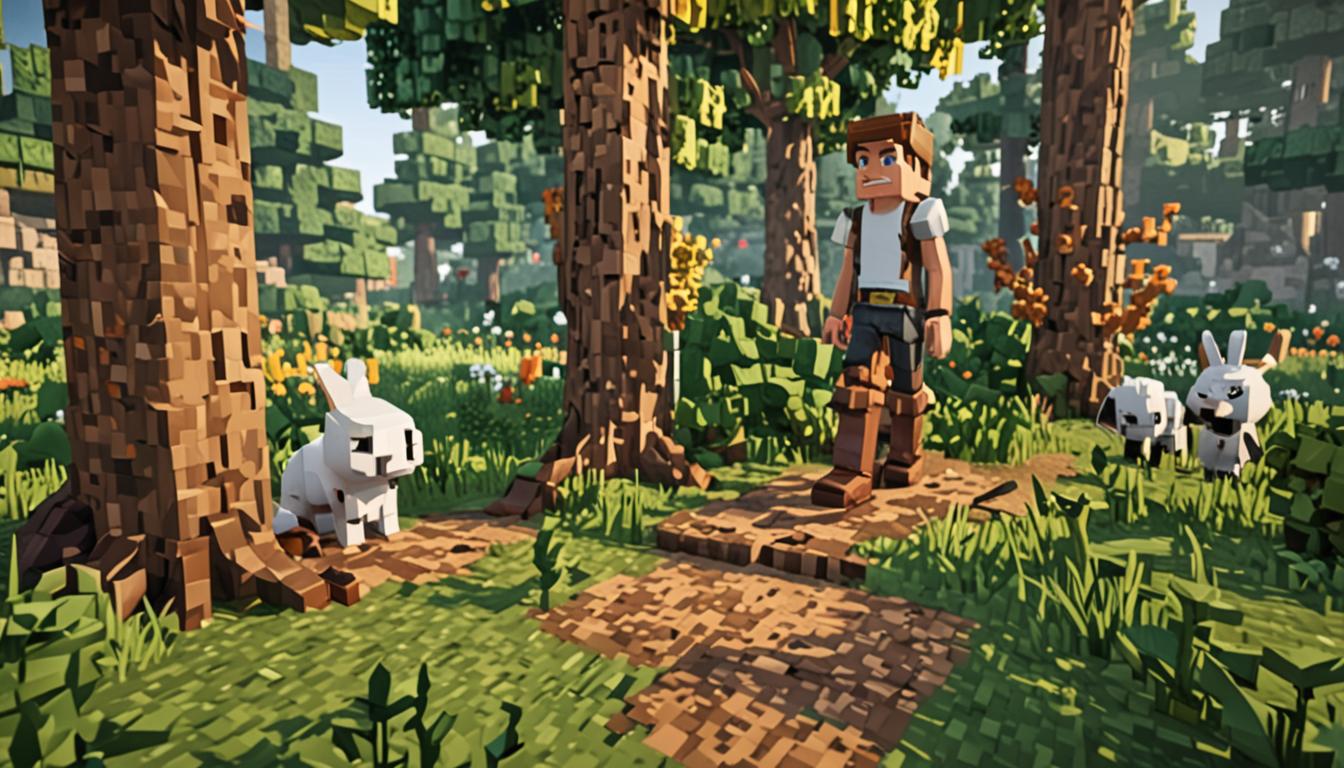
I’m definitely not the bravest kid around, and I always wear mismatched boots because I can never find two that match. However, I do have one special gift that makes me different from everyone else – animals absolutely love me! Whenever I walk through the forest, rabbits hop right up to me, and even the grumpiest wolves wag their tails. I can calm down any creature, no matter how upset they are. Unfortunately, most people in my village just think I’m a noob who will never become a real hero.
The Cave That Wasn’t Stone Anymore
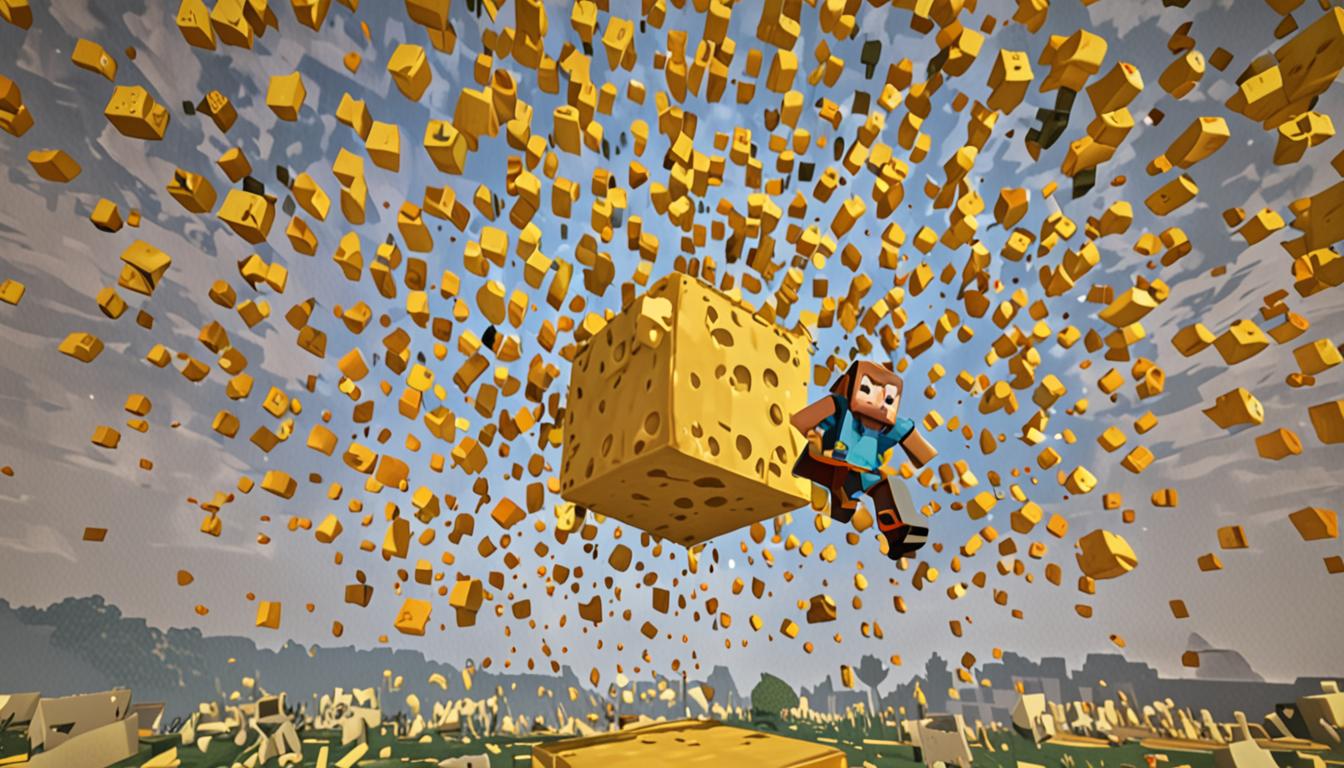
One afternoon I heard bleating coming from the old mine behind my garden – the same mine where I’d tripped down a diamond shaft just the week before. I followed the sound with a torch in one hand and a fistful of wheat in the other, since wheat usually calms down whatever’s making noise long enough for me to figure out what’s going on. Except this time, the tunnel walls weren’t cobblestone anymore. They were soft, pale, and smelled like cheese that had been left out in the sun way too long.
I pressed my hand against the wall and my whole arm sank in up to the elbow. Somewhere deeper in the mine, three baby goats were crying, the sound echoing off tunnels that used to be solid stone. Goats don’t usually wander this far underground on their own, which meant something had either lured them down here or trapped them.
Old Rennet
I found the goats first, huddled together on a ledge above a slow-moving river of what I can only describe as cheese lava – thick, yellow, and creeping down the tunnel a few inches at a time. Standing in the middle of it, taller than three villagers stacked on top of each other, was a golem built entirely out of hardened rind, with two glowing curd-colored eyes and cracks running down its body that oozed slowly whenever it moved.
“Who dares wake Old Rennet?” the golem rumbled, and every word came out slow and heavy, like it was talking through a mouth full of gouda. It wasn’t shouting about taking over the Overworld or bragging about an evil plan – it just sounded old, tired, and a little confused about why its cave was suddenly full of goats and a boy with mismatched boots.
I pieced together what had happened from the way Old Rennet talked about it. Some miners had drilled too deep the week before, cracking open a vein of ancient enchanted milkstone that had been sealed under the mountain since before the village existed. Old Rennet had been the golem set to guard it, and once the seal broke, the milkstone started curdling the moment it touched open air, turning everything nearby – cave walls included – into cheese.
A Job for a Goat Whisperer
Here’s the thing nobody in my village ever gave me credit for: I don’t just calm animals down, I actually understand what they want. And what those three goats wanted, more than anything, was to get to the milkstone vein themselves. Goats aren’t scared of cheese caves. Goats practically invented cheese caves. They’d wandered down here on their own, following the smell, and gotten trapped behind a wall of hardening rind before they could reach it.
“I think I can fix this,” I told Old Rennet, “but I need you to trust me, and I need you to let the goats through.” The golem’s curd-colored eyes narrowed, as much as a cheese golem’s eyes can narrow, but it didn’t stop me. I’ve learned that most creatures who seem scary are usually just protecting something, and once you figure out what that something is, the scary part tends to go away on its own.
I led the goats down to the milkstone vein myself, slipping and sliding through rivers of slow-moving cheese the whole way (some things about me never change). The moment the goats reached the exposed milkstone and started grazing on the pale moss growing across it, the curdling stopped completely. Turns out the moss had been the actual problem – it had been feeding on the milkstone for who knows how long, and the goats eating it away was the one thing that could stop the reaction before it swallowed the whole mountain.
The Cave Remembers How to Be Stone
With the moss gone, the cheese walls slowly hardened, cracked, and crumbled away to reveal ordinary cobblestone underneath – the real kind, the kind I still trip over constantly. Old Rennet’s cracks stopped oozing, and its rumbling voice actually sounded relieved for the first time. “Three hundred years I have guarded this vein alone,” it said. “No one has ever bothered to ask what the moss wanted. They only ever wanted to fight me.”
I told Old Rennet it could keep the goats, if it wanted the company. Golems don’t usually get to have pets, and something about the way it perked up when I suggested it told me that was exactly what it needed. Now the three goats live down in the mine full-time, and Old Rennet keeps the milkstone vein in perfect balance, letting them graze the moss down just enough to keep the whole mountain from turning into a dairy disaster again.
When I climbed back out of the mine that evening, nobody in the village believed there’d been a cheese golem down there at all – not until the goats started showing up at the mine entrance every morning for their bucket of wheat, escorted by nothing anyone could see, but with rind-colored dust on their hooves that definitely wasn’t ordinary cave dirt. I never did tell anyone the whole story. Some things are better left as a secret between a boy, three goats, and a very old, very lonely golem who just wanted someone to ask him a question for once.
Build Your Own Garden (and Don’t Trip Over It!)
Jake might not be the best builder in his village, but that doesn’t stop him from dreaming big—and neither should your child! This LEGO set lets kids create their own Minecraft world at their own pace, just like Jake tending his garden. Building physical models based on digital stories creates a bridge between imagination and reality, much like how ancient cultures used physical monuments to preserve their mythological narratives.
What works
- Kids build confidence through creative play, even if their first attempt isn’t perfect—just like Jake learning to trust his own instincts underground.
- The iconic Creeper character brings the story to life off the page, making Minecraft tangible and fun to recreate at home.
- Building develops problem-solving and fine motor skills while keeping kids engaged long after they finish reading.
- The construction process itself becomes a form of storytelling—kids can narrate Jake’s adventures as they build, extending the narrative experience.
What doesn’t
- Smaller pieces mean this works best for ages 8 and up (younger builders might need a grown-up’s hands nearby).
- Once built, it’s more of a display piece than an evolving playset—kids who like endless expansion might want multiple sets.
This set has small pieces, so it’s perfect for ages 8 and up and makes a wonderful companion to the story. LEGO Minecraft The Creeper Kids Building Toy
The Real Lesson
Everyone in my village still thinks “the day everything went cheesy” is just a weird story I made up to explain why I came home covered in rind dust. But I know what actually happened down there: the scariest thing in that mine wasn’t a monster, it was a very old golem who’d spent three hundred years too afraid to ask anyone for help. My gift isn’t just calming animals down – it’s noticing what everyone else is too scared to notice. That’s not a small thing, even if it doesn’t come with a diamond sword.
Disclaimer: This is an unofficial fan fiction work. This story is not affiliated with, endorsed by, or associated with Mojang Studios or Microsoft. Minecraft is a trademark of Mojang Studios. All Minecraft-related terms, concepts, and references are used for descriptive purposes only in this original creative work.
About This Article

Written by Elias Blackwood. Elias Blackwood has spent 25 years as an obsessive collector of world mythology and folklore, from Greek and Norse epics to Japanese yokai and West African trickster tales — entirely self-taught, for the love of it. His reading draws on comparative mythology, cultural anthropology, and a personal library of translations most people have never heard of. More about this site.
Verify this against a primary source
Specifics change, and your situation may differ from the one described here. These are the authorities worth checking directly:
- Theoi Project — Greek mythology texts with primary source citations
- Perseus Digital Library — classical texts in the original and in translation
- Encyclopaedia Britannica — edited reference for figures and traditions