Chapter 8: The Day the Sunrise Came Back

Ollie and Biscuit — Chapter 8, scene 1

Some of the most interesting historical material is the stuff that almost didn’t survive — the fragmentary records, the suppressed traditions, the oral histories that only made it into writing centuries later. There’s something powerful about recovering those threads and understanding what they meant to the people who carried them. And that’s exactly what makes the mythology of returning light so compelling to dig into: across dozens of cultures — Norse, Egyptian, Japanese, Mesoamerican — the moment when the sun comes back isn’t just a calendar event, it’s a cosmic reckoning, a story that communities told themselves about survival, about whether the world would keep its promises. What we’re exploring in this chapter sits right at the intersection of those ancient traditions and the kind of legendary world-building that takes them seriously, tracing how figures like Biscuit carry the weight of that archetypal moment — the desperate, almost irrational act of trusting that the light will return — even when every rational instinct says it won’t. This is the chapter where the stakes stop being abstract, and I think once you see how deep the historical roots of this narrative go, you’ll feel the full force of what’s actually happening here.

“About forty percent of one,” I whispered back. She nodded like that was completely acceptable, which honestly made me feel great.

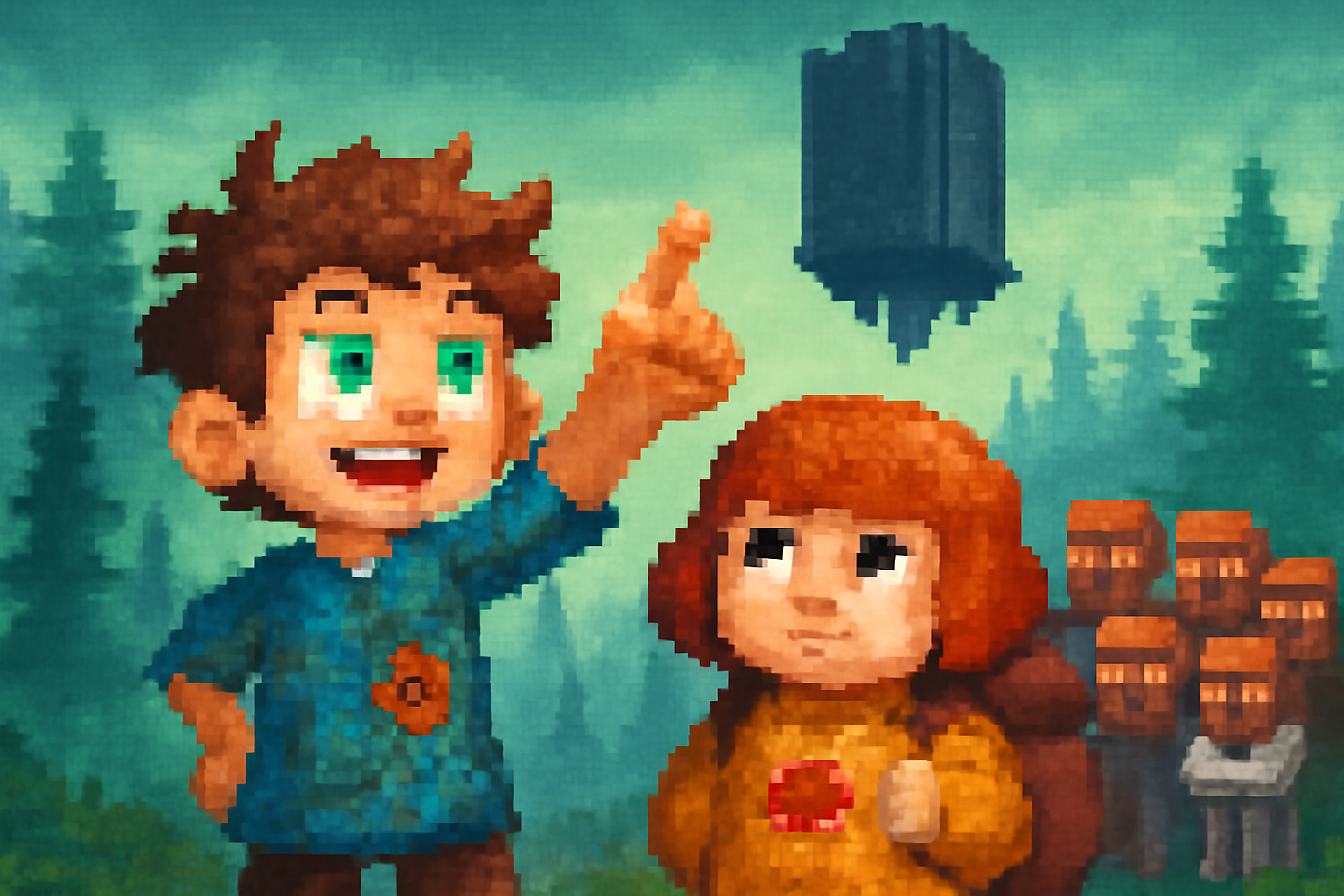
The fog maze was behind us now. We’d found our way out by following the smell Biscuit had been tracking — something she described as “burnt toffee mixed with gray crayon and a very sad Tuesday” — which turned out to be the base of Sky Tower, a tall, crooked structure of dark stone that floated just above the treeline like it had forgotten to come back down. A rickety staircase spiraled up its outside, and at the very top, through the haze, I could just barely see the glow of hundreds of glass jars.

Stolen sunrises. Stolen auroras. All of them trapped up there while the rest of us lived under a flat gray sky that smelled, according to Biscuit, of old socks and sadness.

And somewhere in that tower: the stolen hats.

Ollie and Biscuit — Chapter 8, scene 1

This post contains affiliate links. As an Amazon Associate, I earn from qualifying purchases at no extra cost to you. If Chapter 8 had you totally hooked on the idea of the sun returning to the sky, then you NEED the Treasury of Greek Mythology: Classic Stories of Gods, Goddesses, Heroes & Monsters on your shelf. National Geographic packed this thing with stunning full-color artwork and rich storytelling that brings solar myths, sky gods, and legendary heroes to life in a way that actually makes you feel like you’re *there*. It’s the perfect companion read for anyone who wants to go deeper into the mythological world we’re exploring in this chapter series.

Read more

Chapter 7: Laugh Loudly and Carry a Big Backpack

Ollie and Biscuit — Chapter 7, scene 1

The trickster archetype appears in virtually every mythology on Earth — the figure who breaks rules, upsets order, and somehow ends up being necessary for the world to function. What that says about how humans understand chaos, creativity, and the limits of law is one of the most interesting questions in comparative mythology. Whether it’s Loki shape-shifting his way out of Asgard’s consequences, Anansi spinning webs of clever misdirection across West African tradition, or Coyote stumbling into cosmic significance through sheer audacity, the through-line is always the same: survival through wit, disguise, and a refusal to be caught standing still. So when we meet Ollie mid-transformation — holding a boulder pose long enough to fool a patrol — it doesn’t just read as a fun scene in a fantasy story; it reads as an echo of something ancient, a moment straight out of the mythological playbook that humans have been writing for thousands of years. That’s why this chapter deserves more than a casual read-through.

I unraveled the Wool of Wonders from around my shoulders and became myself again, which was honestly a relief. Being a boulder is surprisingly uncomfortable. I’d managed the correct block type about forty percent of the time yesterday, which was a personal record, and I was quite proud of it.

“Right,” I said, brushing fog off my patched-up blue tunic. “New plan. We need to get into Wanda’s maze, find the hats, and get back to Blockville before the Grand Hat Festival is ruined forever. We have two days. What have you got?”

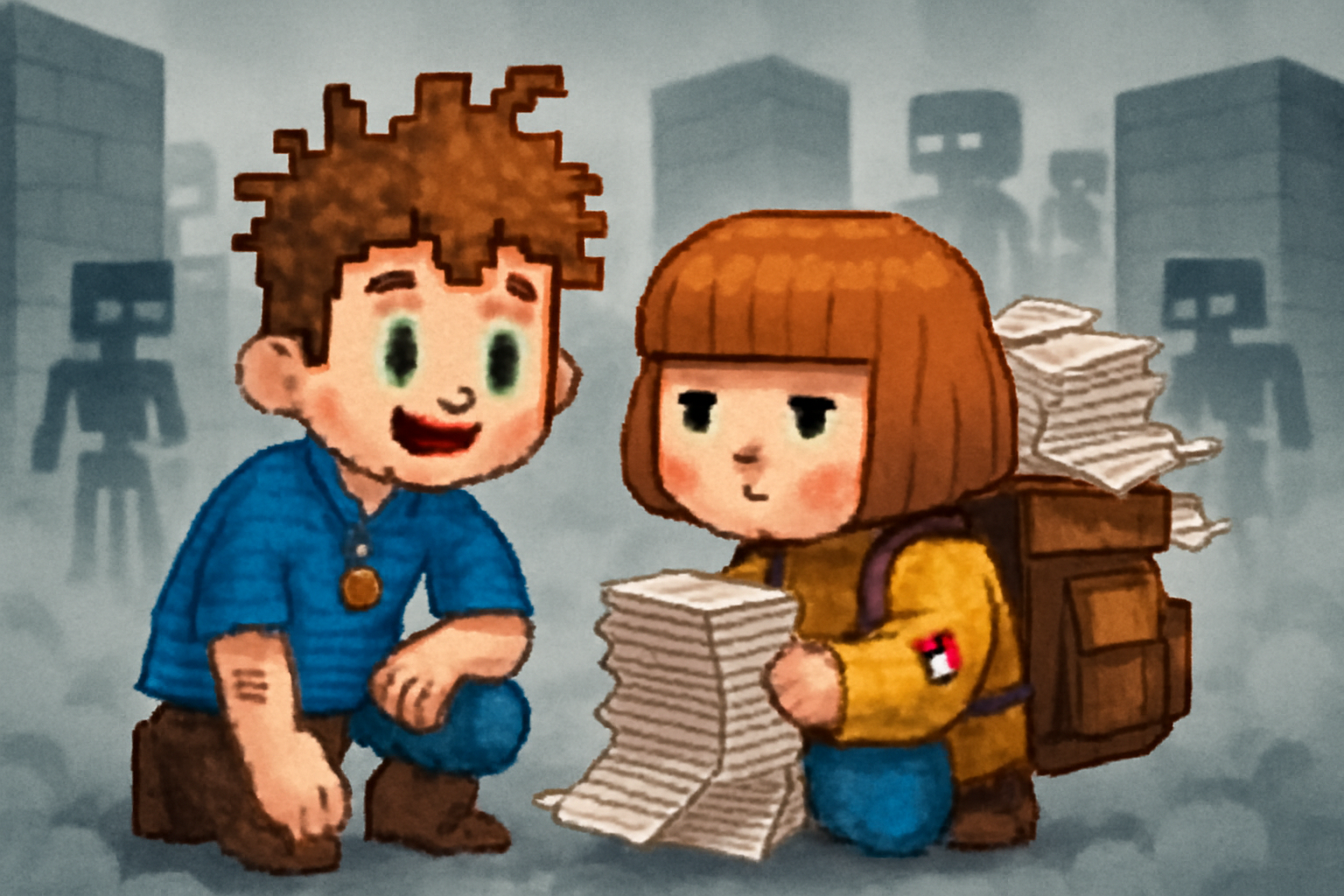
Biscuit unzipped her enormous brown backpack, which made the sound of approximately forty-seven snacks shifting around inside. She pulled out a list. Then another list. Then a list of the other lists.

“Seven plans,” she announced proudly, “ranked by how likely they are to involve us falling into something.”

“Which one has the lowest falling risk?”

She looked at all seven lists very carefully. “None of them, actually.”

Ollie and Biscuit — Chapter 7, scene 1

This post contains affiliate links. As an Amazon Associate, I earn from qualifying purchases at no extra cost to you. If you’re all about Norse mythology like we are here, you NEED to check out this KIDVOVOU 3D Nordic Mythology Wolf Backpack. That 3D wolf design is giving serious Fenrir energy, and honestly? Carrying your school stuff in something that looks ripped straight out of a Viking saga is the ultimate power move. It fits laptops, it’s sturdy enough for adventures both real and imaginary, and it’ll make every other backpack in the hallway look tragically mortal.

Read more

Chapter 6: Hats, Fog, and a Very Suspicious Jar Collection

Ollie and Biscuit — Chapter 6, scene 1

When a fictional world is built with genuine attention to internal consistency — its history, its politics, its cultural logic — reading it becomes an experience very close to studying a real historical civilization. You bring the same analytical tools and they yield the same kind of insight. That’s exactly the lens I want to apply here, because this chapter is doing something quietly fascinating: the sudden, disorienting fog that swallows Biscuit and the narrator whole isn’t just a atmospheric inconvenience — it’s a threshold moment, the kind that appears in mythological traditions from the Celtic otherworld to the liminal mists of Norse cosmology, where geography stops being geography and starts being a test. And then there’s the jar collection, which any folklorist worth their salt will recognize as the kind of detail that only lands with that particular unsettling weight when a world-builder understands how objects accumulate meaning in legendary traditions — think of the vessels, urns, and containers scattered across Greek myth, Norse lore, and countless fairy tale taxonomies, rarely innocent, almost always a problem. This chapter, in other words, deserves a closer look.

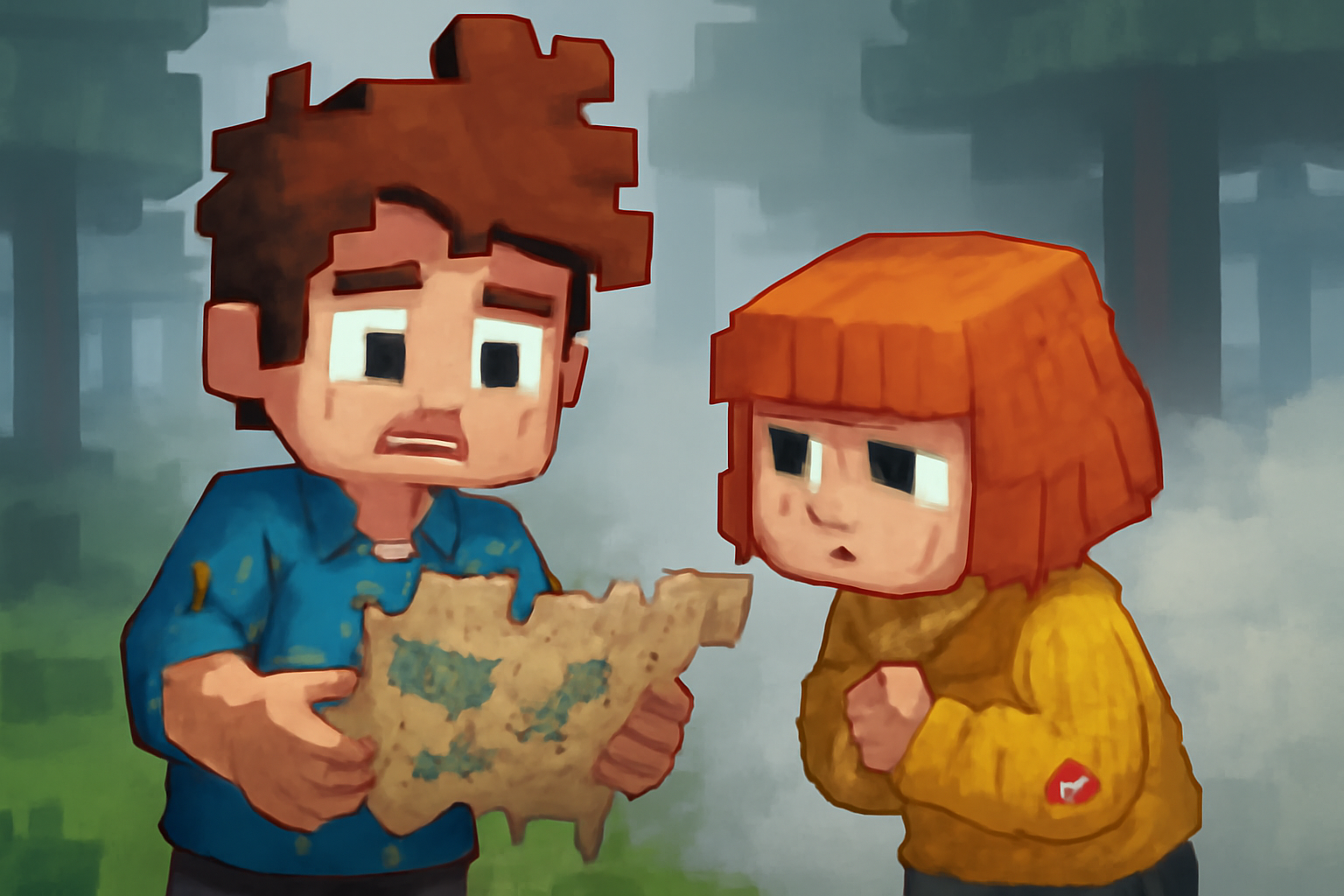
“Biscuit,” I said carefully. “The map is wet.”

“The map is dissolving, Ollie.”

“That’s what I said.”

She made the noise she makes when she’s trying very hard not to say something. I’ve heard it a lot since Sproutville.

Ollie and Biscuit — Chapter 6, scene 1

This post contains affiliate links. As an Amazon Associate, I earn from qualifying purchases at no extra cost to you. If Chapter 6’s foggy atmosphere and mysterious hats have you craving more mythological deep-dives, I can’t recommend the Treasury of Greek Mythology: Classic Stories of Gods, Goddesses, Heroes & Monsters enough. This National Geographic gem is packed with stunning illustrations and the actual backstories behind trickster gods, magical artifacts, and — yes — very suspicious containers (looking at you, Pandora’s jar). It’s the perfect companion read when you want the lore to go even deeper.

Read more

Chapter 5: The Sky Went Gray and Nobody Laughed

Ollie and Biscuit — Chapter 5, scene 1

No mythological tradition is complete without its understanding of death and what comes after — and no aspect of a culture’s worldview tells you more about what they valued in life. The afterlife myths of any civilization are always, in some sense, a portrait of its highest ideals. That’s what makes a sky that refuses to wake up — gray, flat, drained of color — so viscerally loaded with meaning across nearly every mythological tradition humanity has ever produced: from the ashen fields of the Greek Asphodel Meadows to the dimming of the Norse heavens before Ragnarök, a world losing its light is never just weather, it’s a statement. When the color drains from a place like Rainbow Meadows — a landscape defined entirely by its vibrancy — the legendary imagination in all of us should immediately recognize that something cosmologically significant is either approaching or has already quietly begun. This chapter deserves to be read slowly, because if the old myths taught us anything, it’s that the moments just before the world changes forever almost always look, at first glance, like nothing much at all.

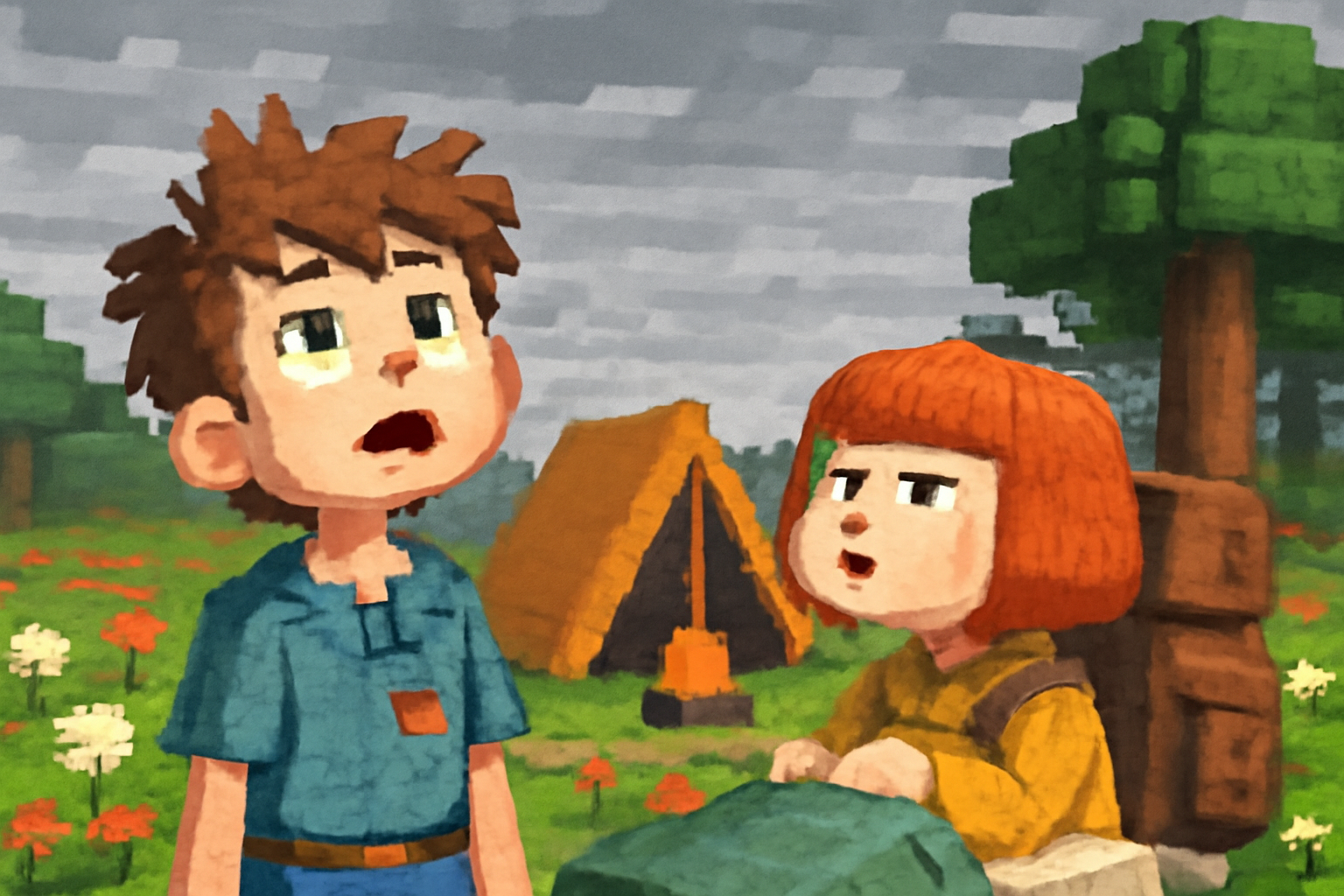
I blinked. I looked left. I looked right. I looked up again, just in case I’d missed something.

Nope. Still cardboard.

“Biscuit,” I said. “The sky is broken.”

Biscuit was already sitting up in her bedroll, her copper bowl-cut hair perfectly neat on one side and completely sideways on the other, which was unusual for her. She was staring upward with an expression I recognized — the one where her nose twitched like a rabbit’s before a big sneeze.

“It’s not broken,” she said slowly. “It smells like old socks. And also…” She sniffed again, more deliberately. “Sadness. Coming from the north.”

I had learned, since our adventures in Rainbow Meadows and everything with Baron Blaze’s ridiculous cape, to take Biscuit’s nose very seriously indeed. If Biscuit said something smelled like old socks and sadness, something was definitely, horribly wrong.

Ollie and Biscuit — Chapter 5, scene 1

This post contains affiliate links. As an Amazon Associate, I earn from qualifying purchases at no extra cost to you. If “The Sky Went Gray” has you wondering who’s actually in charge of all those storm clouds (spoiler: the Greeks had a LOT of opinions about that), then the Treasury of Greek Mythology: Classic Stories of Gods, Goddesses, Heroes & Monsters is exactly what you need on your shelf. National Geographic packed it with stunning artwork and the real stories behind the gods who threw those thunderbolts — it’s the kind of book you crack open for one myth and somehow lose two hours to.

Read more