Chapter 2: The Sheep Who Stole the Show

Ollie and Biscuit — Chapter 2, scene 1

Reading legendary lore feels, to me, like taking field notes on a civilization — you’re assembling a picture of how people organized meaning, justified authority, and explained the inexplicable. Every detail is a data point. That’s the mindset I bring to every piece of deep mythological or legendary content I encounter. And sheep — humble, woolly, seemingly unremarkable sheep — turn out to be extraordinary data points, woven into the symbolic fabric of cultures from ancient Mesopotamia to Norse pastoral mythology in ways that most people completely overlook. When an animal keeps showing up in sacred texts, heroic narratives, and divine allegories across wildly different traditions, that’s not coincidence; that’s a cultural obsession worth dissecting. So let’s talk about why, in the grand theater of legendary history, the sheep somehow stole the show.

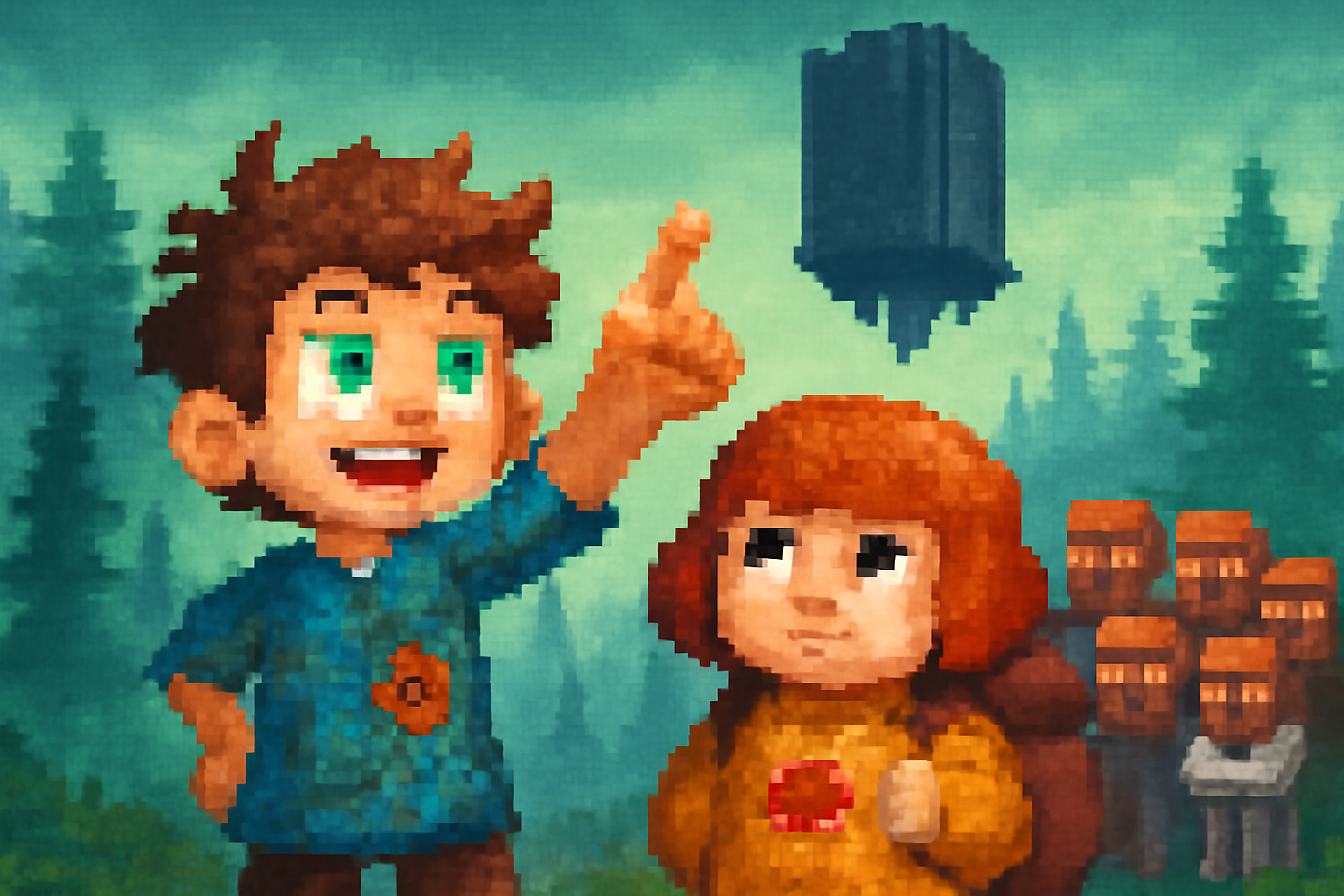
“Watch your feet,” Biscuit said helpfully, about three seconds too late, as she adjusted the enormous backpack bouncing on her shoulders. She had packed it that morning while reading from a list titled Things To Pack, which was itself on a list titled Lists I Need Today. I had counted at least four separate bags of crackers going in. Biscuit believes crackers can solve most problems. She might be right.

We’d left Sproutville before sunrise, still thinking about those scorch marks near the fountain square and the faint smell of redstone machinery Biscuit had detected. Somebody had taken every map in the village, and that somebody had left a very specific kind of mess — the hot, sharp-edged kind. But the Wool Festival couldn’t wait for us to figure that out. Rainbow Meadows needed help now.

Ollie and Biscuit — Chapter 2, scene 1

This post contains affiliate links. As an Amazon Associate, I earn from qualifying purchases at no extra cost to you. After reading about a sheep who literally stole the show, I think every young mythology fan deserves a fluffy sidekick to read along with — and this Tiny Heart Sheep Stuffed Animal is absolutely perfect for the job. It’s small enough to sit on your desk or bookshelf like a little mythological mascot, super soft, and honestly just adorable. Whether you’re team hero or team sheep after this chapter, this little lamb has your back.

Read more

Chapter 5: The Sky Went Gray and Nobody Laughed

Ollie and Biscuit — Chapter 5, scene 1

No mythological tradition is complete without its understanding of death and what comes after — and no aspect of a culture’s worldview tells you more about what they valued in life. The afterlife myths of any civilization are always, in some sense, a portrait of its highest ideals. That’s what makes a sky that refuses to wake up — gray, flat, drained of color — so viscerally loaded with meaning across nearly every mythological tradition humanity has ever produced: from the ashen fields of the Greek Asphodel Meadows to the dimming of the Norse heavens before Ragnarök, a world losing its light is never just weather, it’s a statement. When the color drains from a place like Rainbow Meadows — a landscape defined entirely by its vibrancy — the legendary imagination in all of us should immediately recognize that something cosmologically significant is either approaching or has already quietly begun. This chapter deserves to be read slowly, because if the old myths taught us anything, it’s that the moments just before the world changes forever almost always look, at first glance, like nothing much at all.

I blinked. I looked left. I looked right. I looked up again, just in case I’d missed something.

Nope. Still cardboard.

“Biscuit,” I said. “The sky is broken.”

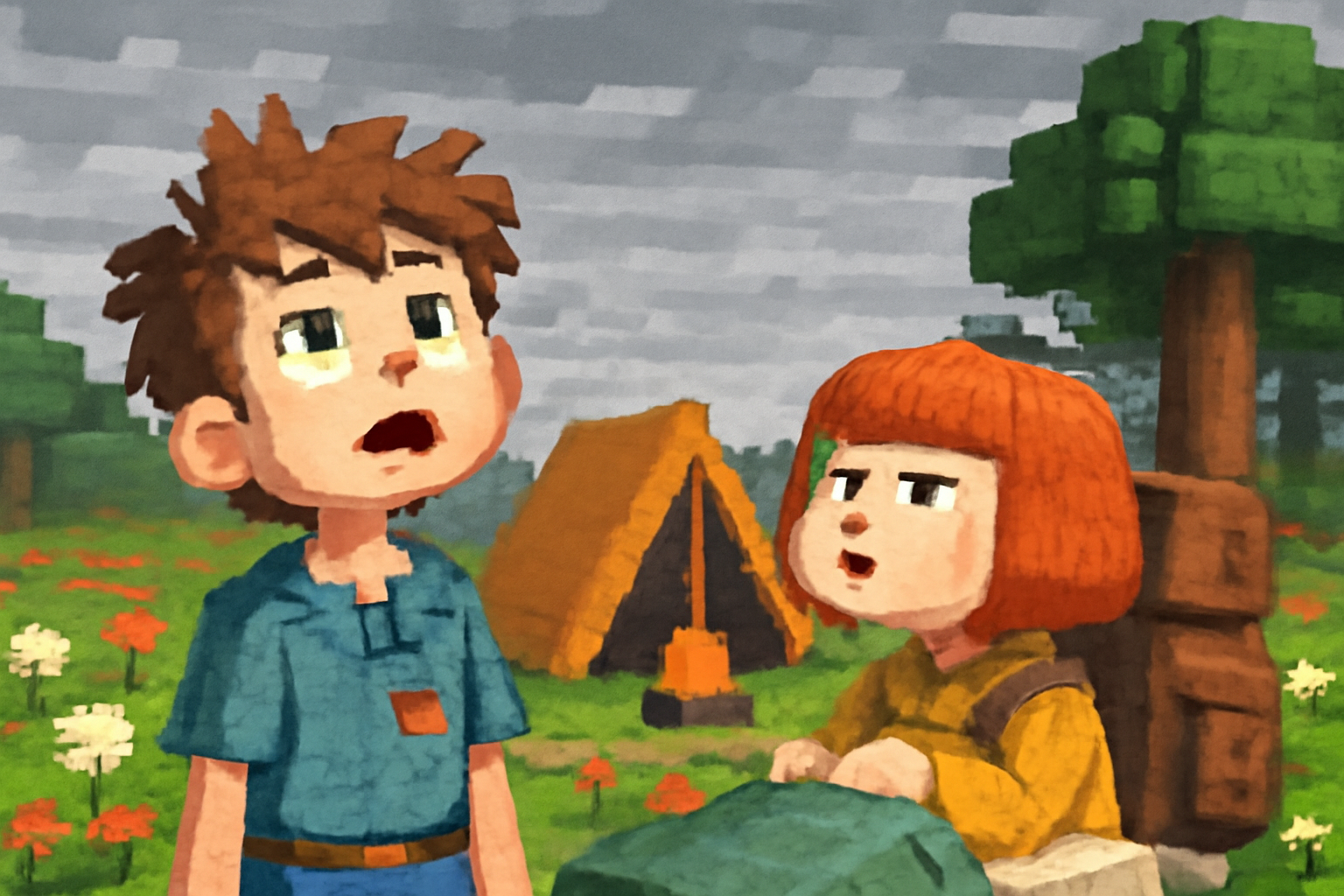
Biscuit was already sitting up in her bedroll, her copper bowl-cut hair perfectly neat on one side and completely sideways on the other, which was unusual for her. She was staring upward with an expression I recognized — the one where her nose twitched like a rabbit’s before a big sneeze.

“It’s not broken,” she said slowly. “It smells like old socks. And also…” She sniffed again, more deliberately. “Sadness. Coming from the north.”

I had learned, since our adventures in Rainbow Meadows and everything with Baron Blaze’s ridiculous cape, to take Biscuit’s nose very seriously indeed. If Biscuit said something smelled like old socks and sadness, something was definitely, horribly wrong.

Ollie and Biscuit — Chapter 5, scene 1

This post contains affiliate links. As an Amazon Associate, I earn from qualifying purchases at no extra cost to you. If “The Sky Went Gray” has you wondering who’s actually in charge of all those storm clouds (spoiler: the Greeks had a LOT of opinions about that), then the Treasury of Greek Mythology: Classic Stories of Gods, Goddesses, Heroes & Monsters is exactly what you need on your shelf. National Geographic packed it with stunning artwork and the real stories behind the gods who threw those thunderbolts — it’s the kind of book you crack open for one myth and somehow lose two hours to.

Read more

Chapter 8: The Day the Sunrise Came Back

Ollie and Biscuit — Chapter 8, scene 1

Some of the most interesting historical material is the stuff that almost didn’t survive — the fragmentary records, the suppressed traditions, the oral histories that only made it into writing centuries later. There’s something powerful about recovering those threads and understanding what they meant to the people who carried them. And that’s exactly what makes the mythology of returning light so compelling to dig into: across dozens of cultures — Norse, Egyptian, Japanese, Mesoamerican — the moment when the sun comes back isn’t just a calendar event, it’s a cosmic reckoning, a story that communities told themselves about survival, about whether the world would keep its promises. What we’re exploring in this chapter sits right at the intersection of those ancient traditions and the kind of legendary world-building that takes them seriously, tracing how figures like Biscuit carry the weight of that archetypal moment — the desperate, almost irrational act of trusting that the light will return — even when every rational instinct says it won’t. This is the chapter where the stakes stop being abstract, and I think once you see how deep the historical roots of this narrative go, you’ll feel the full force of what’s actually happening here.

“About forty percent of one,” I whispered back. She nodded like that was completely acceptable, which honestly made me feel great.

The fog maze was behind us now. We’d found our way out by following the smell Biscuit had been tracking — something she described as “burnt toffee mixed with gray crayon and a very sad Tuesday” — which turned out to be the base of Sky Tower, a tall, crooked structure of dark stone that floated just above the treeline like it had forgotten to come back down. A rickety staircase spiraled up its outside, and at the very top, through the haze, I could just barely see the glow of hundreds of glass jars.

Stolen sunrises. Stolen auroras. All of them trapped up there while the rest of us lived under a flat gray sky that smelled, according to Biscuit, of old socks and sadness.

And somewhere in that tower: the stolen hats.

Ollie and Biscuit — Chapter 8, scene 1

This post contains affiliate links. As an Amazon Associate, I earn from qualifying purchases at no extra cost to you. If Chapter 8 had you totally hooked on the idea of the sun returning to the sky, then you NEED the Treasury of Greek Mythology: Classic Stories of Gods, Goddesses, Heroes & Monsters on your shelf. National Geographic packed this thing with stunning full-color artwork and rich storytelling that brings solar myths, sky gods, and legendary heroes to life in a way that actually makes you feel like you’re *there*. It’s the perfect companion read for anyone who wants to go deeper into the mythological world we’re exploring in this chapter series.

Read more

Chapter 10: The Riddle Contest Nobody Asked For

Ollie and Biscuit — Chapter 10, scene 1

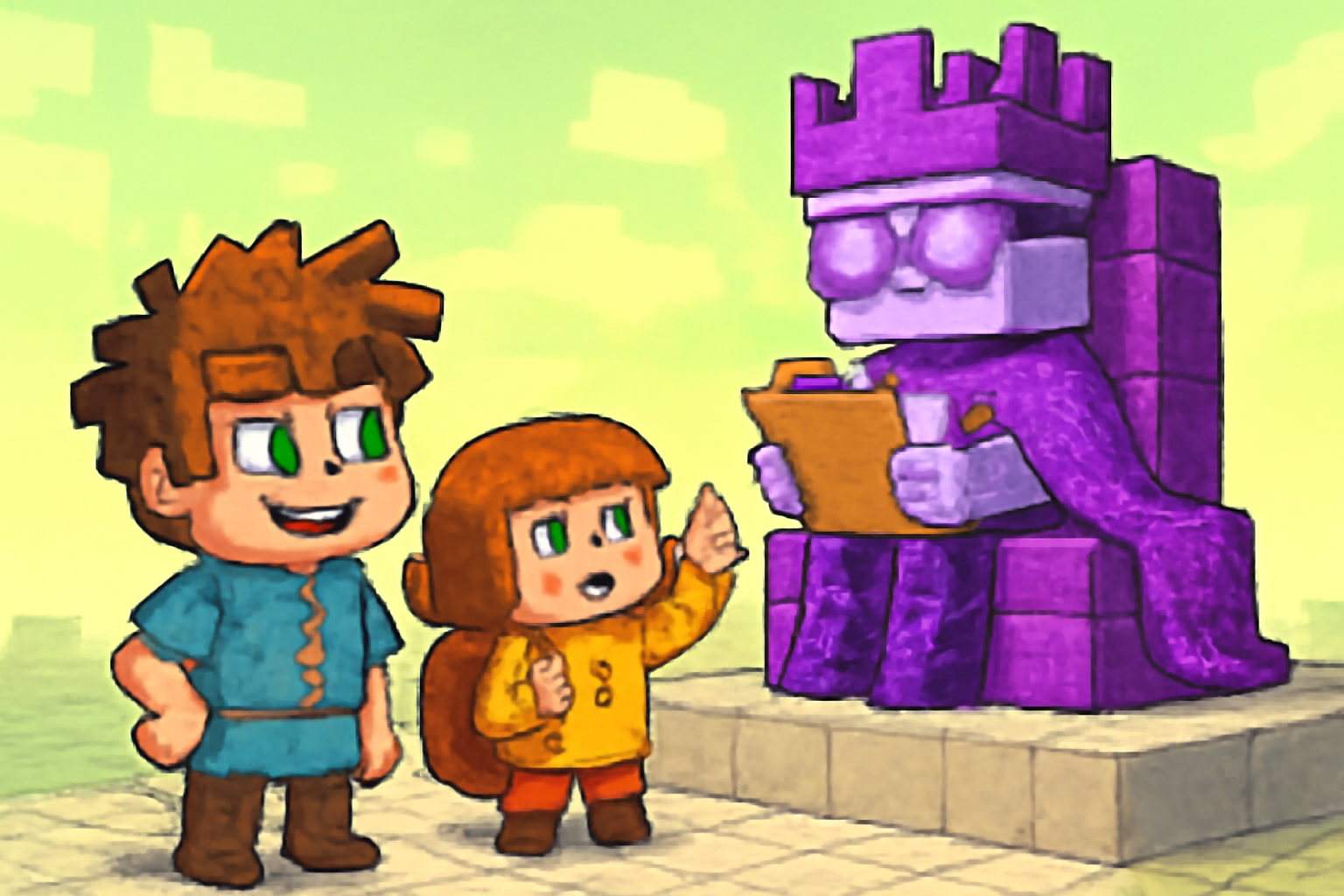
Ritual practices in ancient cultures weren’t superstition — they were the technology of meaning, the systematic way a society maintained its connection to the stories that held it together. When you read about ancient rites with that understanding, they stop being strange and start being completely logical. The riddle contest, in particular, is one of mythology’s most enduring ritual structures — from the Sphinx’s deadly interrogation of Oedipus to Bilbo’s nerve-wracking exchange with Gollum in the dark — because it frames knowledge itself as the ultimate currency of power, the one thing no sword can simply take from you. So when we arrive at Chapter 10 and find the Ender Earl already seated on his throne of stacked purpur pillars, golden clipboard in hand, radiating the particular energy of someone who has been waiting to ask you something insufferable, the mythological bones of this moment are impossible to ignore. He is, whether he knows it or not, playing a role as old as storytelling itself.

“You’re late,” he said, without looking up.

“We got lost,” I said. “Someone swapped all the signs.”

He looked up. “Yes,” he said. “That was me. I have it in writing.” He tapped the clipboard.

Ollie and Biscuit — Chapter 10, scene 1

This post contains affiliate links. As an Amazon Associate, I earn from qualifying purchases at no extra cost to you. If Chapter 10’s riddle contest got your brain buzzing and you’re craving more mythological mischief, the Percy Jackson and the Olympians 5 Book Paperback Boxed Set (w/poster) is the perfect starting point — or a great excuse to reread everything. Percy faces his share of impossible challenges, and honestly the riddle energy in this chapter gives very strong Sphinx-encounter vibes. The included poster is a bonus worthy of any demigod’s bedroom wall.

Read more

Chapter 12: The Most Accidentally Elegant Build in History

Ollie and Biscuit — Chapter 12, scene 1

Sacred sites and legendary places hold a special interest for me because they exist at the intersection of physical geography and cultural meaning — real locations transformed by story into something mythological. Everywhere humans have lived, they’ve done this, and the consistency of the impulse is remarkable. What fascinates me is how accidental beauty so often becomes the most enduring kind — the shrine that was never planned as a shrine, the monument that grew from pure necessity into something transcendent, the structure whose elegance no single architect intended. Across cultures, from the organic sprawl of ancient Delphi to the improvised sacred geometries of folk traditions, the most mythologically resonant places are frequently the ones that emerged through survival, adaptation, and happy accident rather than deliberate design. That tension between intention and emergence is exactly what makes the build we’re examining in this chapter so worth unpacking — because it turns out the ancient world had a great deal to say about what happens when something accidentally becomes sacred.

“Forty-two minutes when we started,” Biscuit announced, consulting the little hourglass she’d pulled from her bag, “which means we now have eleven minutes and — oh no.”

“Eleven minutes is great!” I said, only partially believing it.

The Elegance Duel platform was enormous — a flat stretch of endstone as wide as Sproutville’s entire square, glowing faintly purple in the dim End sky. Two building zones were marked out with thin lines of amethyst dust: one on the left, one on the right. The Ender Earl was already in his zone, working in absolute silence. His structure was breathtaking. A symmetrical tower of purpur blocks, each one perfectly aligned, rising in neat identical tiers. Sea lanterns placed at exact intervals. Everything level. Everything square.

It was the most organized thing I had ever seen. I hated it a little bit.

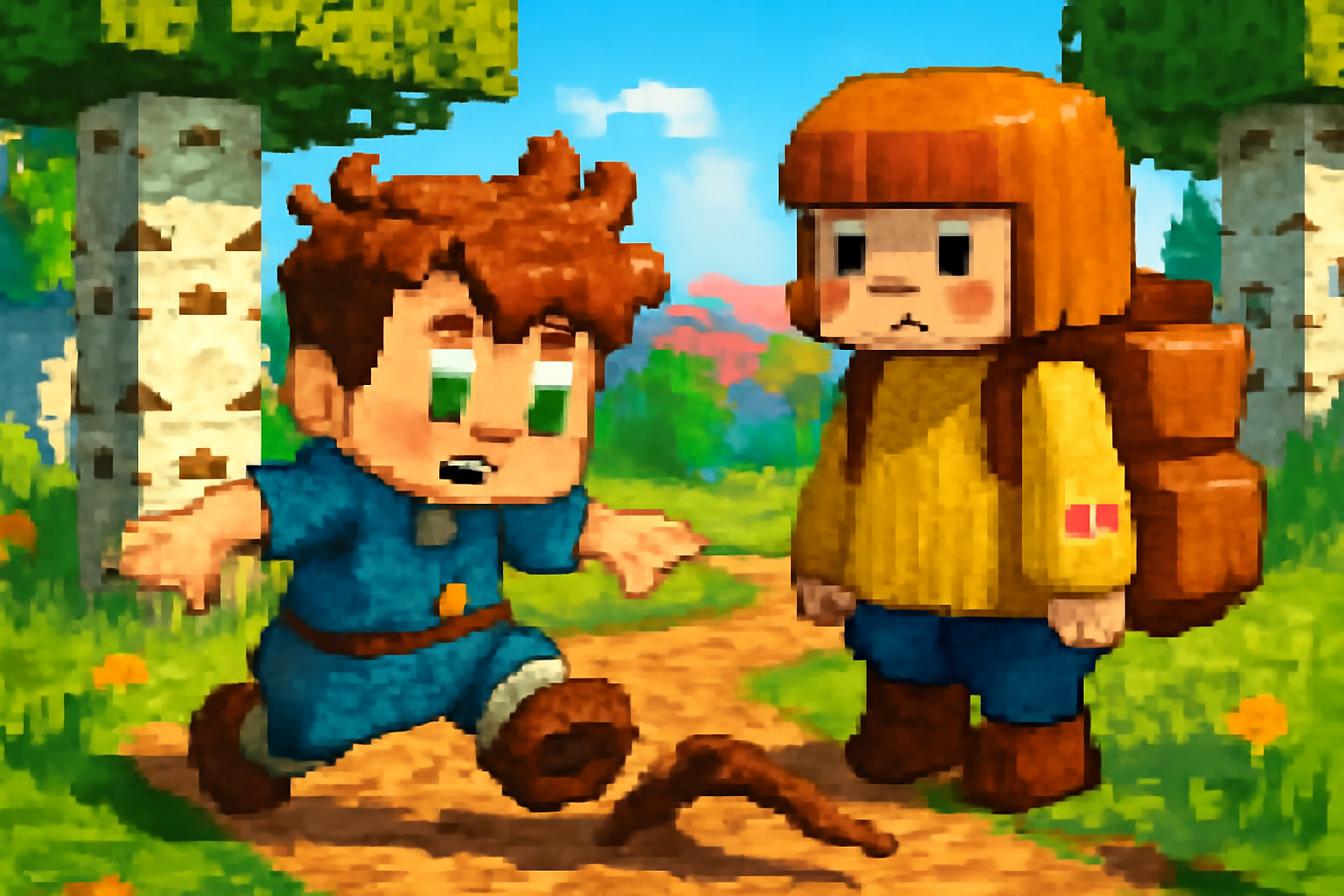
I stepped into my zone, set all the materials in a careful pile, and immediately tripped over the pile.

Ollie and Biscuit — Chapter 12, scene 1

This post contains affiliate links. As an Amazon Associate, I earn from qualifying purchases at no extra cost to you. If Chapter 12 got your Greek mythology gears turning, you NEED to check out Ravensburger Horrified: Greek Monsters. This cooperative strategy game throws you and up to four friends straight into the chaos of facing Medusa, the Minotaur, and more — basically everything we talk about on this blog, but now you’re actually in it. The teamwork mechanic means your whole squad has to think critically together, which honestly makes it feel like you’re building your own accidentally elegant strategy in real time.

Read more

Minecraft Fan Fiction: Artifact Amnesia

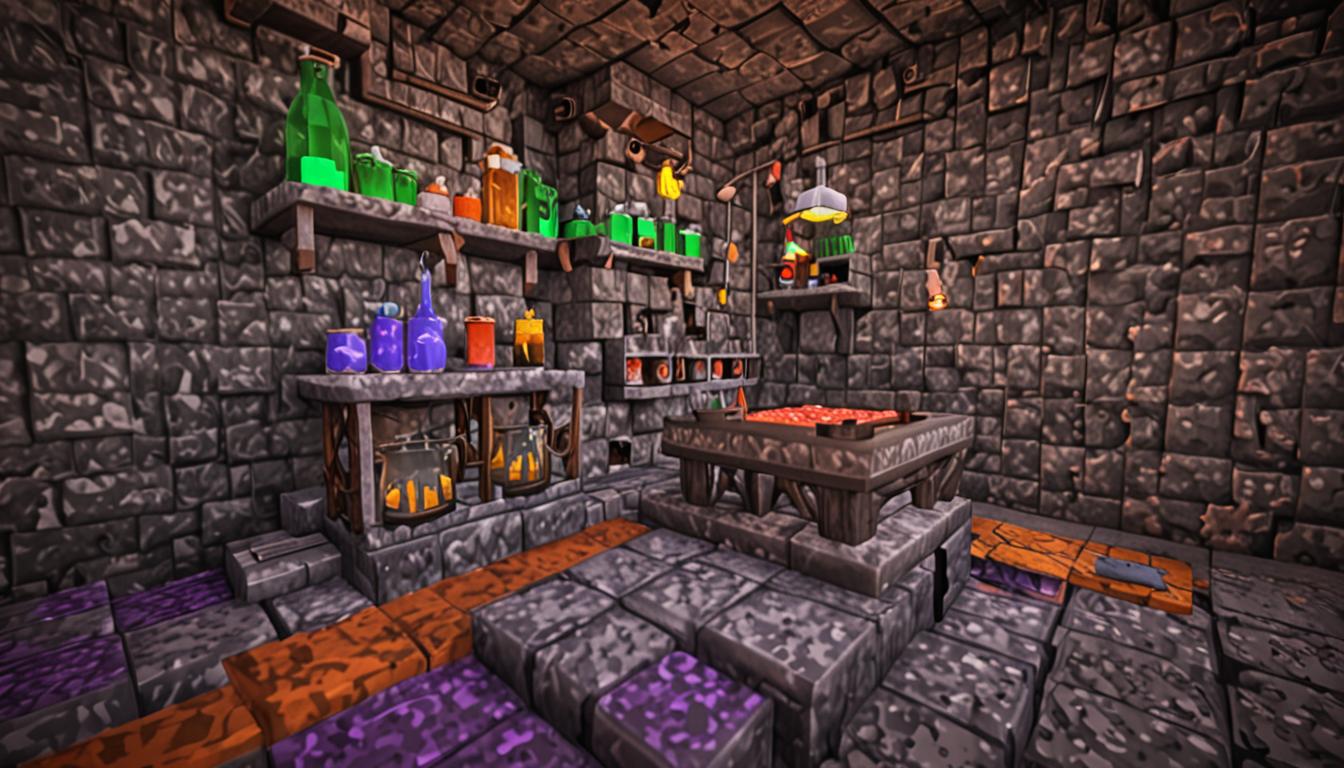
A chaotic Minecraft-style potion brewing station inside a blocky, pixelated stone room with a bubbling brewing stand at the center, featuring three glass bottles with colorful, glowing liquids in vibrant purple, green, and orange hues. The brewing stand is constructed from dark gray cobblestone blocks and a blaze rod, with pixelated flames underneath creating an animated glow effect. Scattered around the workspace are various Minecraft potion ingredients including blocky nether wart, glowstone dust particles, redstone dust, spider eyes, and magma cream, all rendered in the signature cubic Minecraft style. A large explosion of colorful particle effects erupts from one of the bottles, with blocky smoke clouds and sparkles in pink, yellow, and cyan spreading outward in a pixelated burst pattern. The stone brick walls show slight damage with cracks and missing blocks from previous failed experiments, and potion splash marks stain the floor in various colors. Wooden chests with open lids reveal more brewing supplies, while a crafting table sits in the corner covered with recipe books rendered as flat, blocky Minecraft book items. The lighting creates dramatic shadows from flickering torches mounted on the walls, casting an warm orange glow that contrasts with the cool magical luminescence emanating from the potions, capturing both the excitement and unpredictable chaos of potion-making experiments gone awry.

The Accidental Alchemist’s Memory-Saving Adventure Hi! I’m Avery, and I need to tell you about the craziest week of my entire life. You see, everyone in my village called me the “Potion-Splattered Noob Alchemist.” Yeah, I know that’s a super long name. It basically meant I was really, really bad at making potions. Like, the … Read more