Twenty-five years ago, I sat in a dimly lit archive in Kyoto, squinting at a hand-painted scroll depicting a nine-tailed fox — and I realized something that changed how I approach mythology forever. Every culture on earth, no matter how isolated, had independently invented creatures that served the same deep human needs: to explain the unexplained, to embody our fears, and to give shape to our greatest hopes. That realization is exactly why I built this famous mythological creatures guide. Whether you are just beginning your journey into world mythology or you want a single definitive reference to return to, this is the resource I wish had existed when I started. I have spent twenty-five years cataloging over 400 distinct legendary beings across more than 60 cultures. This guide distills the most iconic ones into one place.
People often ask me where to start when studying mythological creatures. The honest answer is: it does not matter where you start, as long as you start with context. A dragon in Chinese mythology is not the same creature as a dragon in medieval Europe. A sea monster in Norse tradition carries completely different cultural weight than one in Polynesian lore. Understanding that distinction — that geography, religion, and historical circumstance shape every single creature — is the foundation of serious mythological study. Ignore that foundation and you will misread every story you encounter.
In this guide, I walk you through the world’s most famous mythological creatures by region and archetype. I cover their origins, their symbolic functions, and why they still matter today. I also flag common beginner mistakes I see constantly — the kind that took me years to unlearn. Let us get into it.
The Dragon: One Creature, Two Completely Different Worlds
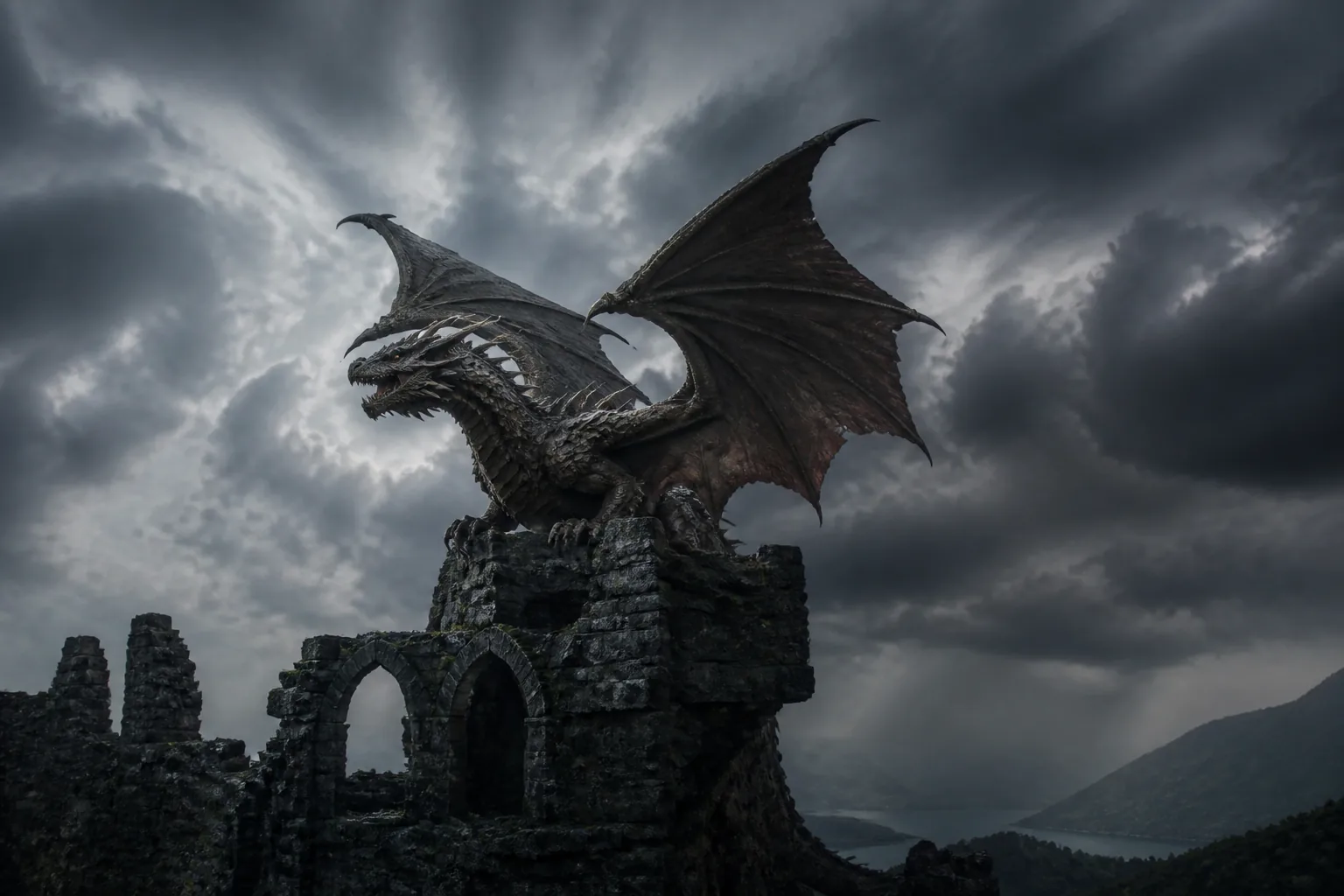
No creature appears in more cultures than the dragon. However, the word “dragon” covers two mythological traditions so different that treating them as the same creature is a serious error. In Western tradition — rooted in Greek, Roman, and later medieval European sources — the dragon is almost always a force of destruction. It hoards gold, breathes fire, terrorizes villages, and must be slain. Saint George’s dragon, Fafnir from Norse legend, and the dragons of Beowulf all share this malevolent profile. They represent chaos, sin, and the untamed natural world threatening civilized order.
Eastern dragons are something else entirely. In Chinese mythology, the lóng (龍) is a benevolent, water-dwelling deity associated with rain, rivers, and imperial authority. Chinese emperors literally called themselves “descendants of the dragon.” In Japanese tradition, ryū dragons are similarly revered as guardians of bodies of water. In Vietnamese folklore, the entire Vietnamese people trace their legendary ancestry to a dragon king named Lạc Long Quân. For example, the Dragon Kings of the Four Seas in Chinese cosmology governed weather and protected humans — a function almost the opposite of their Western counterparts.
In my experience, this East-West split is the single most misunderstood fact in popular mythology. I have corrected this misconception in classrooms, in published articles, and at academic conferences more times than I can count. When you encounter any dragon reference, always ask first: which tradition does it come from? That question alone will save you enormous confusion.
The Phoenix: Rebirth Across Six Civilizations
The phoenix is one of mythology’s great universal symbols. That said, its specific form changes dramatically depending on where you find it. The Greek and Roman phoenix — sourced originally from Herodotus around 450 BCE — was a singular bird that lived for 500 years before building a nest of aromatic wood, igniting itself, and rising reborn from the ashes. It was associated with the sun, cycles of time, and in later Christian interpretation, resurrection itself. Early church fathers adopted the phoenix as a symbol of Christ’s resurrection within the first two centuries CE.
However, similar birds appear in strikingly parallel forms across completely separate traditions. The Fenghuang of Chinese mythology is often called the “Chinese phoenix,” though it is technically a distinct creature — a composite bird representing virtue, grace, and the balance of yin and yang. It appears alongside the dragon as a symbol of imperial marriage, the dragon representing the emperor and the Fenghuang representing the empress. In Egyptian mythology, the Bennu bird served an almost identical symbolic role to the Greek phoenix: a heron-like solar deity associated with the creation cycle and the god Ra.
Specifically, what fascinates me most is that the Persian Simurgh, the Russian Zhar-Ptitsa (Firebird), and the Hindu Garuda all share overlapping qualities with the phoenix archetype. None of these traditions had direct contact with each other at the time these creatures emerged. As a result, scholars debate whether the phoenix represents a universal human need to believe in renewal — or evidence of ancient trade routes carrying mythological ideas further than we think. After 25 years, I lean toward both explanations being partially true.
Famous Mythological Creatures Guide: The Sea Monsters
No category of legendary creature captures human imagination quite like the sea monster. For most of human history, the deep ocean was genuinely unknown and genuinely deadly. Ancient maps famously marked uncharted waters with “here be dragons” or illustrations of terrifying beasts — and in many cases, those illustrations were based on real sightings of misidentified animals. The Kraken of Norse and Icelandic legend, for instance, was almost certainly inspired by encounters with giant squid, which can reach lengths of 43 feet and were documented as real animals in 1857 by Danish naturalist Japetus Steenstrup.
The Kraken itself appears in texts as early as the 13th-century Old Norse Örvar-Odds saga. It was described as so vast that sailors mistook it for an island and landed on its back. In my research, I found that similar “island-creature” myths appear in Arabic, Hebrew, and Irish tradition — all independently. The Arabic Zaratan, the Hebrew Leviathan, and the Irish Jasconius all share this terrifying quality of being mistaken for land. That parallel tells us something profound about how universally sailors feared the unknown depths.
Leviathan deserves special mention. Appearing in the Hebrew Bible’s Book of Job, written roughly between the 6th and 4th centuries BCE, Leviathan is not merely a monster — it is a theological statement. It represents the limits of human power before divine creation. God points to Leviathan specifically to humble Job. For example, Job 41 describes a creature that breathes fire, has scales like shields, and whose heart is hard as stone. This is arguably the most theologically significant sea creature in world mythology.
Scylla, Charybdis, and the Greek Sea
Greek mythology contributed two of history’s most famous nautical monsters: Scylla and Charybdis. Homer placed them opposite each other in a narrow strait — almost certainly the Strait of Messina between Sicily and mainland Italy. Scylla was a six-headed monster that snatched sailors from ships. Charybdis was a massive whirlpool creature that swallowed entire vessels. Together they gave us the phrase “between Scylla and Charybdis” — meaning caught between two equally dangerous choices. That linguistic legacy, still used in English today, demonstrates how deeply mythology has shaped everyday language.
Yokai: Japan’s Vast and Extraordinary Spirit World
When people ask me which mythology offers the richest and most diverse catalog of creatures, I always answer: Japan’s yokai tradition. The word yokai (妖怪) translates roughly as “mysterious apparition” or “strange calamity.” It covers an enormous range of supernatural beings — from terrifying demons to mischievous household spirits. Japanese scholars have cataloged over 400 distinct yokai. The 18th-century artist Toriyama Sekien alone produced four illustrated books documenting more than 200 of them between 1776 and 1781.
Some yokai are iconic globally. The Kitsune is a magical fox spirit that grows more powerful with each of its nine tails — taking up to 1,000 years to achieve its full nine-tailed form. The Tengu are proud, long-nosed mountain spirits associated with martial arts and Buddhist practice. However, my personal favorites are the more peculiar ones. The Kappa is a water-dwelling creature with a turtle shell and a dish of water on its head — if the dish dries out, the Kappa loses its power. According to Japanese folklore tradition, you can defeat a Kappa simply by bowing to it, because it will politely bow back and spill its water.
What makes yokai mythology especially valuable for students of mythology is its completeness. Unlike many mythological traditions that survive only in fragments, the yokai tradition has been continuously documented, illustrated, and culturally maintained for centuries. It offers a living example of how mythology evolves — adapting to new eras while maintaining ancient roots. Specifically, modern anime and video games have introduced yokai to a global audience of millions, demonstrating that mythological creatures remain culturally vital in the 21st century.
The Griffin, the Sphinx, and Composite Creatures of the Ancient World
Composite creatures — beings assembled from parts of multiple real animals — appear in virtually every ancient mythology. They represent a specific kind of symbolic thinking: combining the most powerful qualities of different creatures into one supreme being. The Griffin is perhaps the most widespread example. With the body of a lion and the head and wings of an eagle, it combined the king of beasts with the king of birds. Ancient Greek sources describe the Griffin as a guardian of treasure and divine power. Representations of griffin-like creatures appear in ancient Persian art dating to approximately 3000 BCE — making it one of the oldest continuously depicted mythological creatures on record.
The Sphinx presents a fascinating case study in how the same creature transforms across cultures. The Egyptian Sphinx — most famously embodied by the Great Sphinx of Giza, carved around 2500 BCE — is a lion with a human head, representing royal power and divine protection. It is serene and guardian-like. The Greek Sphinx, however, is a completely different moral entity. It is female, winged, and malevolent — it strangled travelers who could not answer its famous riddle: “What walks on four legs in the morning, two at noon, and three in the evening?” Oedipus solved the riddle (the answer is a human being across the stages of life), and the Sphinx destroyed itself in response.
In my experience, the transformation of the Sphinx from Egyptian guardian to Greek monster is a perfect illustration of how creatures migrate between cultures and get fundamentally reinterpreted. Ancient Greeks encountered Egyptian mythology through trade and travel — particularly after Alexander the Great’s conquest of Egypt in 332 BCE. However, they did not simply copy what they found. They adapted it, darkened it, and gave it a narrative function that suited their own storytelling traditions. That process of adaptation is the heartbeat of comparative mythology.
Creatures of the Americas, Africa, and the Pacific: The Overlooked Traditions
Western academic mythology has historically focused on Greek, Roman, Norse, and Egyptian traditions — which represent a fraction of the world’s mythological wealth. I want to address this imbalance directly, because some of the most extraordinary creatures in world mythology come from traditions that receive far too little attention.
The Thunderbird of Indigenous North American traditions — found across dozens of distinct nations from the Pacific Northwest to the Great Plains — is a colossal supernatural bird whose wingbeats create thunder and whose eyes flash lightning. Unlike the phoenix or the rukh, the Thunderbird is inseparable from a living spiritual and cultural tradition. It is not simply mythology to the nations that hold it sacred. Treating it with the appropriate respect and recognizing that these are living traditions — not ancient relics — is an ethical obligation for any mythology researcher.
From West African tradition, the Adze of the Ewe people of Ghana and Togo is a vampire-like creature that takes the form of a firefly. It can possess humans, causing illness and misfortune. The Inkanyamba of Zulu mythology is a massive, tornado-causing serpent that lives in waterfalls — specifically associated with the Howick Falls in South Africa, where belief in the creature remains active today. From Māori tradition, the Taniwha are powerful water spirits — sometimes dangerous, sometimes protective — that inhabit rivers, lakes, and the sea. Specific Taniwha are named and venerated by particular iwi (tribes) as ancestral guardians.
The lesson I draw from twenty-five years of research is this: the further you explore beyond the Greco-Roman canon, the richer mythology becomes. The creatures listed above are not footnotes. They are the main text of the world’s mythological story.
Common Mistakes Beginners Make When Studying Mythological Creatures
I have taught mythology at the university level and run this site for years. Certain mistakes come up constantly. Here are the five I see most often — and how to avoid them.
Mistake 1: Treating All Dragons as the Same Creature
I covered this above, but it bears repeating as a formal warning. Eastern and Western dragons are fundamentally different beings with different origins, different symbolic functions, and different relationships to humanity. Conflating them leads to misinterpretation of every story that features them. Always identify the cultural tradition before drawing any conclusions.
Mistake 2: Assuming Mythology Means “False Story”
This is perhaps the most damaging misunderstanding in popular culture. In academic mythology studies, “myth” does not mean falsehood. It refers to a sacred narrative that explains the origins of the world, human existence, or cultural practices. Myths were — and in many living traditions still are — believed to be literally true. Approaching any mythological creature with a dismissive “well it’s just a myth” attitude will cause you to miss the entire point of why these stories exist and what they do for the people who tell them.
Mistake 3: Using Pop Culture as a Primary Source
Dungeons and Dragons, video games, movies, and fantasy novels have introduced millions of people to mythological creatures — and that is genuinely valuable. However, these sources take significant creative liberties. A beholder in D&D has no mythological precedent. A unicorn in My Little Pony has almost nothing in common with the fierce, untameable unicorn of medieval European tradition. Specifically, I recommend always tracing a creature back to its earliest documented primary source before forming conclusions about what it represents.
Mistake 4: Ignoring the Colonial History of Mythology Research
Nineteeth and early 20th-century mythologists — many of whom are still cited — operated within colonial frameworks that labeled non-European belief systems as “primitive” or “superstition.” Some of this scholarship is methodologically valuable but ethically compromised. When I first started out, I relied too heavily on these sources without critical examination. That was a mistake. Always read older comparative mythology with awareness of the era and ideological context in which it was produced.
Mistake 5: Expecting Consistency Within a Single Mythology
Mythological traditions are not single-authored novels with consistent internal logic. They are accumulated bodies of stories told across centuries by different people, in different places, for different purposes. As a result, you will find contradictions — and that is perfectly normal. The Greek Medusa is a monster in Homer but a tragic victim in Ovid. The Norse Loki is a helpful trickster in early texts and a world-destroying villain in later ones. Embrace the contradictions. They are where the most interesting scholarship lives.
Frequently Asked Questions About Mythological Creatures
What is the oldest mythological creature on record?
The oldest documented mythological creature is almost certainly the lion-human figure found in the Hohlenstein-Stadel cave in Germany, dated to approximately 40,000 years ago. This carved ivory figurine — depicting a human body with a lion’s head — represents the earliest known evidence of composite creature mythology. In terms of named creatures appearing in written text, the Anzu bird of Sumerian/Akkadian mythology, documented in cuneiform texts dating to approximately 2500 BCE, is among the earliest. The Mesopotamian traditions of ancient Sumer are the oldest written mythological record we possess.
Why do similar creatures appear in cultures that never had contact?
This is one of the central questions of comparative mythology. Two main explanations exist. First, Jungian psychologists like Carl Jung proposed that certain archetypes — like the dragon, the trickster, or the great flood — emerge from a universal human unconscious. Second, cultural diffusionists argue that mythological ideas spread through ancient trade routes, migrations, and contact that modern scholars have underestimated. In reality, both mechanisms probably operate simultaneously. Some parallels reflect universal human psychology. Others reflect ancient cultural exchange we have not yet fully documented.
Are any mythological creatures based on real animals?
Yes — many of them. The Kraken was almost certainly inspired by giant squid. The Cyclops of Greek mythology may have originated when ancient Greeks found the skulls of dwarf elephants (found on Mediterranean islands) and interpreted the large nasal cavity as a single eye socket. The Griffin’s origins may be connected to Protoceratops dinosaur fossils found in the Gobi Desert by ancient Scythian traders — a theory advanced compellingly by folklorist Adrienne Mayor. Griffins appear in Scythian art within the same geographic region where these fossils are abundant. The unicorn likely derives from sightings of the Arabian oryx in profile.
Final Thoughts: Your Journey Into Famous Mythological Creatures
This famous mythological creatures guide is designed to be a beginning, not an endpoint. The creatures covered here — dragons, phoenixes, sea monsters, yokai, composite beings, and the creatures of traditions too often overlooked — represent thousands of years of human imagination, fear, wonder, and wisdom. Each one is a doorway into a specific culture’s most deeply held beliefs about how the world works.
In twenty-five years of research, the single most important lesson I have learned is this: respect the source. Every mythological creature belongs to a living or historical human community that used it to make sense of existence. Your job as a student of mythology is to understand that creature on its own terms before you analyze, compare, or interpret it. That discipline — that patience — is what separates casual curiosity from genuine mythological literacy.
Start with the creatures that call to you. Maybe it is the dragon, because you grew up with fantasy novels. Maybe it is the yokai, because you encountered them through anime. Maybe it is the Thunderbird, because you have a personal connection to Indigenous North American tradition. Whatever your entry point, follow it. Follow it into the primary sources. Follow it into the archaeological record. Follow it into the living communities where these beings are still honored.
The world of mythology rewards curiosity more generously than almost any other field of human knowledge. I have been studying it for twenty-five years and I still discover something that surprises me every single week. That is the gift these creatures offer. They are not relics. They are alive — as long as someone is asking questions about them.
Bookmark this guide. Return to it. And then go deeper — the specific culture posts, the deep-dive creature profiles, and the regional mythology guides here on Legendary Mythics are all designed to take you further. The journey is the point. Welcome to it.
About This Article

Written by Elias Blackwood. Elias Blackwood has spent 25 years as an obsessive collector of world mythology and folklore, from Greek and Norse epics to Japanese yokai and West African trickster tales — entirely self-taught, for the love of it. His reading draws on comparative mythology, cultural anthropology, and a personal library of translations most people have never heard of. More about this site.
Verify this against a primary source
Specifics change, and your situation may differ from the one described here. These are the authorities worth checking directly:
- Theoi Project — Greek mythology texts with primary source citations
- Perseus Digital Library — classical texts in the original and in translation
- Encyclopaedia Britannica — edited reference for figures and traditions