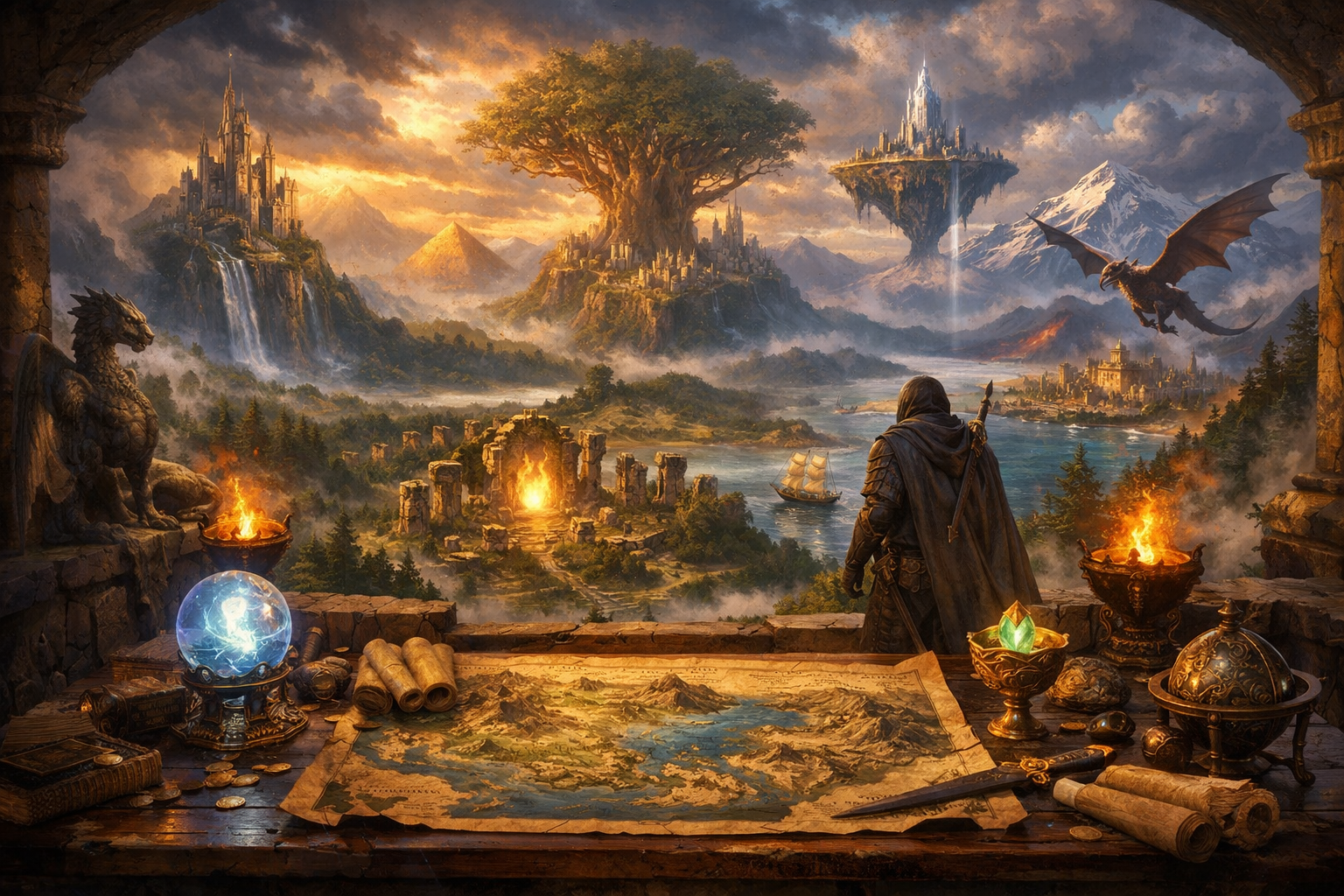
Chapter 2: The Sheep Who Stole the Show

Ollie and Biscuit — Chapter 2, scene 1

Reading legendary lore feels, to me, like taking field notes on a civilization — you’re assembling a picture of how people organized meaning, justified authority, and explained the inexplicable. Every detail is a data point. That’s the mindset I bring to every piece of deep mythological or legendary content I encounter. And sheep — humble, woolly, seemingly unremarkable sheep — turn out to be extraordinary data points, woven into the symbolic fabric of cultures from ancient Mesopotamia to Norse pastoral mythology in ways that most people completely overlook. When an animal keeps showing up in sacred texts, heroic narratives, and divine allegories across wildly different traditions, that’s not coincidence; that’s a cultural obsession worth dissecting. So let’s talk about why, in the grand theater of legendary history, the sheep somehow stole the show.

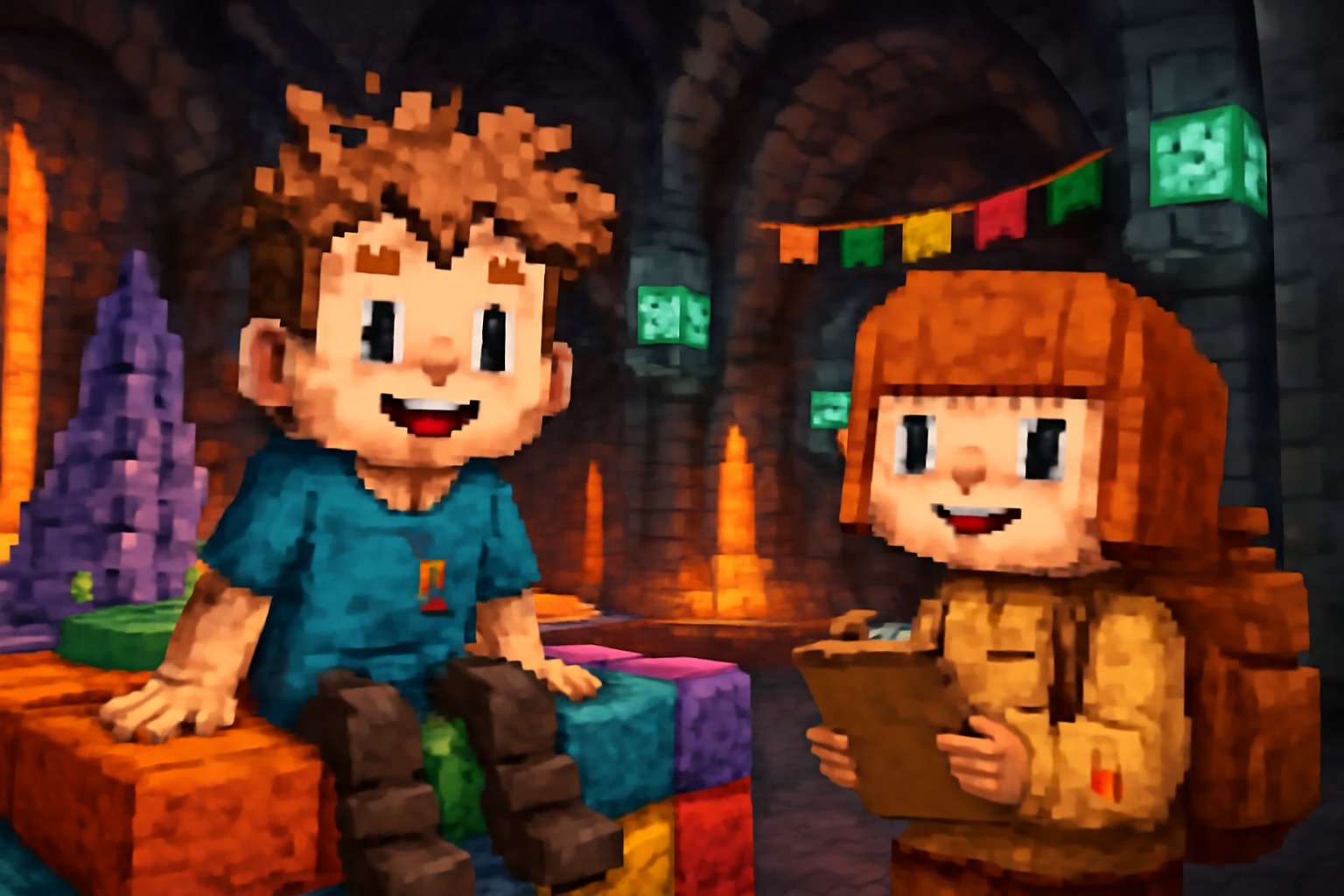
“Watch your feet,” Biscuit said helpfully, about three seconds too late, as she adjusted the enormous backpack bouncing on her shoulders. She had packed it that morning while reading from a list titled Things To Pack, which was itself on a list titled Lists I Need Today. I had counted at least four separate bags of crackers going in. Biscuit believes crackers can solve most problems. She might be right.

We’d left Sproutville before sunrise, still thinking about those scorch marks near the fountain square and the faint smell of redstone machinery Biscuit had detected. Somebody had taken every map in the village, and that somebody had left a very specific kind of mess — the hot, sharp-edged kind. But the Wool Festival couldn’t wait for us to figure that out. Rainbow Meadows needed help now.

Ollie and Biscuit — Chapter 2, scene 1

This post contains affiliate links. As an Amazon Associate, I earn from qualifying purchases at no extra cost to you. After reading about a sheep who literally stole the show, I think every young mythology fan deserves a fluffy sidekick to read along with — and this Tiny Heart Sheep Stuffed Animal is absolutely perfect for the job. It’s small enough to sit on your desk or bookshelf like a little mythological mascot, super soft, and honestly just adorable. Whether you’re team hero or team sheep after this chapter, this little lamb has your back.

Read more

Chapter 1: Upside-Down and Absolutely Fine

Ollie and Biscuit — Chapter 1, scene 1

I studied mythology and ancient history at university, and the one thing that struck me across every culture I examined was how consistently people encoded their deepest values, fears, and social structures into their legends — which is exactly why I find these kinds of deep dives so endlessly fascinating. There is something almost universal about the comic hero’s stumble: the chosen one who arrives not in glory but in chaos, soaking bystanders and disrupting the ordinary world in a way that signals, loud and unmistakable, that something has fundamentally shifted. From the bumbling youngest sons of Norse and Celtic folklore to the trickster-adjacent figures who tumble headlong into their destinies across Greek, Japanese, and West African traditions, cultures have always understood that the hero who begins upside-down often ends up reorienting the entire world around them. What I love about Ollie’s opening splash — undignified, chaotic, and absolutely perfect — is how faithfully it echoes that ancient storytelling instinct: disruption as destiny, embarrassment as threshold. So let’s dig into why this chapter does something far older and far cleverer than it might first appear.

“I meant to do that,” I announced to no one in particular, sitting in the fountain with water streaming down my messy brown hair.

That’s when I heard the screaming.

Ollie and Biscuit — Chapter 1, scene 1

This post contains affiliate links. As an Amazon Associate, I earn from qualifying purchases at no extra cost to you. If “Chapter 1: Upside-Down and Absolutely Fine” has you craving more mythological mayhem, the Treasury of Greek Mythology: Classic Stories of Gods, Goddesses, Heroes & Monsters is basically my top-tier recommendation for leveling up your myth knowledge. National Geographic packed this book with stunning artwork and stories about everyone from Zeus to Medusa — the kind of deep lore that makes you go “wait, THAT’S how it happened?” every other page. Genuinely a must-have.

Read more

What Is Dionysus’ Symbol? The Main Symbols of the Greek Wine God

What Is Dionysus Symbol? The Main Symbols of the Greek Wine God

Introduction: Why Dionysus’ Symbols Still Fascinate Us Today I’ve spent years diving deep into Greek mythology, and few figures have captured my imagination quite like Dionysus — the god of wine, ecstasy, fertility, and theatre. If you’ve ever wondered what is Dionysus’ symbol, the short answer is this: his most iconic and primary symbol is … Read more

Chapter 10: The Riddle Contest Nobody Asked For

Ollie and Biscuit — Chapter 10, scene 1

Ritual practices in ancient cultures weren’t superstition — they were the technology of meaning, the systematic way a society maintained its connection to the stories that held it together. When you read about ancient rites with that understanding, they stop being strange and start being completely logical. The riddle contest, in particular, is one of mythology’s most enduring ritual structures — from the Sphinx’s deadly interrogation of Oedipus to Bilbo’s nerve-wracking exchange with Gollum in the dark — because it frames knowledge itself as the ultimate currency of power, the one thing no sword can simply take from you. So when we arrive at Chapter 10 and find the Ender Earl already seated on his throne of stacked purpur pillars, golden clipboard in hand, radiating the particular energy of someone who has been waiting to ask you something insufferable, the mythological bones of this moment are impossible to ignore. He is, whether he knows it or not, playing a role as old as storytelling itself.

“You’re late,” he said, without looking up.

“We got lost,” I said. “Someone swapped all the signs.”

He looked up. “Yes,” he said. “That was me. I have it in writing.” He tapped the clipboard.

Ollie and Biscuit — Chapter 10, scene 1

This post contains affiliate links. As an Amazon Associate, I earn from qualifying purchases at no extra cost to you. If Chapter 10’s riddle contest got your brain buzzing and you’re craving more mythological mischief, the Percy Jackson and the Olympians 5 Book Paperback Boxed Set (w/poster) is the perfect starting point — or a great excuse to reread everything. Percy faces his share of impossible challenges, and honestly the riddle energy in this chapter gives very strong Sphinx-encounter vibes. The included poster is a bonus worthy of any demigod’s bedroom wall.

Read more

Minecraft Fan Fiction: Artifact Amnesia

A chaotic Minecraft-style potion brewing station inside a blocky, pixelated stone room with a bubbling brewing stand at the center, featuring three glass bottles with colorful, glowing liquids in vibrant purple, green, and orange hues. The brewing stand is constructed from dark gray cobblestone blocks and a blaze rod, with pixelated flames underneath creating an animated glow effect. Scattered around the workspace are various Minecraft potion ingredients including blocky nether wart, glowstone dust particles, redstone dust, spider eyes, and magma cream, all rendered in the signature cubic Minecraft style. A large explosion of colorful particle effects erupts from one of the bottles, with blocky smoke clouds and sparkles in pink, yellow, and cyan spreading outward in a pixelated burst pattern. The stone brick walls show slight damage with cracks and missing blocks from previous failed experiments, and potion splash marks stain the floor in various colors. Wooden chests with open lids reveal more brewing supplies, while a crafting table sits in the corner covered with recipe books rendered as flat, blocky Minecraft book items. The lighting creates dramatic shadows from flickering torches mounted on the walls, casting an warm orange glow that contrasts with the cool magical luminescence emanating from the potions, capturing both the excitement and unpredictable chaos of potion-making experiments gone awry.

The Accidental Alchemist’s Memory-Saving Adventure Hi! I’m Avery, and I need to tell you about the craziest week of my entire life. You see, everyone in my village called me the “Potion-Splattered Noob Alchemist.” Yeah, I know that’s a super long name. It basically meant I was really, really bad at making potions. Like, the … Read more

The Myths of Dionysus: From Birth to Divine Ascension

A dramatic ancient Greek ceremonial scene unfolds in a torch-lit outdoor amphitheater at dusk, where hundreds of devotees gather in flowing white and purple robes to honor Dionysus through sacred rituals. In the center, masked dancers whirl ecstatically around a marble altar adorned with grapevines, wine amphoras, and flickering oil lamps, their movements creating dynamic swirls of fabric against the golden firelight. The crowd forms concentric circles, some participants holding thyrsus staffs topped with pinecones and ivy, others raising wine cups toward the darkening sky filled with stars. Ancient stone columns draped in grape clusters and ivy frame the scene, while the warm glow of braziers illuminates faces expressing joy, reverence, and spiritual connection. The atmosphere pulses with communal energy as wine flows freely, musicians play reed pipes and drums in the shadows, and the entire gathering moves in harmonious celebration beneath a crescent moon, embodying the intoxicating power and divine ecstasy associated with the god of wine and revelry.

Ancient Greek mythology presents few figures as complex and fascinating as Dionysus, the god of wine, ecstasy, and divine madness. His journey from miraculous birth to divine recognition weaves through some of mythology’s most captivating tales. Moreover, these stories reveal profound themes about transformation, acceptance, and the struggle between civilization and wild nature. The Miraculous … Read more

Dionysus: The Greek God of Wine, Ecstasy, and Ritual Madness

A majestic scene depicting Dionysus, the Greek god of wine and fertility, standing in a lush vineyard during the peak of harvest season, his powerful muscular form draped in flowing purple robes adorned with grape vine patterns. Golden sunlight filters through heavy clusters of ripe grapes hanging from ancient twisted vines, casting dappled shadows across the fertile earth below. The god holds a ornate thyrsus staff topped with pine cones and wrapped in ivy, while a crown of grape leaves and small purple grapes adorns his curly dark hair. Around him, the natural world pulses with divine energy - wine barrels rest among the vines, wild flowers bloom in vibrant colors, and the air shimmers with an otherworldly golden glow that suggests the mystical connection between the changing seasons and divine power. The composition captures the essence of autumn's abundance and the sacred relationship between nature's cycles and ancient Greek religious symbolism.

Far from a simple deity, Dionysus stands as a profound paradox, a god whose very essence challenged the ordered world of the Olympians and the rational thought prized by Greek philosophy. His compelling allure stemmed from his embodiment of life’s most potent, often contradictory, forces. The Duality: Divine Ecstasy vs. Terrifying Madness Dionysus was the … Read more

The Cult of Dionysus: Ancient Greek Rites and Festivals

The Cult of Dionysus: Ancient Greek Rites and Festivals

The Cult of Dionysus: Ancient Greek Rites and Festivals The Revolutionary Nature of Dionysian Worship The Dionysiac mysteries represented a radical departure from traditional Greek religious practices, offering participants an intoxicating blend of spiritual transcendence and physical liberation. Unlike the formal ceremonies conducted in marble temples for gods like Apollo or Athena, Dionysian worship took … Read more