The Thyrsus in Ancient Greek Art & Ritual
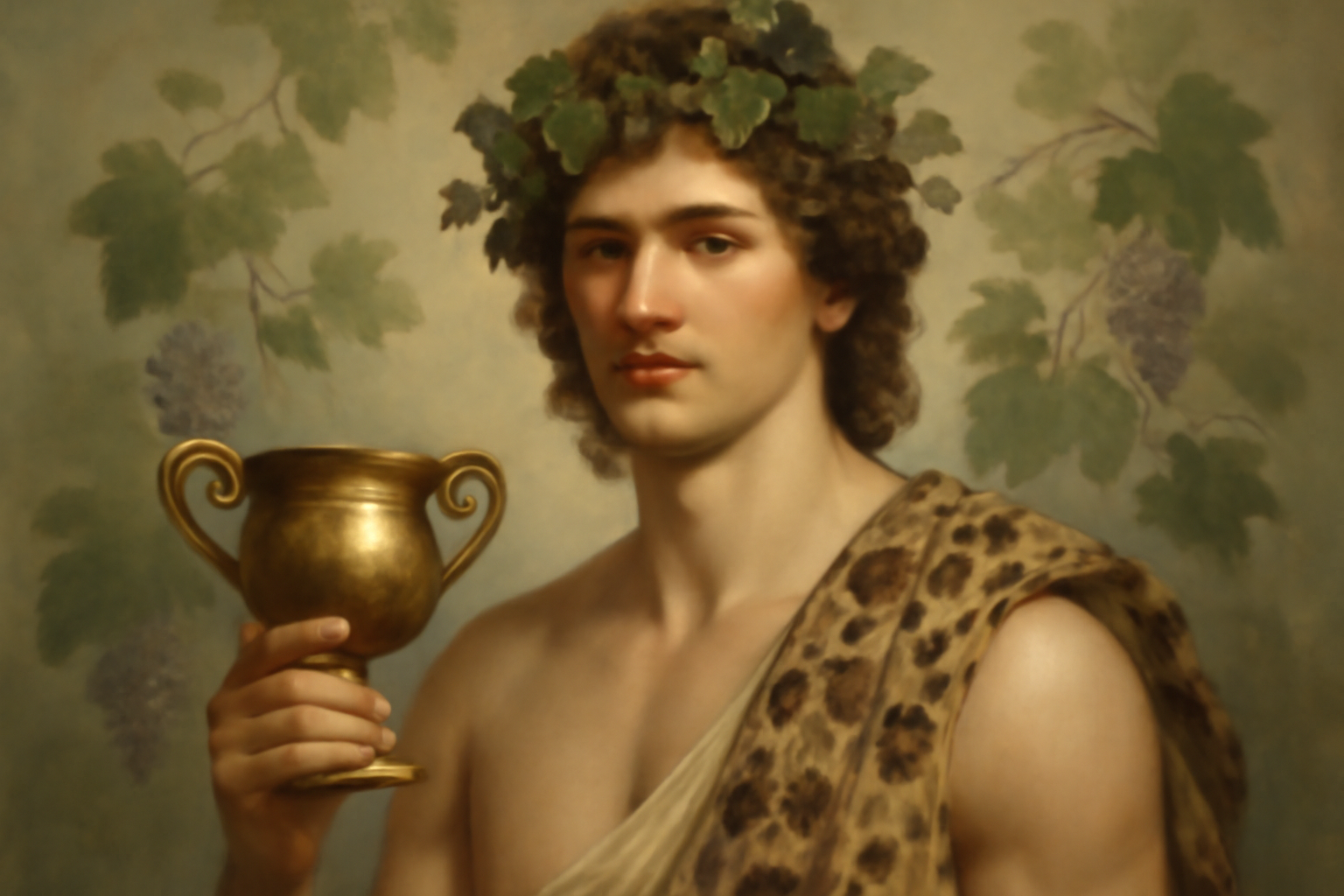
Of all the objects associated with Dionysus, none carried more weight — literally and symbolically — than the thyrsus, the fennel-stalk staff topped with a pinecone that appears in his hand across a thousand years of Greek and Roman art. Other posts on this site cover Dionysus’s full symbolic wardrobe; this one goes deep on a single object, tracing exactly where the thyrsus turns up in the archaeological and artistic record, and what ancient worshippers actually did with it.
What the Thyrsus Meant
Crafted from a hollow fennel stalk (the narthex) and crowned with a pinecone, the thyrsus was wrapped in ivy leaves and, in some ancient descriptions, had a tip that dripped with honey. Devotees carried it during Dionysiac festivals and processions, where it functioned as far more than decoration.
What set the thyrsus apart from Dionysus’s other emblems was its built-in duality: a phallic staff topped with a fertile pinecone, fusing masculine and feminine symbolism into one object. Ancient sources treat it as both a beneficent wand — capable, in myth, of striking rocks to bring forth water, wine, or honey — and a weapon, used to strike down those who defied the god’s worship. To carry the thyrsus was to claim the authority to do either.
That duality made the staff a physical stand-in for the tensions Dionysus embodied more broadly: order against chaos, civilization against wildness, ordinary mortal life against divine ecstasy. Holding the thyrsus was a visible claim to standing on the far side of that line, at least for the duration of a festival.
Artistic Representations Across Media
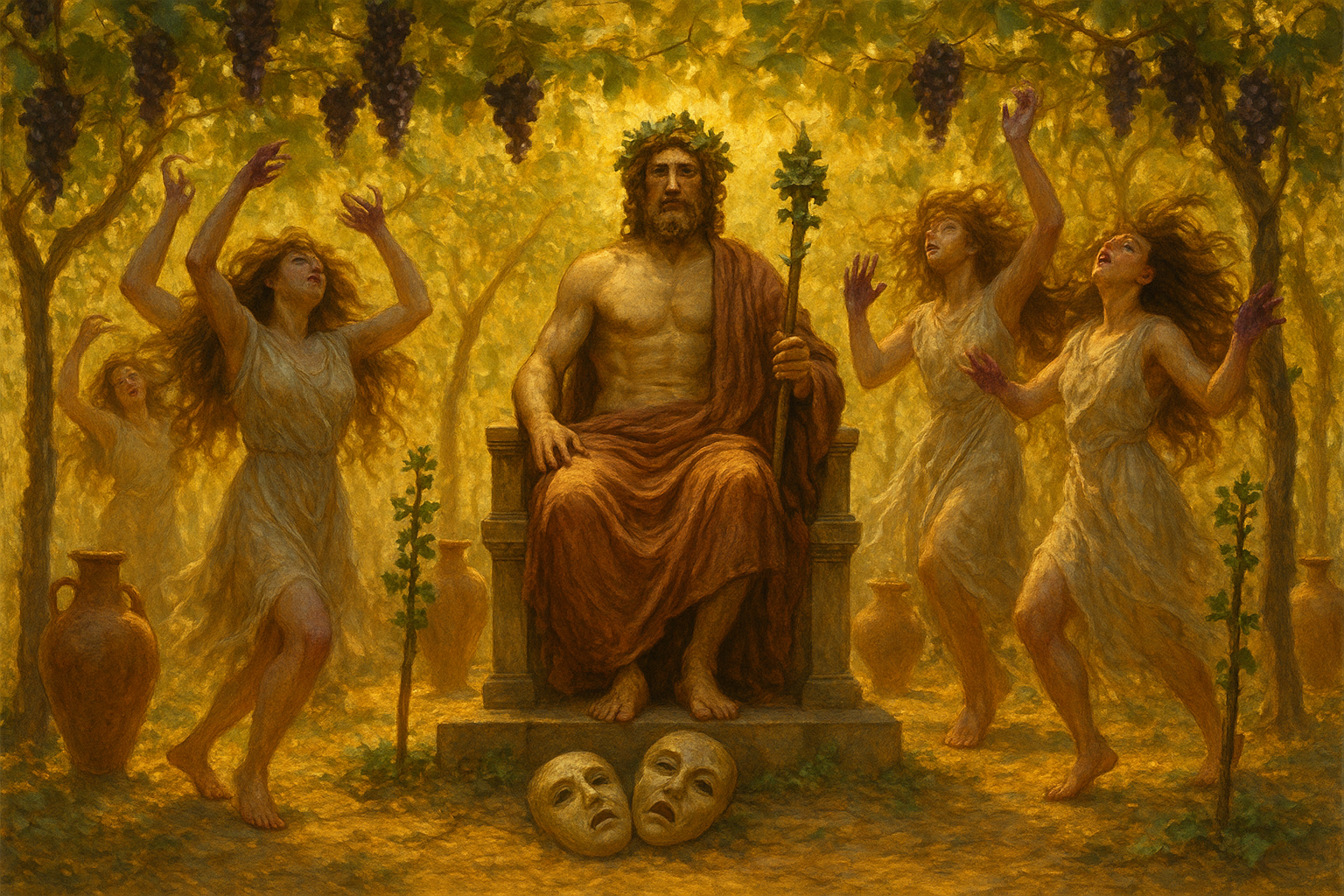
Across the ancient Mediterranean, the thyrsus appears with remarkable consistency in artistic representations spanning more than a millennium — from Archaic-period vase painting to Roman-era wall painting. That consistency is part of what makes it such a useful object to trace: unlike myths, which shift between authors and regions, the thyrsus’s visual form barely changed.
Vase Paintings and Pottery
- Red-figure and black-figure pottery from Athens frequently showcase Dionysus gripping his thyrsus during mythological scenes
- Drinking vessels (kylixes and kraters) often featured the god using his staff to transform pirates into dolphins or to strike down those who opposed his worship
- The thyrsus appears on hundreds of surviving Greek vase paintings from the 6th through 4th centuries BCE, making it one of the most consistently documented divine attributes in ancient art
Monumental Sculpture
- Roman marble copies of Hellenistic Dionysus figures typically show the god resting his weight against a tall thyrsus, its pinecone finial carved in fine relief — a compositional device sculptors returned to again and again across regional workshops
- The staff functioned as a practical prop for sculptors as much as a symbol: it let them pose the god leaning and relaxed rather than rigidly standing, emphasizing his divine ease rather than martial authority
- Temple pediments and friezes across Greece and Asia Minor feature the thyrsus as a key identifying element in Bacchanalian scenes
Frescoes and Wall Paintings
- Pompeii’s Villa of Mysteries contains the most famous surviving depiction: a frieze in which a fully initiated devotee holds a thyrsus as the visual mark that her initiation into the Dionysiac mysteries is complete
- Roman domestic art frequently incorporated thyrsus motifs in dining rooms, connecting the symbol to wine, celebration, and hospitality
- Syncretic Egyptian-Greek art from Ptolemaic Alexandria, where Dionysus was merged with Osiris into the composite deity Dionysus-Osiris, sometimes shows the fused god’s staff blending the thyrsus with elements of Egyptian royal regalia
The Thyrsus in Religious Practice
Sacred Processions and Festivals
- Dionysiac processions featured worshippers carrying miniature thyrsus staffs made from fennel stalks
- Festival celebrations during the Greater Dionysia included theatrical performances where actors portraying satyrs brandished decorative thyrsus props
- Mystery cult initiation, as depicted at the Villa of the Mysteries, marked its final stage with the initiate holding her own thyrsus — a visual sign that the rite was complete
Regional Variations
- The thyrsus’s core form — fennel stalk, pinecone, ivy — stayed fairly consistent across the Greek world, but the wider dress of Dionysus’s worshippers varied more by region
- In Thrace, where some ancient writers placed the origins of the god’s cult, his followers wore a fox pelt (the bassaris) rather than the fawn skin more common in Attic sources, and Dionysus himself carried the epithet Bassareus
- Roman-era Bacchic art leaned harder on the grapevine than the thyrsus alone, often twining grape clusters up the staff alongside the traditional pinecone
The Figurine That Brings the Thyrsus to Life
If you’ve just read about the thyrsus’s construction and where it turns up across Greek and Roman art, a quality figurine bridges the gap between academic understanding and visual experience. This miniature captures the god’s essential attributes in a form you can actually hold and examine.
What works
- Displays the thyrsus, pinecone, and ivy detailing discussed in this post in a single, artifact-like piece
- Fine detail work captures the artistic conventions ancient Greek potters and sculptors used to represent the god
- Small enough to keep on a desk or shelf as a reference object while researching or reading deeper into Dionysian worship
What doesn’t
- A modern resin reproduction is not an archaeological artifact, so it can’t teach you about regional variations or dating of actual ancient representations
- It’s decorative rather than educational—there’s no accompanying scholarly context or primary source material
This works best as a visual companion to your reading, not as a substitute for examining actual museum collections or ancient sources. If you’re serious about understanding how Greek artists actually depicted Dionysus across different eras and regions, you’ll still want to seek out museum catalogs and archaeological databases. But for a tangible reminder of what you’ve learned here, the Veronese Design Dionysus Miniature Figurine is a solid choice.
About This Article

Written by Elias Blackwood. Elias Blackwood has spent 25 years as an obsessive collector of world mythology and folklore, from Greek and Norse epics to Japanese yokai and West African trickster tales — entirely self-taught, for the love of it. His reading draws on comparative mythology, cultural anthropology, and a personal library of translations most people have never heard of. More about this site.
Verify this against a primary source
Specifics change, and your situation may differ from the one described here. These are the authorities worth checking directly:
- Theoi Project — Greek mythology texts with primary source citations
- Perseus Digital Library — classical texts in the original and in translation
- Encyclopaedia Britannica — edited reference for figures and traditions