Chapter 7: Laugh Loudly and Carry a Big Backpack

Ollie and Biscuit — Chapter 7, scene 1

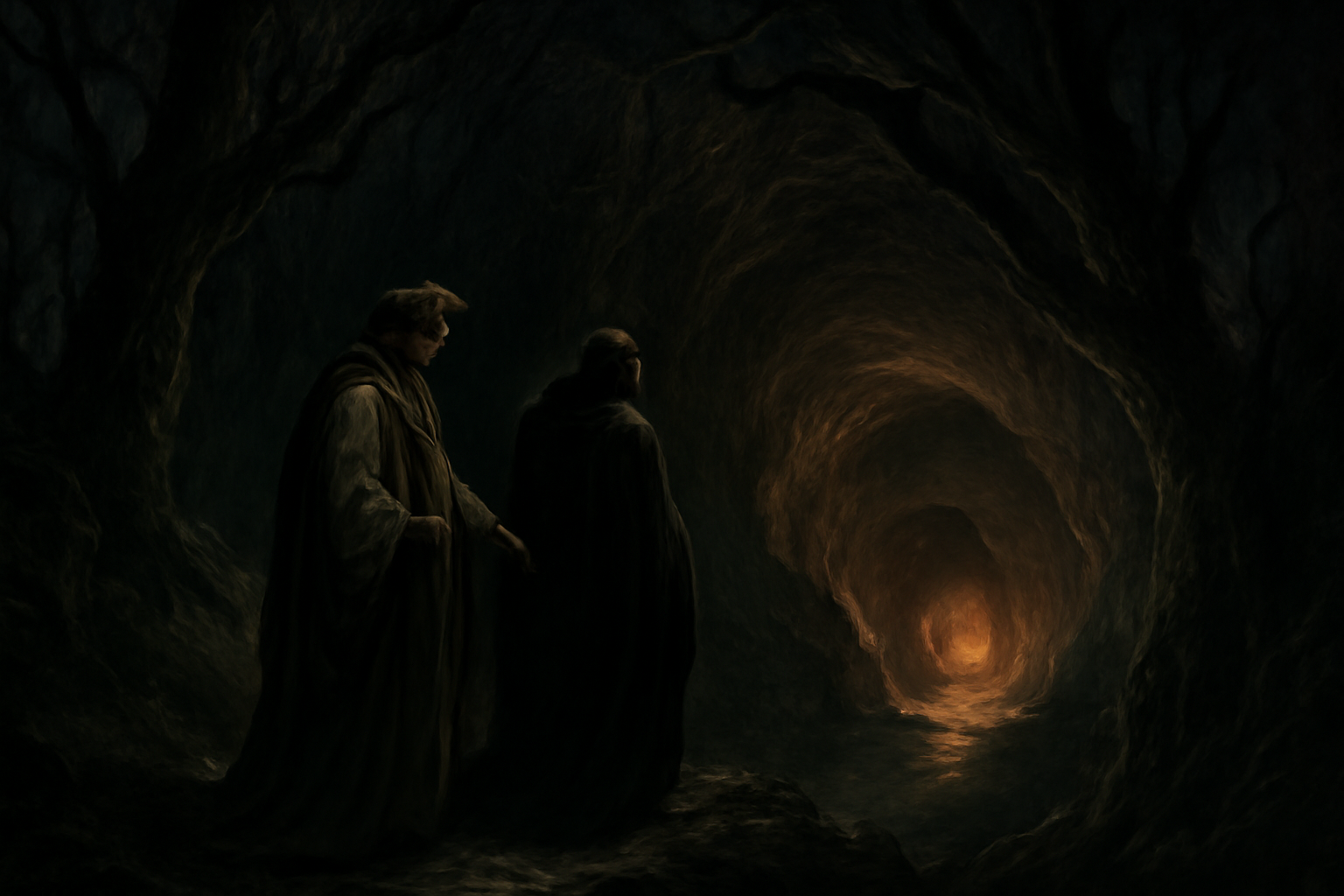
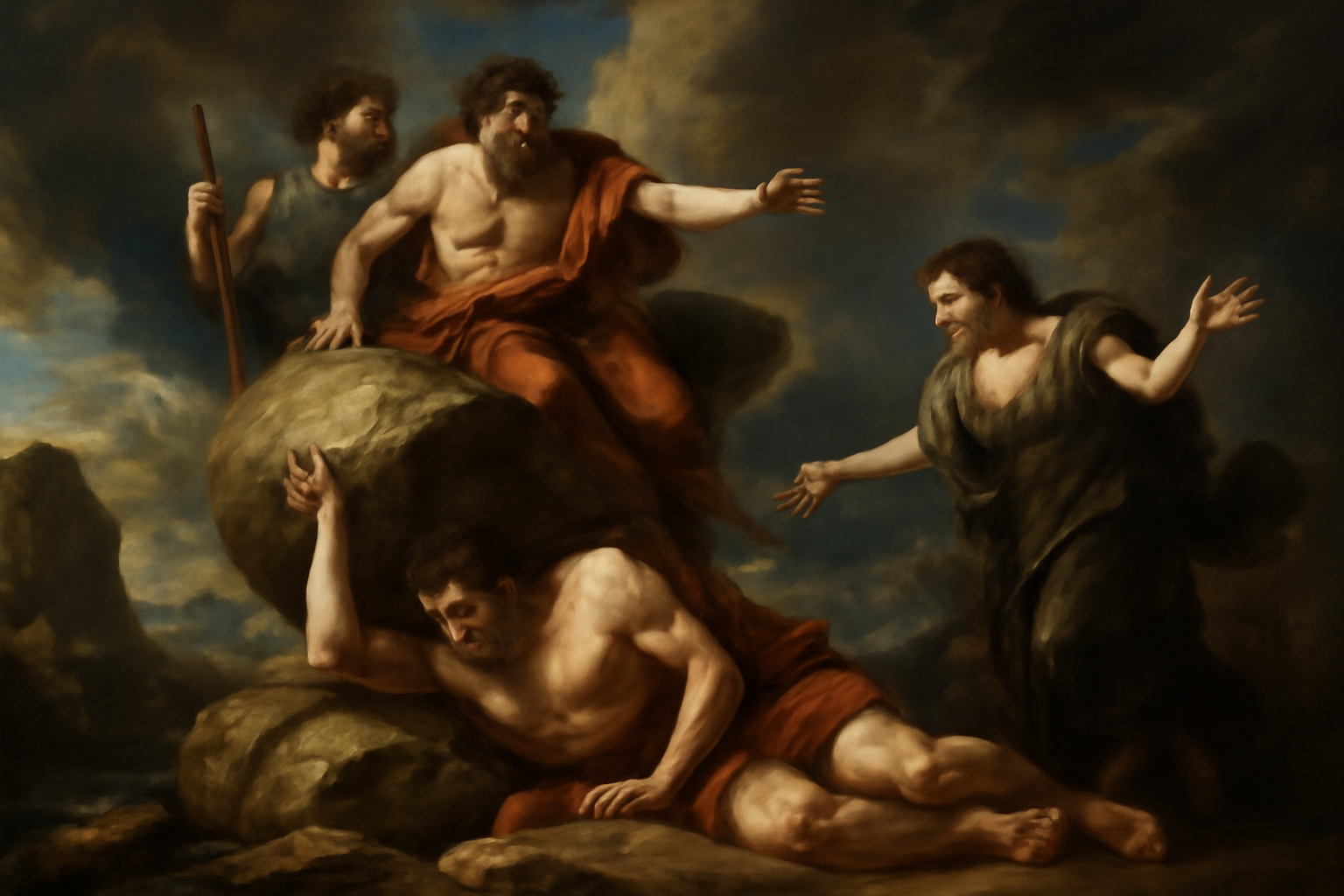
The trickster archetype appears in virtually every mythology on Earth — the figure who breaks rules, upsets order, and somehow ends up being necessary for the world to function. What that says about how humans understand chaos, creativity, and the limits of law is one of the most interesting questions in comparative mythology. Whether it’s Loki shape-shifting his way out of Asgard’s consequences, Anansi spinning webs of clever misdirection across West African tradition, or Coyote stumbling into cosmic significance through sheer audacity, the through-line is always the same: survival through wit, disguise, and a refusal to be caught standing still. So when we meet Ollie mid-transformation — holding a boulder pose long enough to fool a patrol — it doesn’t just read as a fun scene in a fantasy story; it reads as an echo of something ancient, a moment straight out of the mythological playbook that humans have been writing for thousands of years. That’s why this chapter deserves more than a casual read-through.

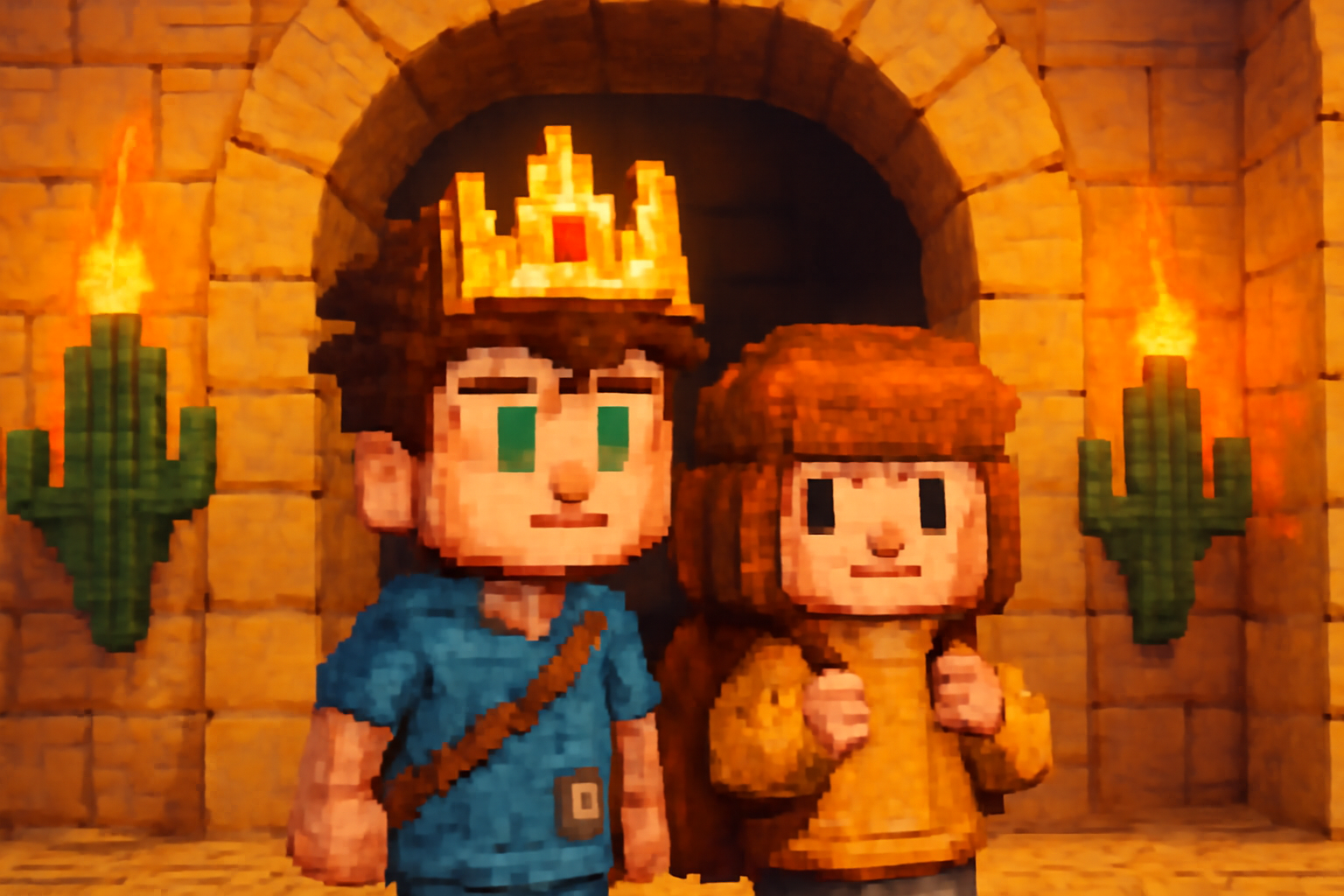
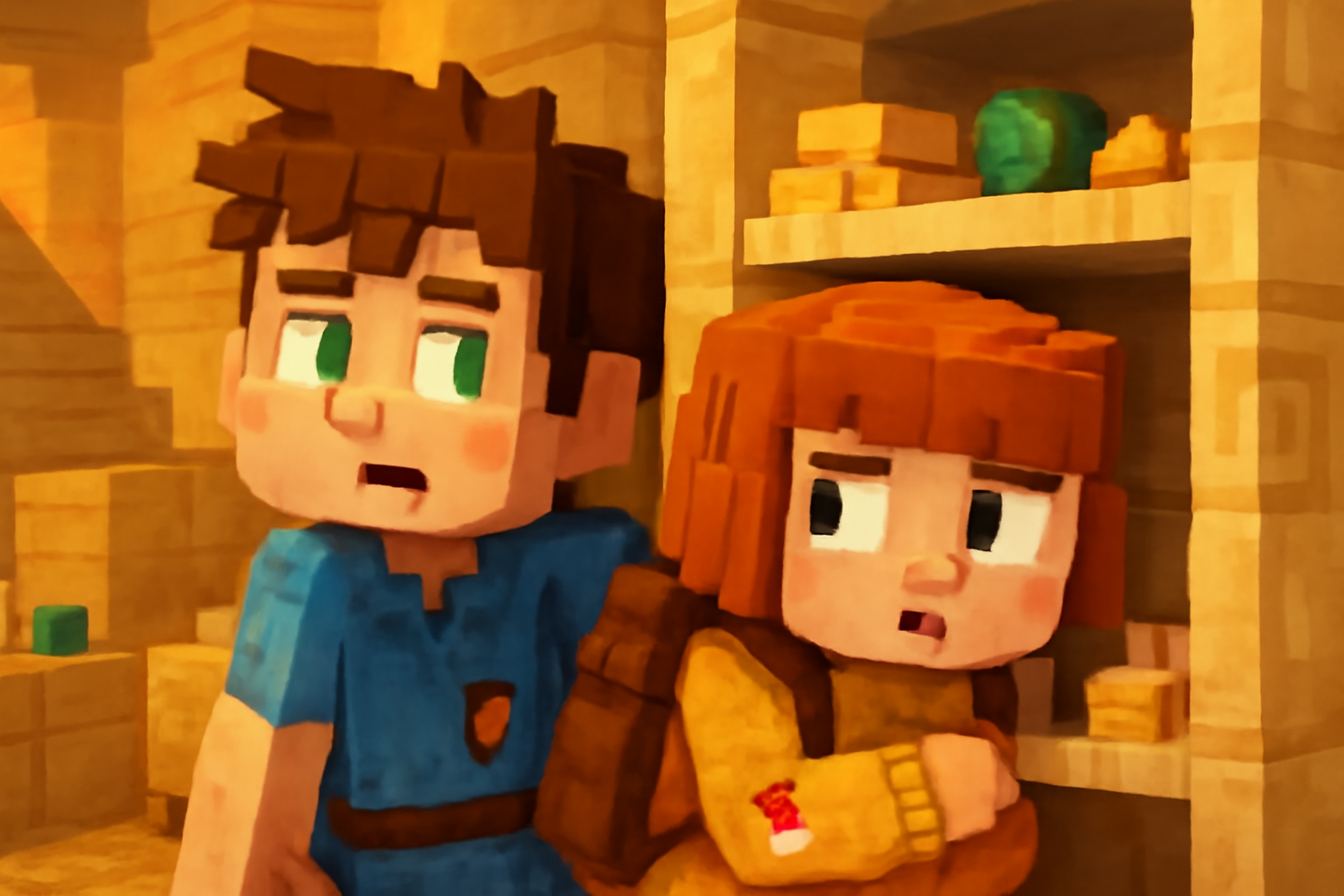
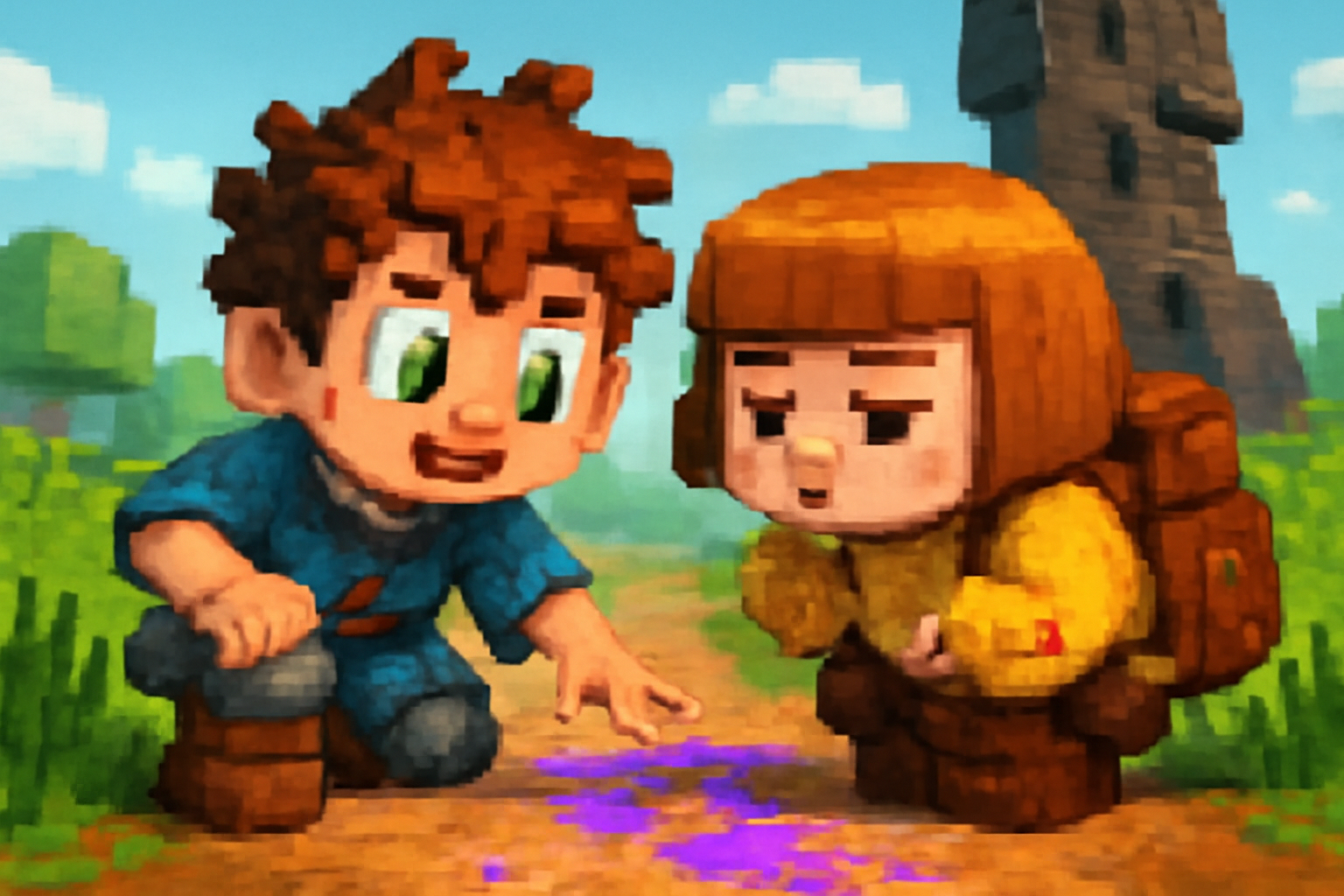
I unraveled the Wool of Wonders from around my shoulders and became myself again, which was honestly a relief. Being a boulder is surprisingly uncomfortable. I’d managed the correct block type about forty percent of the time yesterday, which was a personal record, and I was quite proud of it.

“Right,” I said, brushing fog off my patched-up blue tunic. “New plan. We need to get into Wanda’s maze, find the hats, and get back to Blockville before the Grand Hat Festival is ruined forever. We have two days. What have you got?”

Biscuit unzipped her enormous brown backpack, which made the sound of approximately forty-seven snacks shifting around inside. She pulled out a list. Then another list. Then a list of the other lists.

“Seven plans,” she announced proudly, “ranked by how likely they are to involve us falling into something.”

“Which one has the lowest falling risk?”

She looked at all seven lists very carefully. “None of them, actually.”

Ollie and Biscuit — Chapter 7, scene 1

This post contains affiliate links. As an Amazon Associate, I earn from qualifying purchases at no extra cost to you. If you’re all about Norse mythology like we are here, you NEED to check out this KIDVOVOU 3D Nordic Mythology Wolf Backpack. That 3D wolf design is giving serious Fenrir energy, and honestly? Carrying your school stuff in something that looks ripped straight out of a Viking saga is the ultimate power move. It fits laptops, it’s sturdy enough for adventures both real and imaginary, and it’ll make every other backpack in the hallway look tragically mortal.

Read more

Chapter 6: Hats, Fog, and a Very Suspicious Jar Collection

Ollie and Biscuit — Chapter 6, scene 1

When a fictional world is built with genuine attention to internal consistency — its history, its politics, its cultural logic — reading it becomes an experience very close to studying a real historical civilization. You bring the same analytical tools and they yield the same kind of insight. That’s exactly the lens I want to apply here, because this chapter is doing something quietly fascinating: the sudden, disorienting fog that swallows Biscuit and the narrator whole isn’t just a atmospheric inconvenience — it’s a threshold moment, the kind that appears in mythological traditions from the Celtic otherworld to the liminal mists of Norse cosmology, where geography stops being geography and starts being a test. And then there’s the jar collection, which any folklorist worth their salt will recognize as the kind of detail that only lands with that particular unsettling weight when a world-builder understands how objects accumulate meaning in legendary traditions — think of the vessels, urns, and containers scattered across Greek myth, Norse lore, and countless fairy tale taxonomies, rarely innocent, almost always a problem. This chapter, in other words, deserves a closer look.

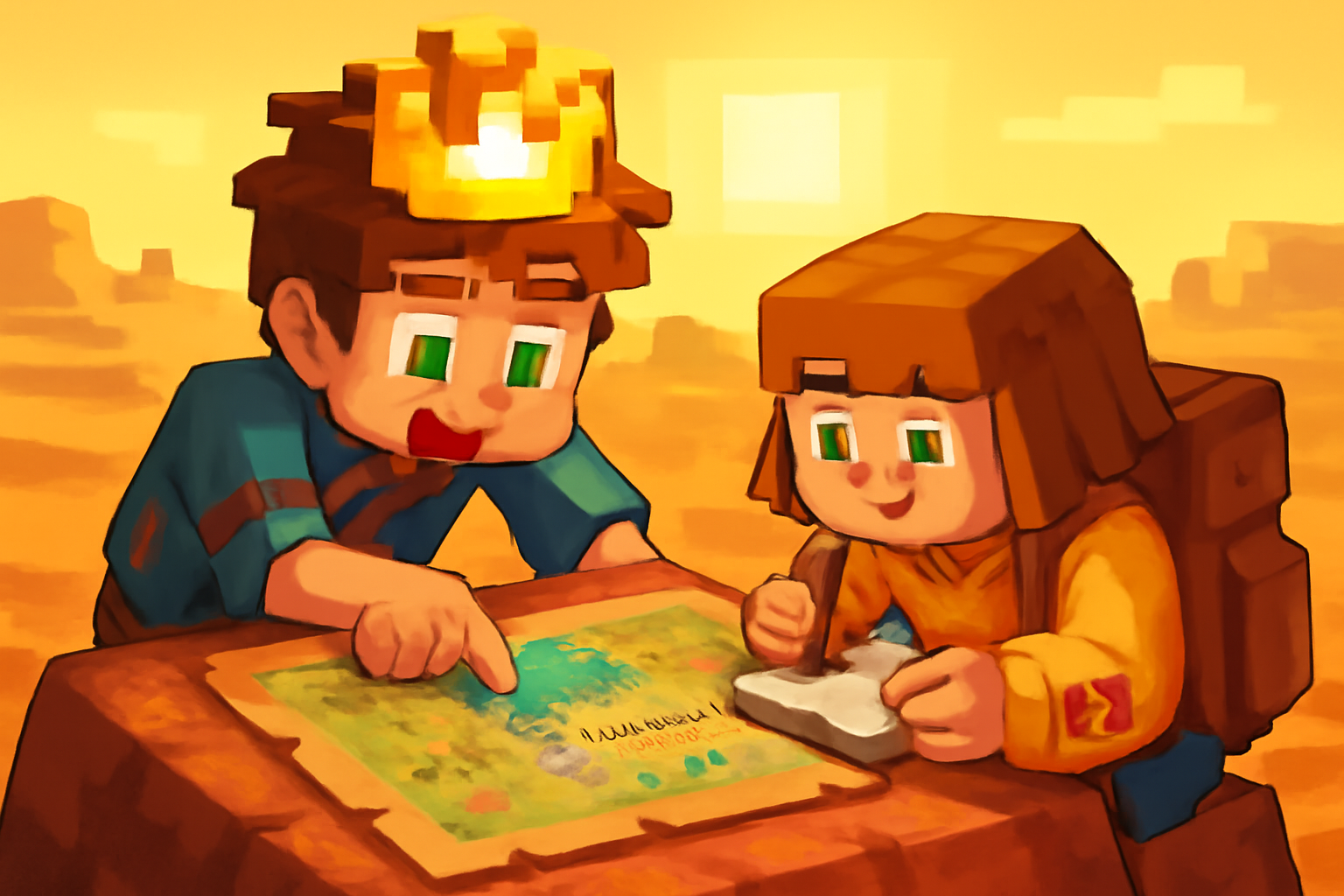
“Biscuit,” I said carefully. “The map is wet.”

“The map is dissolving, Ollie.”

“That’s what I said.”

She made the noise she makes when she’s trying very hard not to say something. I’ve heard it a lot since Sproutville.

Ollie and Biscuit — Chapter 6, scene 1

This post contains affiliate links. As an Amazon Associate, I earn from qualifying purchases at no extra cost to you. If Chapter 6’s foggy atmosphere and mysterious hats have you craving more mythological deep-dives, I can’t recommend the Treasury of Greek Mythology: Classic Stories of Gods, Goddesses, Heroes & Monsters enough. This National Geographic gem is packed with stunning illustrations and the actual backstories behind trickster gods, magical artifacts, and — yes — very suspicious containers (looking at you, Pandora’s jar). It’s the perfect companion read when you want the lore to go even deeper.

Read more

Chapter 5: The Sky Went Gray and Nobody Laughed

Ollie and Biscuit — Chapter 5, scene 1

No mythological tradition is complete without its understanding of death and what comes after — and no aspect of a culture’s worldview tells you more about what they valued in life. The afterlife myths of any civilization are always, in some sense, a portrait of its highest ideals. That’s what makes a sky that refuses to wake up — gray, flat, drained of color — so viscerally loaded with meaning across nearly every mythological tradition humanity has ever produced: from the ashen fields of the Greek Asphodel Meadows to the dimming of the Norse heavens before Ragnarök, a world losing its light is never just weather, it’s a statement. When the color drains from a place like Rainbow Meadows — a landscape defined entirely by its vibrancy — the legendary imagination in all of us should immediately recognize that something cosmologically significant is either approaching or has already quietly begun. This chapter deserves to be read slowly, because if the old myths taught us anything, it’s that the moments just before the world changes forever almost always look, at first glance, like nothing much at all.

I blinked. I looked left. I looked right. I looked up again, just in case I’d missed something.

Nope. Still cardboard.

“Biscuit,” I said. “The sky is broken.”

Biscuit was already sitting up in her bedroll, her copper bowl-cut hair perfectly neat on one side and completely sideways on the other, which was unusual for her. She was staring upward with an expression I recognized — the one where her nose twitched like a rabbit’s before a big sneeze.

“It’s not broken,” she said slowly. “It smells like old socks. And also…” She sniffed again, more deliberately. “Sadness. Coming from the north.”

I had learned, since our adventures in Rainbow Meadows and everything with Baron Blaze’s ridiculous cape, to take Biscuit’s nose very seriously indeed. If Biscuit said something smelled like old socks and sadness, something was definitely, horribly wrong.

Ollie and Biscuit — Chapter 5, scene 1

This post contains affiliate links. As an Amazon Associate, I earn from qualifying purchases at no extra cost to you. If “The Sky Went Gray” has you wondering who’s actually in charge of all those storm clouds (spoiler: the Greeks had a LOT of opinions about that), then the Treasury of Greek Mythology: Classic Stories of Gods, Goddesses, Heroes & Monsters is exactly what you need on your shelf. National Geographic packed it with stunning artwork and the real stories behind the gods who threw those thunderbolts — it’s the kind of book you crack open for one myth and somehow lose two hours to.

Read more

Chapter 4: One Very Accidental Victory

Ollie and Biscuit — Chapter 4, scene 1

The hero’s journey isn’t just a storytelling template — it’s a document of what a culture considered transformative, what trials it thought built character, and what kind of person it most wanted to produce. Reading any legendary hero narrative with that context makes the whole thing richer. What fascinates me most is that the accidental victory — the win that stumbles in through the back door while the hero is busy doing something else entirely — appears across mythological traditions from the Greeks to the Norse to the folk cycles of West Africa, and it’s never truly accidental at all; it’s the story’s way of saying that preparation, character, and a certain stubborn attentiveness to the world are exactly what luck looks like up close. Chapter 4 leans right into that tradition, and I think that’s worth pausing on, because the cultures that told these kinds of stories weren’t celebrating incompetence or coincidence — they were making a very precise and somewhat radical argument about what heroism actually requires.

“Ollie!” Biscuit’s voice came hissing through the tall grass to my left. “Did you get it? All of it? Tell me you got ALL of it!”

“Every drop,” I whispered back, holding up the little clay pot full of golden resin. It smelled faintly of oak bark and something warm, like summer. “How’s the distraction going?”

Biscuit poked her copper bowl-cut head through the grass. Her chunky yellow sweater had a grass stain on the mushroom sleeve, which meant things had been at least slightly chaotic. “Baron Blaze has been telling me his entire life story for the last twelve minutes,” she said. “Did you know he once reorganized all the Nether fortresses by SIZE? He made a CHART. He showed me the chart, Ollie. It was laminated.”

I pressed my lips together so I wouldn’t laugh. “He laminated it?”

“With GOLD trim.” She grabbed my arm. “Come on. He’ll finish the story eventually and then he’ll notice you’re gone and then—”

A sound like a small thunderstorm wearing a very fancy hat rolled across the meadow.

“WHERE,” boomed Baron Blaze, “IS THE SHORT ONE WITH THE RIDICULOUS HAIR?”

I looked at Biscuit. “He means me.”

“He absolutely means you,” she confirmed.

Ollie and Biscuit — Chapter 4, scene 1

This post contains affiliate links. As an Amazon Associate, I earn from qualifying purchases at no extra cost to you. If Chapter 4’s accidental victory got your heart racing, you NEED to check out Ravensburger Horrified: Greek Monsters. This cooperative board game throws you and up to four friends straight into the chaos of facing creatures like Medusa and the Minotaur — and trust me, nothing feels more epic than pulling off a last-second win together. It’s the perfect way to live out your own accidental victory moment, except this time you’re actually planning it. Mostly.

Read more

Chapter 3: Baron Blaze and the Very Fancy Cape

Ollie and Biscuit — Chapter 3, scene 1

One of the things that keeps me coming back to mythology and legendary history is how directly it connects to the present — not as quaint relics but as the actual root system of ideas we still live with. Pull on almost any modern concept and you’ll find it attached to something thousands of years old. Baron Blaze and his Very Fancy Cape might sound like the kind of title that belongs on a children’s shelf, but strip away the playful framing and you’re looking at one of the oldest archetypes in the legendary canon: the fire lord draped in symbolic regalia, a figure whose clothing is not decoration but declaration, a visual language of power that runs from the cloaks of Norse war-gods straight through to the ceremonial mantles of medieval European nobility. The scorch marks we left behind in Sproutville weren’t just plot texture — they’re the kind of detail that, once you start reading it through a mythological lens, starts pulling threads that connect to volcanic deity cults, to the Roman fascination with ignis as both destroyer and civilizer, to the very specific and deliberate way ancient cultures used fire imagery to signal someone worth fearing. That’s the rabbit hole we’re diving into today, and I promise it goes much deeper than a fancy cape.

What I didn’t expect was for that someone to show up wearing a cape.

Ollie and Biscuit — Chapter 3, scene 1

This post contains affiliate links. As an Amazon Associate, I earn from qualifying purchases at no extra cost to you. After reading about Baron Blaze and his legendary cape, every kid is going to want one of their own — and this D.Q.Z Superhero Capes for Kids 20-Set is my top pick for that. You get 20 capes AND masks in a rainbow of colors, which means the whole crew can suit up together. Baron Blaze would absolutely approve of that kind of squad energy. Perfect for birthday parties or just an epic afternoon of backyard adventures.

Read more

Chapter 17: The Ground Is Shaking and That Is Not Ollie’s Fault This Time

Ollie and Biscuit — Chapter 17, scene 1

The history of civilization is largely the history of conflict — who controls resources, who defines legitimacy, who writes the story afterward. When you study the great wars of legendary and mythological traditions, you’re really studying how human societies process trauma, justify power, and construct identity through narrative. What fascinates me about moments like this one — the ground literally shaking beneath characters who are already carrying the weight of something much larger than themselves — is how deeply that image echoes through mythological traditions worldwide, from the trembling earth before Ragnarök to the quaking fields outside Troy, as if the land itself becomes a participant in the story rather than just a backdrop. Ollie’s world, chaotic and reluctant and stumbling forward anyway, sits squarely in that lineage: the reluctant hero surrounded by forces older and stranger than any single person’s missteps, navigating a landscape that has opinions. That’s not just good fantasy storytelling — that’s mythology doing exactly what mythology has always done, which is remind us that the ground beneath our feet was never really stable to begin with, and the people who survive are the ones who keep moving anyway.

“I KNOW,” I said, very relieved. “I haven’t even tripped yet today.”

“It’s nine in the morning.”

“It’s a personal record.”

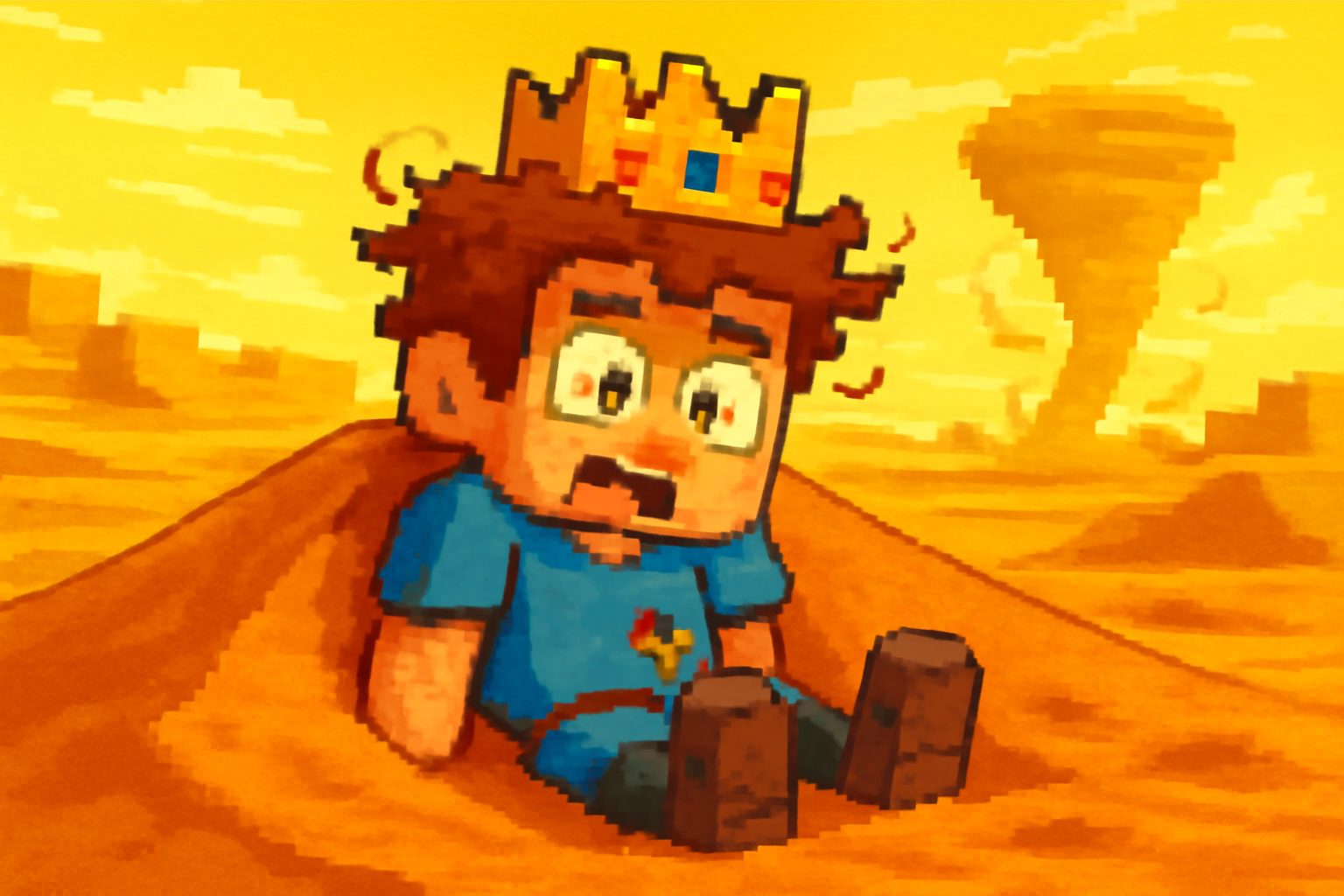
The Rumbling Ridges stretched out ahead of us — a wide, rocky landscape striped with deep orange cracks where warm light pulsed up from somewhere far, far below. The rocks were dark and jagged like giant broken teeth, and little wisps of steam shot upward without warning, making the whole place look like a pot of soup coming to a boil. A very large, very dangerous pot of soup. The Champion’s Crown on my head buzzed with a warm, steady hum — the kind it had made right before we’d found Captain Cactus’s fortress, and before we’d walked into the Ender Earl’s courtyard, and before about seventeen other moments I’d rather not think about too hard.

Four villains down. The crown glowed brighter than I’d ever seen it.

But right now, something else was glowing too.

Ollie and Biscuit — Chapter 17, scene 1

This post contains affiliate links. As an Amazon Associate, I earn from qualifying purchases at no extra cost to you. If today’s chapter has you wondering what else Poseidon, Zeus, or any of those gloriously chaotic Olympians have been up to, I genuinely cannot recommend the Treasury of Greek Mythology: Classic Stories of Gods, Goddesses, Heroes & Monsters enough. It’s packed with stunning National Geographic photography and artwork alongside the real myths — the kind of book you pick up to check one thing and somehow lose an entire Saturday to. Perfect for anyone who wants the full, unfiltered story behind all the ground-shaking drama.

Read more

Chapter 18: Seven Vents, Five Artifacts, and One Spectacular Sneeze

Ollie and Biscuit — Chapter 18, scene 1

My Saturday morning ritual used to be showing up at the university library with no plan and just following citation trails — one footnote leading to a 19th-century translation, which led to a fragmentary text, which opened up an entire mythology I’d never encountered. That kind of discovery is exactly what drew me to this topic, because volcanic landscapes in legendary lore are never just geological backdrop — from the fire-vents of Polynesian tradition where Pele wages her endless, magnificent wars, to the forge-mountains of Norse cosmology trembling under the work of dwarven craftsmen, they are active mythological agents, territories with attitude, and apparently the universe agrees, because here we have Biscuit and their companion sprinting across the Rumbling Ridges toward what sounds like a convergence of five artifacts potent enough to make the earth itself crack and hiss in protest. The detail that stops me cold, though, is the number seven — seven vents — because across an almost absurd range of unconnected mythological traditions, seven appears as the threshold number for sacred thresholds, trials, and cosmological locks, and I don’t think that’s an accident. Whether this is deliberate world-building geometry or intuitive storytelling touching something ancient, I want to pull that thread and see exactly where it leads.

“Four vents sealed!” Biscuit announced, checking her list at a full run, which is an impressive skill that I have never once managed. “Three remaining — northeast, northwest, and the big one at the ridge peak. Fizzwick has been at vent two, but I re-capped it while you were talking to that magma sprite about his feelings.”

“He had a lot of feelings,” I said, slightly out of breath. “Very valid ones, actually.”

The Champion’s Crown buzzed against my forehead, warmer than usual. Four villains down, and its glow had been getting steadily brighter since the Ender Earl — but right now it was doing something new. It was pulsing, like a heartbeat that had just had a very alarming piece of news.

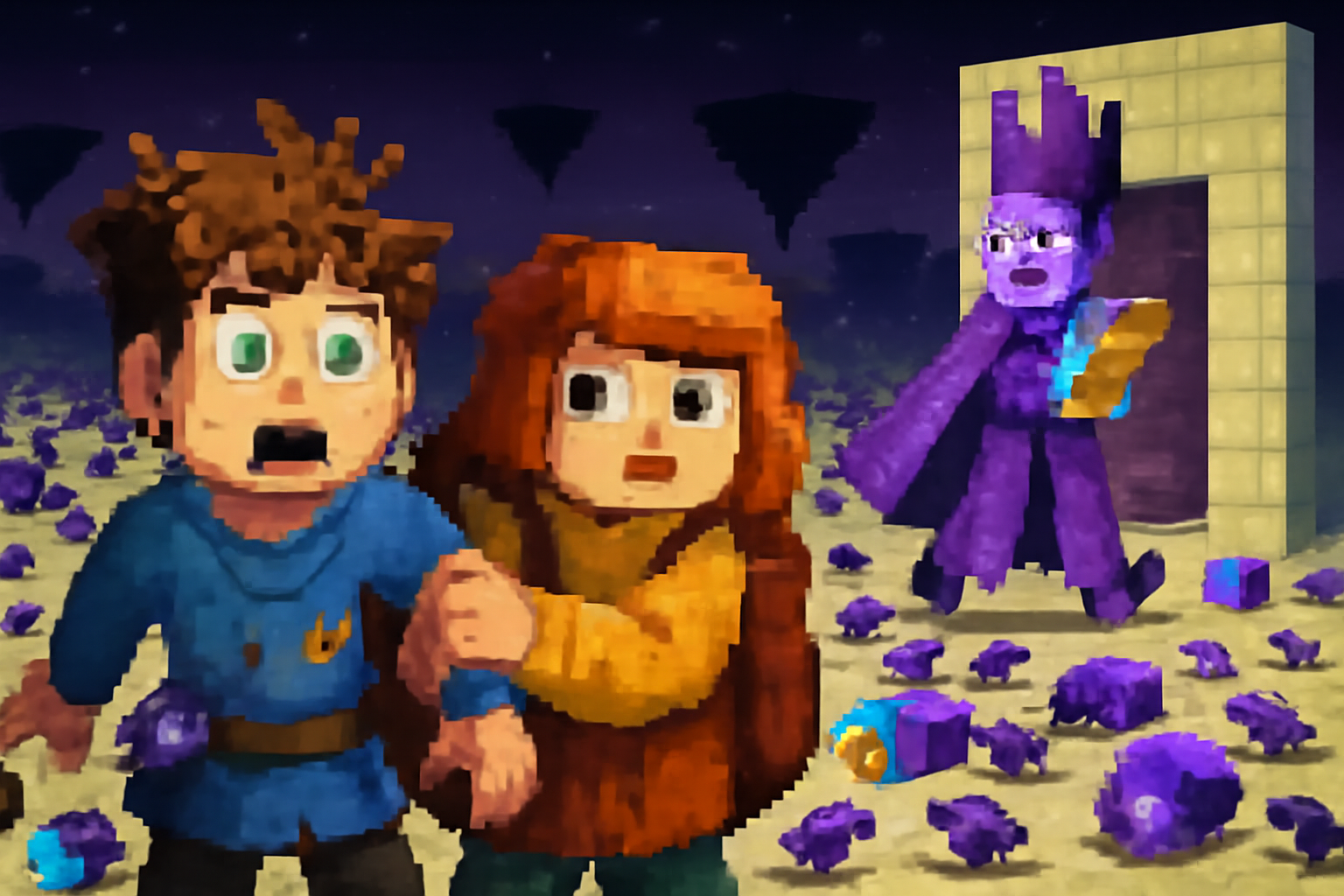
I didn’t get to think about that for long, because we rounded a boulder and nearly ran face-first into an army of Magma Cubes.

There were dozens of them. Big ones, medium ones, and a frankly concerning number of tiny ones bouncing along in a line like a very dangerous conga. They filled the entire path between us and the northeast vent, jiggling and glowing and blocking the way completely.

“Right,” I said. “Wool of Wonders. Magma block disguise. I’ve got this.”

Biscuit’s eyebrows went up. “You’ve successfully become the correct block roughly forty percent of the time.”

“That’s a much higher percentage than when we started,” I pointed out, and I pulled the Wool of Wonders from my pocket before she could argue.

The warm, shimmery fabric rippled over me. I felt the familiar tingle, held my breath, and thought very specifically: magma block, magma block, please be a magma block and not a hay bale or a dirt block or that one time I became a bookshelf

I looked down at my hands.

Glowing orange. Cracked and warm. Magma block.

I actually gasped out loud. Biscuit made a noise that sounded like a proud sniff combined with shock combined with someone trying very hard not to cheer.

“Don’t say anything,” I told her. “I’ll lose it.”

I walked straight into the Magma Cube army. They bounced around me, completely unbothered. One of the bigger ones bumped into me, squinted with its tiny cube eyes, and then bounced away. I gave Biscuit a thumbs up from inside the disguise, which probably looked extremely strange, but she understood.

She darted around the outer edge of the army while they were focused on not-noticing me, and we met on the other side, both slightly out of breath and grinning enormously.

“You were a perfect magma block,” Biscuit said.

I nearly tripped over a pebble from pure happiness. “I know.

Ollie and Biscuit — Chapter 18, scene 1

This post contains affiliate links. As an Amazon Associate, I earn from qualifying purchases at no extra cost to you. If you’ve ever wondered what heroes actually eat between dodging mythological disasters and collecting world-ending artifacts, the Percy Jackson and the Olympians: The Official Cookbook is absolutely your next obsession. Seriously, after writing about five artifacts and a chaotic sneeze that probably leveled a temple, I needed a snack — and this cookbook delivers Camp Half-Blood energy straight to your kitchen. It’s packed with recipes inspired by the series, so you can fuel your own epic quests. Highly recommend.

Read more

5 Most Misunderstood Figures in Greek Mythology, Corrected

5 Most Misunderstood Figures in Greek Mythology, Corrected

This post contains affiliate links. As an Amazon Associate I earn from qualifying purchases. I still remember the first time a student in one of my comparative religion seminars confidently declared that Medusa was “just a monster.” It took everything I had not to groan audibly. After more than 25 years of studying ancient Greek … Read more

Hidden Astronomical Meaning in Greek Mythology: What I Found After Years of Research

Hidden Astronomical Meaning in Greek Mythology: What I Found After Years of Research

This post contains affiliate links. As an Amazon Associate I earn from qualifying purchases. About fifteen years into my research, I was working through Hesiod’s Works and Days in the original Greek when something stopped me cold. Hesiod wasn’t just telling farmers when to plant their crops — he was embedding an entire cosmological framework … Read more