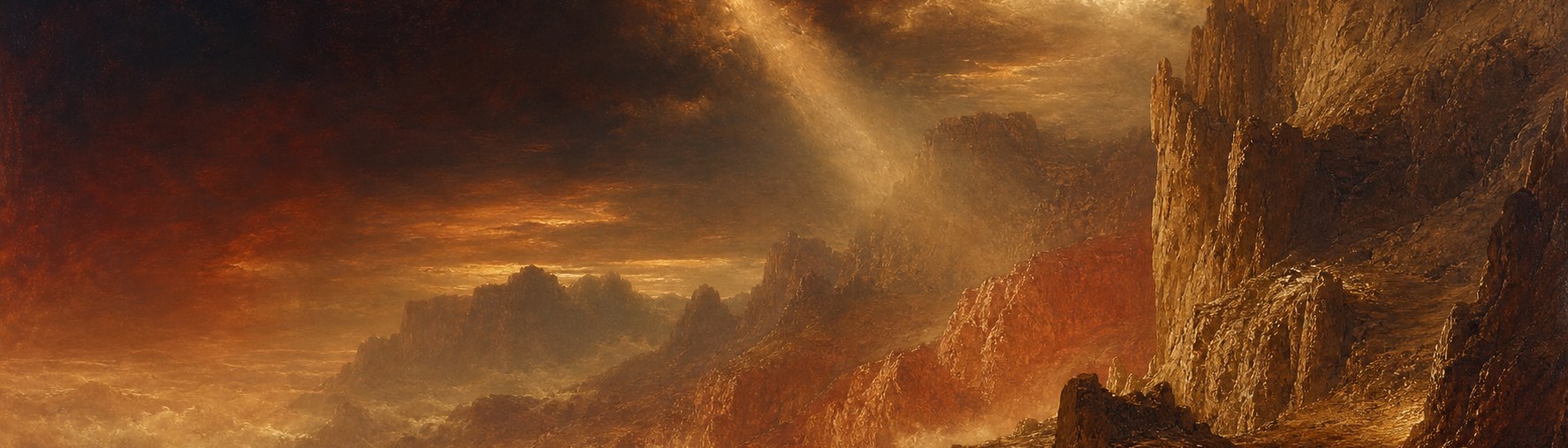

Impundulu is the name I heard most often during my early fieldwork readings on Southern African witchcraft beliefs, and it remains one of the most fully realized blood-drinking familiars in world folklore. Known across Zulu, Xhosa, and Pondo communities as the “lightning bird,” the impundulu is far more than a symbol of storms. It is a living creature in the belief system of many amaXhosa and amaZulu households, a black-and-white bird roughly the size of a person, bound to a human owner and hungry for blood. Over 25 years of studying comparative religion and folklore, I have rarely found a familiar spirit so thoroughly woven into explanations of illness, death, and social conflict.
My interest in the impundulu began while comparing it against other blood-drinking beings documented across the continent, work that eventually led me into the broader field of vampire beliefs across Africa and the Caribbean. What struck me first was the specificity of the reports. Colonial magistrates, missionaries, and later trained anthropologists all recorded remarkably consistent descriptions from informants living hundreds of miles apart. That consistency, in fact, is one reason folklorists take the impundulu seriously as a case study rather than dismissing it as vague superstition.
What the Impundulu Is: A Witch’s Inherited Familiar
In the classic ethnographic sense, the impundulu is a familiar spirit owned by a human witch, most often a woman, though male ownership is also recorded. The relationship is typically inherited down the female line, passed from mother to daughter or aunt to niece as a kind of dark inheritance. Monica Wilson’s fieldwork among the Pondo, published in her studies of Mpondo social structure during the 1930s and 1950s, describes the bird as a hereditary possession bound tightly to specific family lines. This inheritance pattern matters because it frames witchcraft accusations as a family concern rather than an isolated individual failing.
The bird itself is usually described as roughly human-sized, with black and white plumage resembling that of certain African hornbills or the fiscal shrike, though informants insist it is not simply a natural bird. Specifically, its behavior marks it as supernatural: it speaks, it obeys commands, and it demands blood as payment for service. As a result, sighting an unusual black-and-white bird near a homestead where sickness has struck was, and in some rural areas still is, treated as material evidence in a witchcraft dispute.
Command of the Storm: Lightning as the Impundulu’s Signature
The name “lightning bird” is not decorative. Among Zulu and Xhosa communities, lightning strikes on homes, cattle, or people are frequently attributed directly to the impundulu’s action, sent by an umthakathi against an enemy. The flash and the crash of a storm are read as the bird’s arrival and departure, a dramatic signature that separates ordinary weather from an attack. This belief appears repeatedly in early twentieth-century accounts, including those gathered by ethnographer Alice Werner in her survey of African mythology, where lightning deaths in the eastern regions of Southern Africa were rarely treated as random accidents.
When lightning struck a hut in these communities, the response was procedural rather than purely emotional. A diviner, known in Zulu as a sangoma or inyanga, would often be summoned to determine whether the strike was natural or the work of an impundulu under a witch’s control. Ritual specialists sometimes performed a ceremony called “doctoring” the site of the strike, removing supposed contamination left by the bird. This practice, recorded by scholars such as Harriet Ngubane in her work on Zulu ideas of illness and healing, shows how thoroughly meteorological events were folded into the logic of witchcraft.
Shapeshifting, Seduction, and the Thirst for Blood
Beyond its bird form, the impundulu carries a second, more intimate disguise. It can appear as a strikingly handsome young man, approaching women at night to seduce them, sometimes over years. This shapeshifting motif recurs in testimony collected in the Eastern Cape, where women accused of witchcraft occasionally described the impundulu as a lover who visited them repeatedly, demanding loyalty and, eventually, blood in return for wealth or protection. The sexual dimension distinguishes the impundulu from many other African familiars and places it closer, thematically, to European incubus traditions, though the cultural logic behind it is distinctly local.
Its appetite for blood is described as genuinely insatiable. The impundulu feeds itself, however it equally serves its owner by draining victims chosen for punishment or vengeance. Some accounts describe it drinking directly from a sleeping victim’s body, leaving no visible wound, while others describe it causing internal bleeding that manifests later as illness. This dual feeding, personal and instrumental, reinforces the sense that the bird is not merely a servant but a semi-independent predator that must be constantly satisfied or risk turning on its own keeper.
Ubuthakathi: The Impundulu Inside the Witchcraft Framework
To understand the impundulu correctly, I have found it essential to place it inside the broader Southern African concept of ubuthakathi, or harmful witchcraft. The umthakathi, the human witch, is believed to direct the impundulu against rivals, unfaithful spouses, or entire families as an act of malicious intent. This is not folklore in a passive, storytelling sense; historically, it functioned as an accusatory framework used in real social disputes, sometimes with serious consequences for the accused, particularly older women.
Muti, the traditional medicine and magical substances used across the region, allegedly gains extraordinary potency from impundulu body parts. Fat rendered from the bird is described in several ethnographic accounts as a key ingredient for both healing and harming, depending on the practitioner’s intent. As a result, the bird’s death, when it can be achieved at all, was treated as a significant event, sometimes requiring specialist handling to prevent its power from causing further harm to those who removed the remains.
- The impundulu is passed down through female family lines, most often mother to daughter.
- Its arrival is signaled by lightning and thunder, blamed for storm-related deaths and property damage.
- It shapeshifts into a handsome young man to seduce and bind women to its service.
- Its fat and body parts are considered powerful, dangerous ingredients in traditional muti.
- It is blamed for wasting illnesses, including symptoms resembling tuberculosis.
A Folk Diagnosis: Wasting Sickness and Coughing Blood
One of the most striking functions of the impundulu belief is diagnostic. Communities historically used the bird to explain wasting diseases, particularly illnesses marked by persistent coughing and coughing blood. Medical anthropologists working in the twentieth century, including researchers documenting health beliefs in the former Transkei region, noted that tuberculosis symptoms were frequently attributed to impundulu attacks rather than to bacterial infection. This is not simply a case of ignorance; it reflects a coherent explanatory system in which illness has social causes, specifically jealousy, conflict, or a family curse channeled through the bird.
This overlap between folklore and disease has practical consequences that scholars have taken seriously. Public health researchers in South Africa have written about the tension between biomedical tuberculosis treatment and traditional impundulu-based explanations, since patients sometimes sought a sangoma before, or instead of, a clinic. Adam Ashforth’s ethnographic work in Soweto during the 1990s, later published as part of his broader study of witchcraft and AIDS in South Africa, documents similar overlapping explanations for wasting illness in that period, showing how enduring this framework remains.
Control, Feeding, and the Sangoma’s Role
Owning an impundulu is described as neither simple nor safe. The bird must be fed, typically with blood, and neglect is believed to provoke it into attacking its own keeper’s family. Some accounts describe the impundulu being kept hidden in the thatch of a roof or in a covered clay pot, fed secretly at night to avoid detection by neighbors or relatives. This secrecy itself becomes evidence in witchcraft accusations, since unexplained wealth or unusual household behavior invites suspicion.
The sangoma occupies a central role in resolving these disputes. Trained through years of apprenticeship and spirit calling, the sangoma is consulted to divine whether illness or lightning damage stems from an impundulu attack, and if so, to identify the responsible witch. This diagnostic authority gives the sangoma significant social power, however it also places considerable responsibility on their judgment, since accusations can fracture families or entire communities. Ngubane’s clinical observations describe this process as deeply ritualized, involving bones, herbs, and induced trance states to communicate with ancestral spirits.
Why the Impundulu Widens the African Blood-Lore Map
Placed alongside other African blood-drinking beings, the impundulu occupies a distinctive niche. West African traditions describe firefly-witches and forest-dwelling ogres who threaten travelers from outside the home, external dangers approaching from the bush. The impundulu, by contrast, is fundamentally domestic and hereditary, tied to family lines and household secrets rather than the wilderness. This distinction matters for anyone studying the wider history of vampires, since it demonstrates how blood-drinking folklore adapts to local kinship structures rather than following a single universal template.
Southern African belief systems place the impundulu firmly within family relationships, storms, and disease, making it one of the more socially embedded blood familiars documented anywhere in Africa. Its combination of weather control, seduction, hereditary transmission, and disease explanation gives researchers a remarkably complete case study. In my own comparative work, few familiars offer such a tightly integrated system linking meteorology, kinship, and medicine under one supernatural figure.
After decades spent tracing blood-drinking beings across continents, I keep returning to the impundulu as proof that folklore functions as lived explanation, not mere superstition. It answers real questions about why lightning strikes one home and not another, why a relative wastes away coughing blood, and why unexplained wealth appears in a neighbor’s household. The impundulu remains a vivid, socially functional piece of Southern African belief, and it deserves serious attention from anyone studying how communities explain suffering through story.
About This Article

Written by Elias Blackwood. Elias Blackwood has spent 25 years as an obsessive collector of world mythology and folklore, from Greek and Norse epics to Japanese yokai and West African trickster tales — entirely self-taught, for the love of it. His reading draws on comparative mythology, cultural anthropology, and a personal library of translations most people have never heard of. More about this site.
Verify this against a primary source
Specifics change, and your situation may differ from the one described here. These are the authorities worth checking directly:
- Theoi Project — Greek mythology texts with primary source citations
- Perseus Digital Library — classical texts in the original and in translation
- Encyclopaedia Britannica — edited reference for figures and traditions